
Historical correction, 10 October 2026: The EPA proposal and furniture proclamation below were published after the preserved 17 September archive date. The corrected EPA dates are 22 September announcement, 23 September publication and 7 November comments; covered furniture duties began on 14 October. The selected carbon and calcium-carbide entries and illustrative arithmetic are corrected below. The later Hapag-Lloyd record below qualifies the blanket surcharge claim. Other classification claims, historical carrier rates, cost inputs and forecasts remain unverified.
On 23 September 2025, the US Environmental Protection Agency published a Notice of Proposed Rulemaking that would rewrite large sections of the TSCA Section 6 risk evaluation framework. The asserted blanket Hapag-Lloyd USD 250 surcharge from 1 October 2025 has not been established. A later December carrier schedule, discussed below, distinguishes cargo-specific premiums. IMDG Code Amendment 42-24 becomes mandatory on 1 January 2026. The 29 September proclamation scheduled duties on covered wooden furniture and cabinets from 14 October. If you’re importing chemicals from China into Australian or US distribution, the compliance stack you priced for Q4 is already out of date.
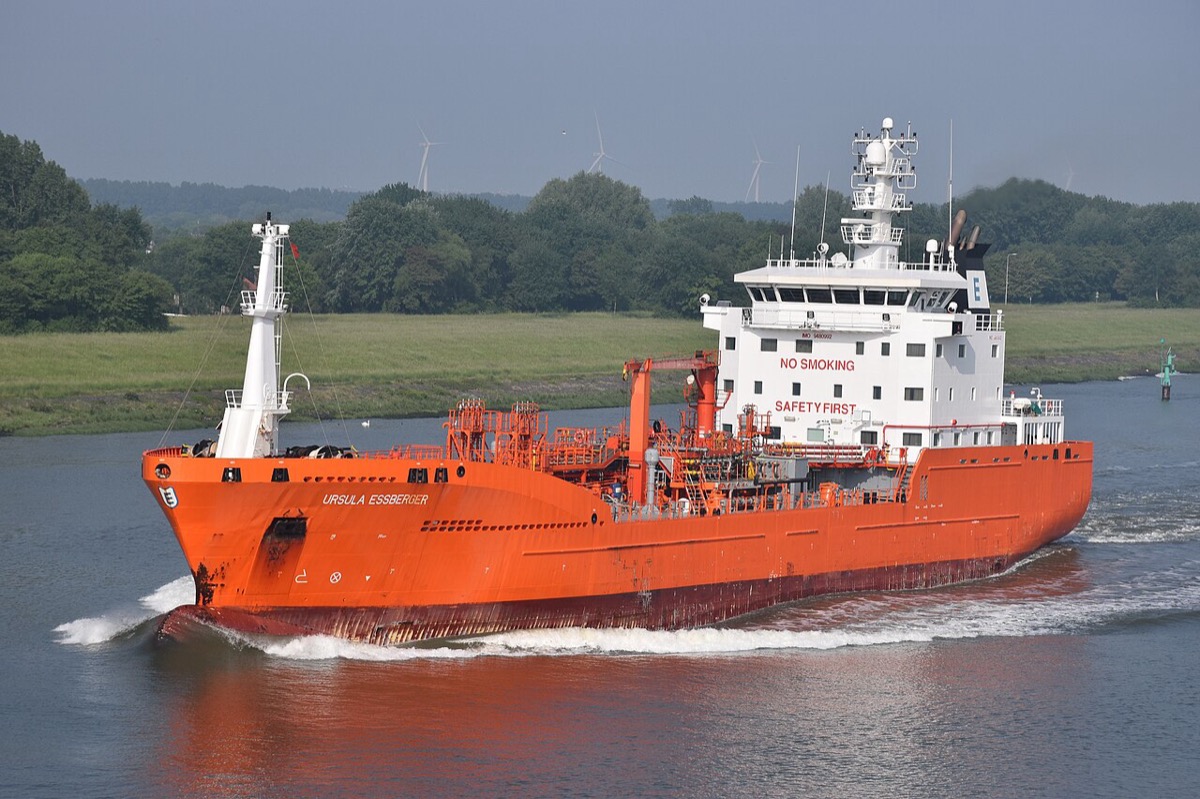
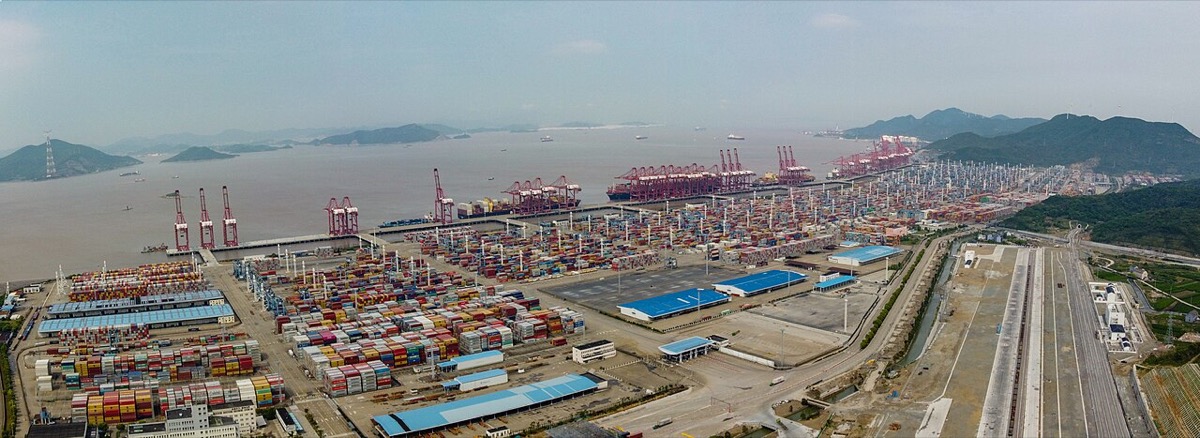
This is the September 2025 cornerstone update. You’ll get the TSCA rewrite in plain language, the IMDG 42-24 reclassification matrix that matters for lithium, sodium-ion and certain metal powders, the real arithmetic behind the DG surcharge stacking on freight, and a landed cost walkthrough for a representative forty-foot container of specialty resin out of Ningbo-Zhoushan. It’s not pretty, but it is navigable if you start now.
EPA’s TSCA Section 6 rewrite: what the proposed framework actually changes
The September 23 Notice of Proposed Rulemaking is the largest structural revision to TSCA risk evaluation since the 2016 Lautenberg Amendments. EPA is proposing to move away from the whole-chemical approach adopted under the previous administration and back toward a conditions-of-use framework that carves risk evaluation by specific industrial and commercial uses. For importers that sounds academic. In practice, it changes which CAS numbers land on the risk management track, how fast, but does not itself establish new CBP recordkeeping or a mid-2026 finalisation date.
Three things matter for your compliance calendar. First, the proposal narrows the scope of what EPA will evaluate in a single risk evaluation, which means more chemicals will be batched into more discrete evaluations. Second, EPA has signalled it will re-open several existing risk evaluations, including methylene chloride (CAS 75-09-2), trichloroethylene (CAS 79-01-6), and 1-bromopropane (CAS 106-94-5), to apply the new framework retroactively. Third, import certification is a separate obligation. 19 CFR 12.121 requires positive certification for covered bulk chemicals and mixtures, negative certification for excluded chemicals when not clearly identified as excluded, and article certification only where a specific TSCA rule or order requires it. The former every-shipment claim was too broad.

You can’t wait for the final rule. The published notice set a comment deadline of 7 November 2025 but the article’s Q2 2026 finalisation forecast was not established by that notice. The actionable step for Australian importers serving the US market through Long Beach, Savannah or Houston is to refresh your CAS inventory against the EPA’s working list of high-priority substances, document current conditions of use by SKU, and push your Chinese manufacturer partners, whether that’s Wanhua on isocyanates, Sinopec on solvents, or a mid-tier specialty producer, to formalise safety data sheets to the 2025 GHS revision 10 format. Bureau Veritas and SGS both have certification streams running for this. Price it in now.
IMDG Amendment 42-24: the 300-plus changes that matter in your container
Amendment 42-24 was adopted by IMO’s Maritime Safety Committee in 2024 and becomes mandatory on 1 January 2026, with voluntary application permitted through the transition window. Port state control authorities in Australia, Singapore, and the US have already signalled zero tolerance for non-conforming documentation once the clock ticks over. The headline changes for chemical importers sit in three areas: lithium and sodium-ion batteries, certain metal powders, and revised UN entries for common organic intermediates.
The biggest operational shift is the introduction of dedicated UN numbers and Special Provisions for sodium-ion cells and batteries, which previously moved under lithium-equivalent analogue numbers or as unclassified. That’s no longer acceptable. Class 9 sodium-ion entries now sit under their own UN numbers with applicable packing, stowage and segregation rules; the sodium-ion battery entries do not assign a packing group. If your Chinese battery-chemistry supplier has been declaring sodium-ion as lithium-ion for convenience, that stops working from 1 January.
IMDG Amendment 42-24 lists UN 1361 carbon of animal or vegetable origin in Class 4.2, packing groups II or III, with Special Provision 978. Activated carbon has a separate UN 1362 entry and Special Provision 979. This is not a pyrophoric versus non-pyrophoric split. Section 5.4.1.5.18 requires UN 1361 production date, packing date and packing temperature; it does not establish the former universal activation-pathway declaration or fee claim.
IMDG 42-24 reclassification matrix (selected entries)
| UN Number | Description | Change under 42-24 | Impact on China imports |
|---|---|---|---|
| UN 3551 / 3552 | Sodium-ion cells and batteries (new) | Dedicated Class 9 entries, new SPs | Separate declaration mandatory, no lithium substitution |
| UN 1361 | Carbon, animal or vegetable origin | Class 4.2, PG II/III; SP 978 | Additional production/packing dates and packing temperature |
| UN 1402 | Calcium carbide | Stowage category B in 42-24 | Apply vessel-specific conditions in 7.1.3.2; not below-deck only |
| UN 3077 | Environmentally hazardous substance, solid, n.o.s. | Marine pollutant marking threshold revised | More SKUs captured, especially pigments and catalysts |
| UN 2211 | Polymeric beads, expandable | Limited quantity provisions revised | Some specialty foams lose LQ exemption |
| UN 1263 | Paint / paint-related material | Flashpoint reporting tolerance tightened | Coatings ex-Ningbo need revised flashpoint certs |

Your Dangerous Goods Declaration, shipper’s letter of instruction, and packaging certification all need to reflect 42-24 conventions for any booking that will load on or after 1 January 2026. Most Chinese forwarders are slow on this. Brief your GACC-registered export partner in writing by mid-October, and require a specimen DGD showing the 42-24 formatting before you approve any Q1 2026 booking.
Hapag-Lloyd’s later published DG schedule
Hapag-Lloyd’s December 2025 DGP schedule lists USD 250 per container for UN 1361 only, valid from 1 January 2026. It lists USD 200 for ordinary Class 3, 6.1 and 8 entries, with UN, location and subsidiary-hazard conditions. Other DG charges may apply, and amounts are non-binding until booking confirmation. This later record does not verify a September announcement, a 2024 suspension or a blanket October reinstatement. The article has not established the claimed matching moves by other carriers.
If six containers actually incurred an additional USD 250 each, that would be USD 1,500 monthly or USD 18,000 over twelve months. These are conditional arithmetic results. The article has not established that premise for its Class 3, 6.1 or 8 example, or the claimed USD 80,000 to USD 140,000 annual programme uplift.
Later carrier record and unverified historical surcharge claims
| Carrier | DG surcharge per 40 ft | Effective date | Trade lanes | Notes |
|---|---|---|---|---|
| Hapag-Lloyd | USD 250 for UN 1361 only | 1 Jan 2026 | Subject to location and cargo conditions | December 2025 schedule; not a verified October reinstatement |
| Maersk | Unverified $200 claim | Not verified | Claimed Asia-North America, Asia-Europe | No matching dated notice established |
| MSC | Unverified $225 claim | Not verified | Claimed Asia-Europe, Asia-Mediterranean | No matching dated notice established |
| CMA CGM | Unverified $250 claim | Not verified | Claimed all DG trades | No matching dated notice established |
| COSCO | Unverified $180 claim | Not verified | Claimed Asia-North America | No matching dated notice established |
| ONE | Unverified $200 claim | Not verified | Claimed global scope | No matching dated notice established |
The DGP schedule does not establish every bunker, emissions or other charge that applies to a consignment. Check the actual route, booking and contractual terms before calculating an invoice total or assuming a surcharge can be passed through.
Furniture and cabinet tariffs: the 14 October commencement
The 29 September proclamation scheduled a 25% duty from 14 October 2025 on covered upholstered wooden products and wooden kitchen cabinets and vanities, subject to the stated classifications and exceptions. Plenty of chemical importers are reading past this because it sounds like a downstream problem. It isn’t. The tariff schedule captures finished goods under HTS 9403 and 9404, but the knock-on demand impact for wood coatings, adhesives, catalysts, and polyurethane chemistries lands directly on chemical importers. If you’re supplying Chinese MDI, TDI, polyether polyols or melamine-formaldehyde resin into Australian or US furniture and cabinetry converters, brace for 15 to 25 percent demand pullback through Q4 as converters rework sourcing.
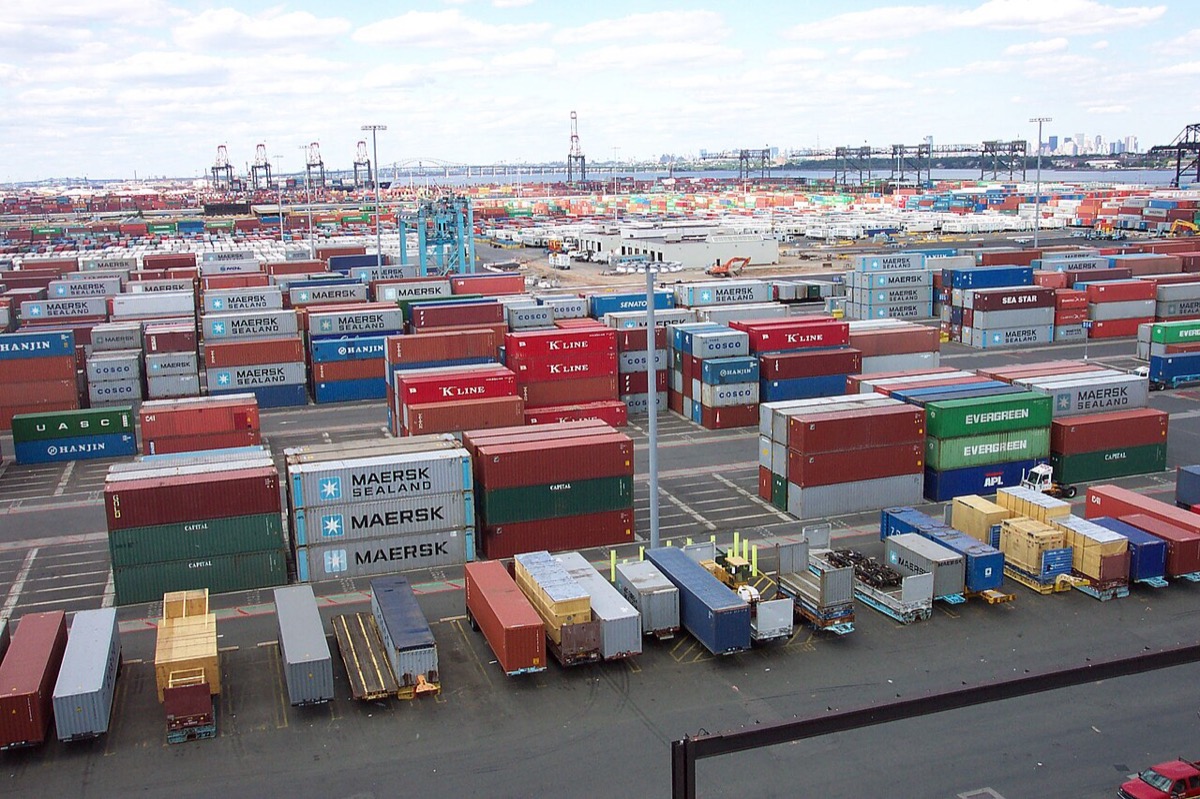
Historical tariff examples by HS code (individual coverage and totals unverified)
| HS Code | Description | US Section 301 | US Section 232 | Australia GST + duty | Effective landed uplift vs 2024 |
|---|---|---|---|---|---|
| 2929.10 | Isocyanates (MDI, TDI) | 25% | 0% | 10% GST | +4.2% |
| 3907.29 | Polyether polyols | 25% | 0% | 10% GST | +3.8% |
| 3909.20 | Melamine-formaldehyde resin | 25% | 0% | 10% GST | +5.1% |
| 3208.20 | Acrylic coatings (wood) | 25% | 0% | 10% GST | +6.4% |
| 9403.60 | Wooden furniture (finished) | 25% | 25% for covered products from 14 Oct 2025; confirm classification and exceptions | 10% GST | +21% |
| 9403.40 | Wooden cabinets (finished) | 25% | 25% for covered products from 14 Oct 2025; confirm classification and exceptions | 10% GST | +21% |
If your order book depends on converters who export finished furniture into the US market, you’re going to feel it. If your book is domestic Australian cabinetry, you’re more insulated, but not immune: Australian converters who re-export to US buyers will still adjust volumes downward. Have a volume-adjusted revised forecast for your December and January orders with your Wanhua, Sinopec or equivalent suppliers no later than the third week of September.
Landed cost walkthrough: 40 ft container of specialty resin, Ningbo-Zhoushan to Melbourne
The following is an illustration using unverified inputs, including the GST amount and chemical classification; it is not a complete landed-tax calculation. The scenario: one forty-foot container, 22 metric tonnes net, of specialty melamine-formaldehyde resin (HS 3909.20), CAS 9003-08-1, IMDG Class 9 marine pollutant, ex-Ningbo-Zhoushan, destination the Port of Melbourne, under FOB terms. Compare Q3 2024 cost base against Q4 2025 post-surcharge, post-compliance baseline.
Illustrative cost-row sums per MT
| Cost component | Q3 2024 baseline | Q4 2025 revised | Delta |
|---|---|---|---|
| FOB resin cost | $1,480 / MT | $1,520 / MT | +$40 |
| Ocean freight (all-in) | $82 / MT | $115 / MT | +$33 |
| Assumed DG surcharge, not a verified bill | $0 | $11.36 / MT | +$11.36 |
| Bunker / ETS / low sulphur | $18 / MT | $26 / MT | +$8 |
| Marine insurance (DG premium) | $4 / MT | $7 / MT | +$3 |
| IMDG 42-24 documentation uplift | $0 | $3 / MT | +$3 |
| Port of Melbourne THC + wharfage | $42 / MT | $48 / MT | +$6 |
| Australian customs brokerage | $8 / MT | $9 / MT | +$1 |
| Assumed GST amount, calculation unverified | $166 / MT | $178 / MT | +$12 |
| Sum of illustrative rows per MT | $1,800 | $1,917.36 | +$117.36 |
The displayed rows sum to $1,800 and $1,917.36 per MT, a difference of $117.36. Multiplied by 22 MT, that is $2,581.92 per container; at 240 containers, $619,660.80. These are arithmetic results from assumed inputs, not verified margin pressure, actual GST liability or observed freight inflation.
The smart play for most of the Australian importers we speak with is a hybrid: push for a 1.5 to 2 percent FOB reduction via longer commitment (Wanhua and the larger Sinopec subsidiaries will entertain this in Q4 for 2026 annual contracts), layer in a dangerous goods surcharge pass-through clause on your wholesale terms (ACCC compliant, clearly disclosed), and rebid your freight contract with Hapag-Lloyd, COSCO and ONE in parallel to benchmark the DG fee structure.
Compliance timeline: what lands when
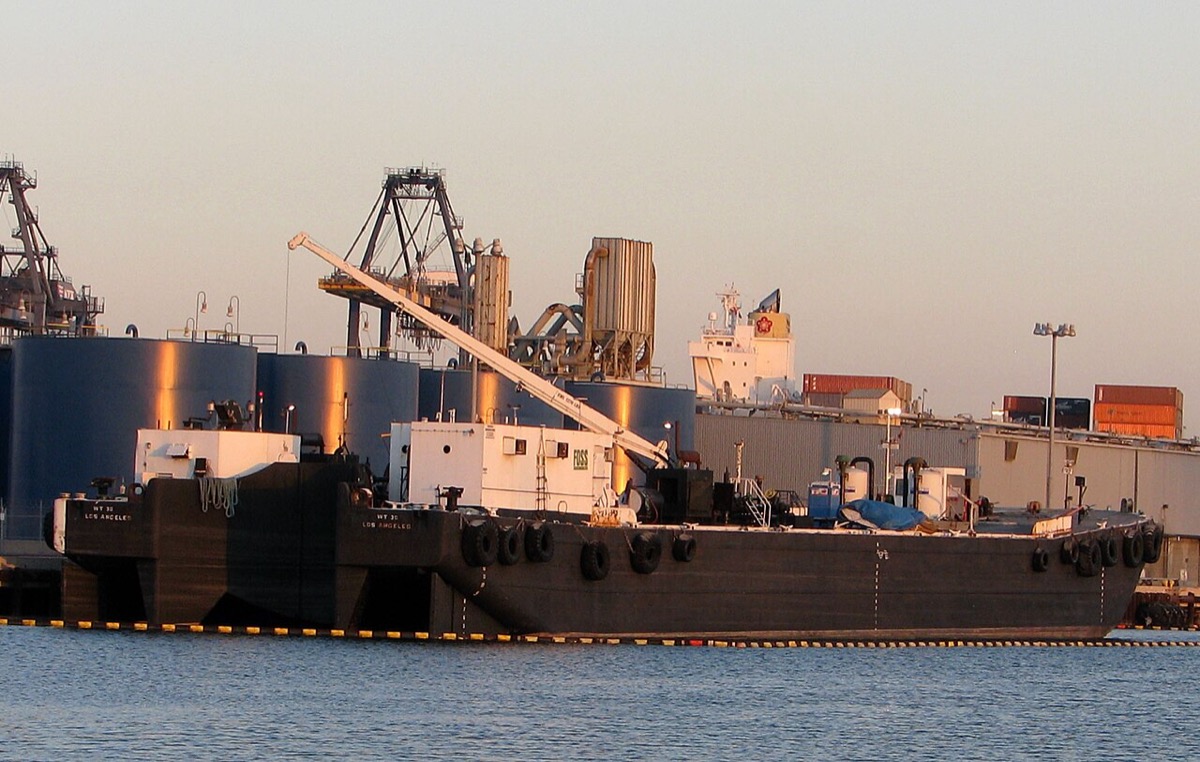
Q4 2025 through Q1 2026 compliance deadlines
| Date | Event | Action window |
|---|---|---|
| 23 Sep 2025 | EPA TSCA NPRM published | Comments due 7 November 2025 |
| 14 Oct 2025 | Covered Section 232 furniture / cabinet duties commence | Check product coverage and stated exceptions |
| 1 Jan 2026 | Later Hapag-Lloyd UN 1361 DGP record | Check booking, cargo and location conditions |
| Historical MSC date unverified | No matched DG notice established | Obtain the actual carrier notice |
| Historical CMA CGM/COSCO dates unverified | No matched DG notices established | Obtain the actual carrier notices |
| Historical ONE date unverified | No matched DG notice established | Obtain the actual carrier notice |
| 7 Nov 2025 | EPA comment deadline | TSCA comment filed via trade association |
| 1 Jan 2026 | IMDG 42-24 mandatory | Supplier DGDs and packaging certs refreshed |
| Q2 2026 | Unverified historical EPA finalisation forecast | Check subsequent official action |
If you’re a six-month-ahead planner, your September and October work sets up whether Q1 2026 is controlled or chaotic. The forwarders and brokers who will carry this well are the ones with genuine IMDG 42-24 training in their operations teams today, not the ones who plan to handle it in December.
Your next action this week
Do three things before the end of September. Get a written confirmation from your Chinese supplier that every chemical on your 2026 forecast has a GHS revision 10 compliant SDS in English by 1 December. Require your forwarder to produce a specimen 42-24 compliant Dangerous Goods Declaration for one active SKU as proof of readiness, not a promise. Ask your freight provider for a sealed rate renewal inclusive of DG surcharge pass-through language in writing, not verbally. If any of those three won’t happen in writing, you have your answer about which supplier, forwarder or carrier gets rotated out before the IMDG clock ticks over.
Sourzi’s compliance desk tracks every TSCA, IMDG and tariff movement daily. If you want an audit of your current CAS inventory against the EPA working list, a forwarder DG readiness assessment, or a landed cost model refresh for your top ten SKUs, contact us and we’ll turn it around inside seven business days.