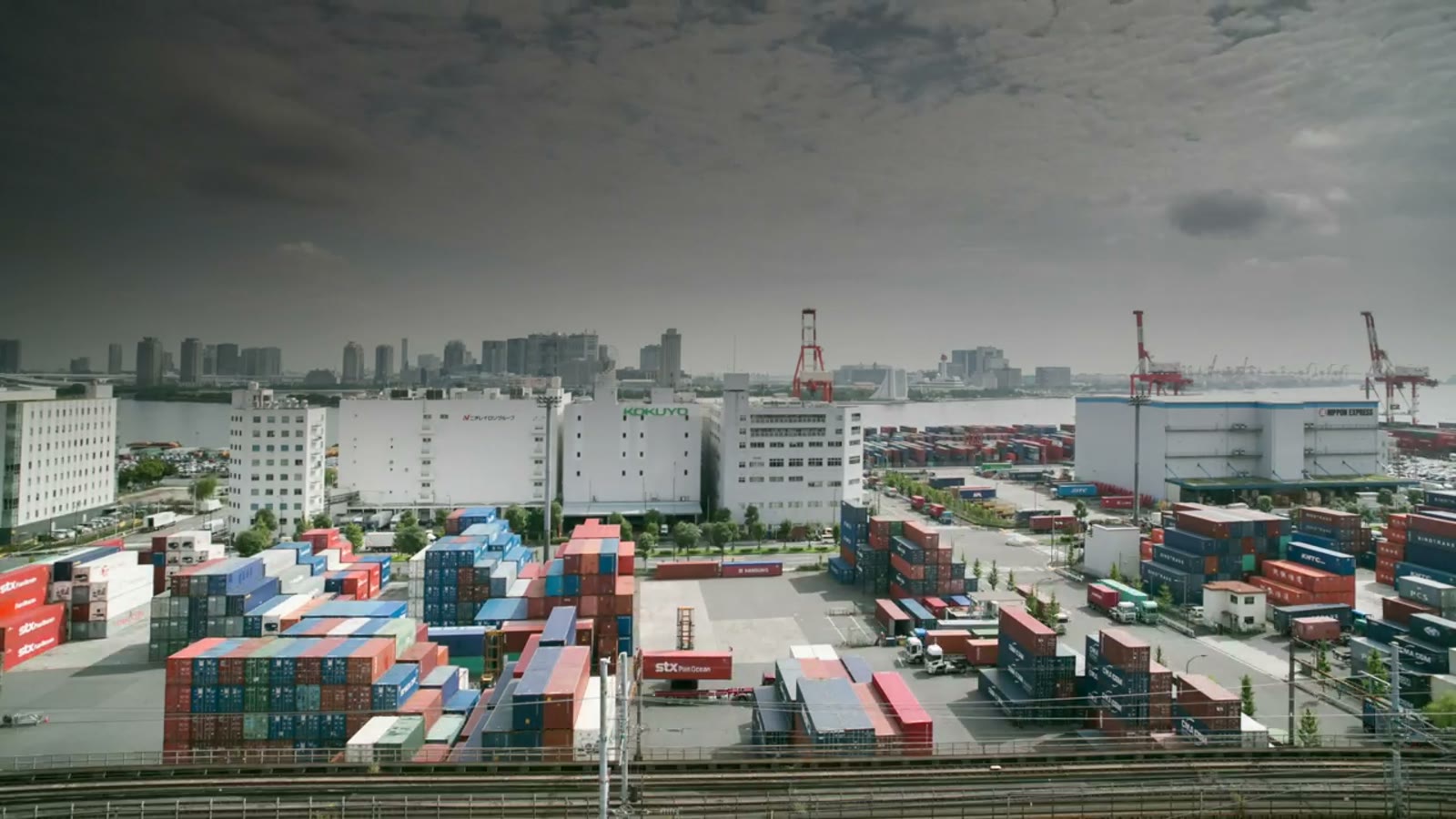
The Trump-Xi meeting in Busan on 30 October produced the framework every Australian chemical importer was hoping for. A one-year extension of the tariff truce, reciprocal tariffs capped at roughly 10 percent through 10 November 2026. The 20 percent fentanyl-related tariff cut in half to 10 percent, effective 10 November. A twelve-month suspension of the 9 October rare earth package including the five new controlled elements and the 0.1 percent de minimis FDPR-style provision. But the April 4 MOFCOM Announcement No. 18, which added the original seven rare earths to the control list, is not suspended. It stays. And EPA, in a separate announcement during the week of 3 November, has expanded its import enforcement resources for TSCA Section 13 and risk management rule violations.

This is the November 2025 cornerstone. You’ll get the precise shape of the Busan deal, a clean read on what’s suspended versus what stays, the arithmetic for how your 2026 landed cost actually moves on a ten-SKU programme, and the strategic call on whether to bank the savings, reinvest into a forward buy, or hedge against the twelve-month expiry with non-China diversification. There’s a real window here. The question is whether you use it to de-risk or to over-extend.
What the Busan deal actually delivered
The Busan framework is a twelve-month suspension, not a settlement. That framing matters for how you plan. Three specific commitments were made public. First, reciprocal tariffs on Chinese-origin goods remain at the reduced 10 percent rate (down from the earlier 34 percent threatened and 24 percent interim) through 10 November 2026. Second, the fentanyl-related International Emergency Economic Powers Act tariff, which sat at 20 percent on all Chinese-origin goods, was halved to 10 percent effective 10 November 2025. Third, the 9 October MOFCOM rare earth package, including Announcements Nos. 55, 56, 57, 58, 61 and 62, is suspended for twelve months.
In return, the US committed to continued engagement on fentanyl precursor enforcement, suspension of certain port fee escalations that were scheduled for Q1 2026, and a pause on Phase One investigation remedies pending Chinese compliance review. Critically, the Section 301 tariffs (List 1 through 4A) stay in place at their current rates. The Section 232 tariffs on steel, aluminium, furniture and cabinets also stay. The April 4 MOFCOM Announcement No. 18, which added dysprosium, terbium, samarium, gadolinium, lutetium, scandium and yttrium to the control list, is not part of the suspension.
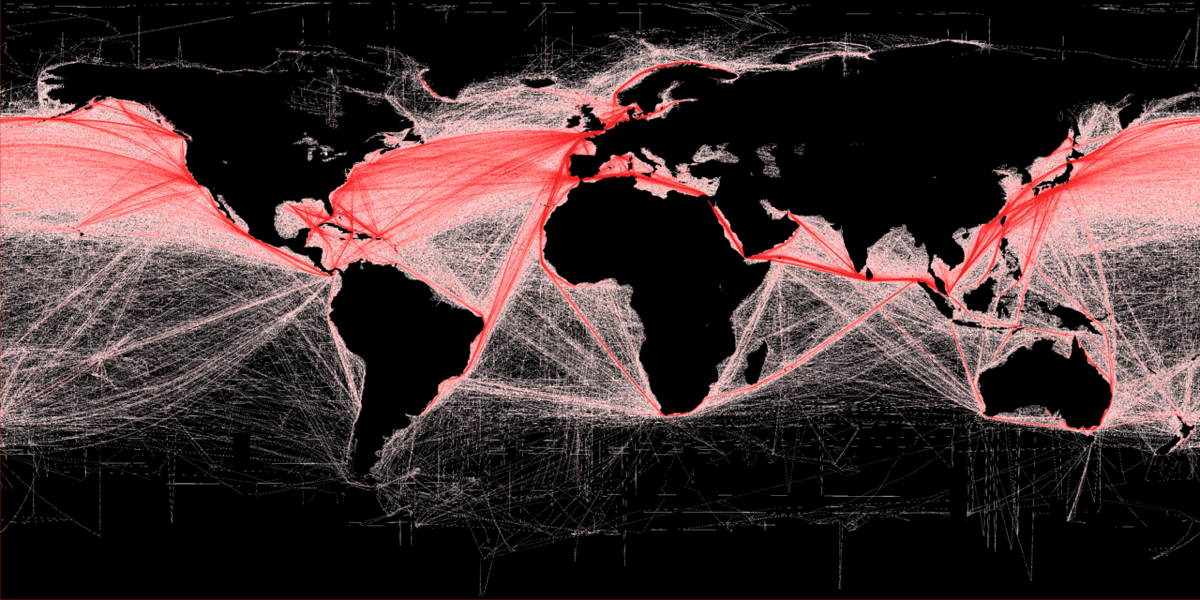
The ambiguity sits in the EPA announcement. In the same week as the Busan framework, EPA confirmed it is expanding import enforcement staffing at CBP partner ports (Los Angeles, Long Beach, Houston, Savannah, Charleston) with specific focus on TSCA Section 13 import certifications, PFAS reporting compliance and the risk management rule enforcement for methylene chloride and trichloroethylene. Tariff relief doesn’t mean compliance relief. If anything, EPA is being explicit that the regulatory side tightens even as the tariff side loosens.
Busan deal: what’s suspended and what stays
| Measure | Pre-10 Nov 2025 | Post-10 Nov 2025 | Duration |
|---|---|---|---|
| Fentanyl IEEPA tariff | 20% | 10% | Through 10 Nov 2026 |
| Reciprocal tariff on China | 24% interim | 10% | Through 10 Nov 2026 |
| Section 301 List 1-4A | In force | In force | No change |
| Section 232 steel, aluminium | In force | In force | No change |
| Section 232 furniture, cabinets | In force | In force | No change |
| MOFCOM Oct 9 package (Nos. 55-58, 61-62) | In force | Suspended | 12 months |
| MOFCOM Apr 4 Announcement No. 18 | In force | In force | Not suspended |
| USTR port fees | In force | Suspended Q1 2026 escalation | 12 months |
| Phase One Section 301 investigation | In force | Paused | 12 months |
| EPA TSCA enforcement | Standard | Expanded | Ongoing |
Why April 4 staying live matters more than the October 9 suspension
The commentary through the first two weeks of November has been about what’s suspended. The operationally important story is what stays. MOFCOM Announcement No. 18 of 4 April 2025 introduced dual-use export controls on dysprosium, terbium, samarium, gadolinium, lutetium, scandium and yttrium. It established the licensing framework, end-user certification requirements and the Chinese Export Control Law enforcement apparatus that now covers these seven elements. The October package layered additional controls and extended the framework extraterritorially. The suspension removes the extension. It does not remove the foundation.

For chemical importers, the practical implication is clear. If your 2026 sourcing programme involves any of those seven elements in catalyst chemistries, specialty pigments, phosphors, polishing compounds or specialty alloy precursors, you still need your Chinese supplier to hold a valid MOFCOM export licence and you still need to provide end-user certification. The paperwork burden from April remains. The audit trail MOFCOM and GACC have been building since April remains. The only thing that lifts is the extraterritorial reach of the October 0.1 percent de minimis rule.
That changes two things in your planning. One, the non-China diversification case is slightly less urgent on the October five (holmium, erbium, thulium, europium, ytterbium) but is unchanged on the April seven. Two, the reason you started the diversification in the first place, the structural willingness of Beijing to use rare earths as a coercive lever, is confirmed not refuted. The October suspension is tactical. The April framework is strategic. Plan accordingly.
The April 4 seven (still controlled) vs October 9 five (suspended 12 months)
| Element | Symbol | Control status | Chemical importer exposure |
|---|---|---|---|
| Dysprosium | Dy | Apr 4 (live) | Catalyst, magnet precursor |
| Terbium | Tb | Apr 4 (live) | Phosphor, fuel cell catalyst |
| Samarium | Sm | Apr 4 (live) | SmCo magnet, catalyst |
| Gadolinium | Gd | Apr 4 (live) | MRI contrast, specialty alloy |
| Lutetium | Lu | Apr 4 (live) | Catalyst, PET imaging |
| Scandium | Sc | Apr 4 (live) | Aerospace alloy, fuel cell |
| Yttrium | Y | Apr 4 (live) | Phosphor, superconductor |
| Holmium | Ho | Oct 9 (suspended 12 mo) | Specialty laser, nuclear |
| Erbium | Er | Oct 9 (suspended 12 mo) | Fibre optic, laser |
| Thulium | Tm | Oct 9 (suspended 12 mo) | Portable X-ray |
| Europium | Eu | Oct 9 (suspended 12 mo) | Red phosphor, nuclear control |
| Ytterbium | Yb | Oct 9 (suspended 12 mo) | Laser crystal, stress gauge |
The 2026 landed cost model: how the fentanyl tariff cut actually flows through
A 10-point reduction in the fentanyl tariff is meaningful. On a generic Chinese-origin chemical shipment with a $1,500 per MT FOB, a 10 percent cut is $150 per MT removed from the landed stack. Over a 240-container programme at 22 MT per container, that’s $792,000 of annualised tariff relief. The question is whether you bank it, re-invest it, or share it with customers.
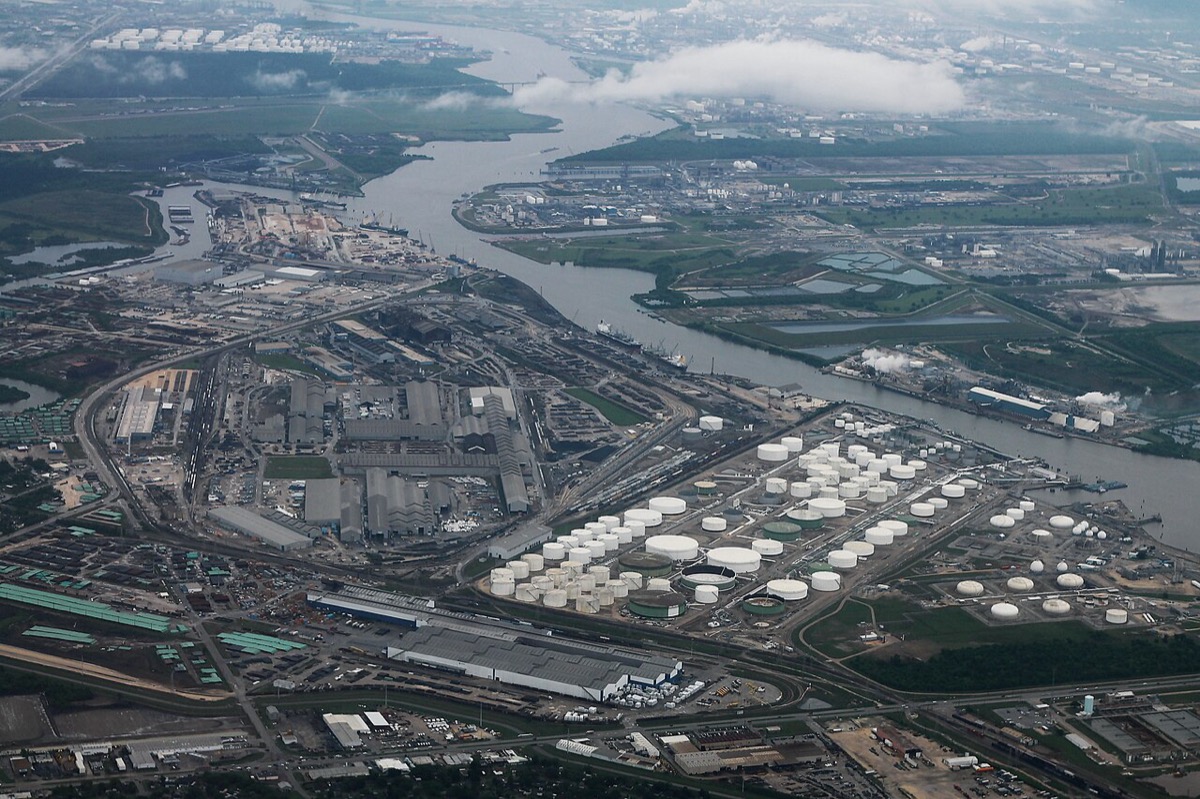
Worked landed cost per MT, representative specialty resin (HS 3909.20), Ningbo-Zhoushan to Melbourne
| Cost component | Q3 2025 (pre-Busan) | Q1 2026 (post-Busan) | Delta |
|---|---|---|---|
| FOB resin | $1,520 / MT | $1,520 / MT | $0 |
| Ocean freight all-in | $115 / MT | $108 / MT | -$7 |
| DG surcharge | $11.36 / MT | $11.36 / MT | $0 |
| Bunker / ETS | $26 / MT | $24 / MT | -$2 |
| Section 301 List 3 (25%, US re-export scenario) | $380 / MT | $380 / MT | $0 |
| Fentanyl IEEPA tariff (US re-export scenario) | $304 / MT | $152 / MT | -$152 |
| Reciprocal tariff (US re-export, down from 24% to 10%) | $365 / MT | $152 / MT | -$213 |
| Port of entry fees, MPF, HMF | $24 / MT | $24 / MT | $0 |
| Australian landed components | $242 / MT | $244 / MT | +$2 |
| Total landed US-delivered per MT | $2,987 | $2,615 | -$372 |
A $372 per MT reduction on US-delivered specialty resin is a 12.4 percent cost base improvement. On a 120-container annual programme (roughly 2,640 MT) that’s just under $982,000 of recovered margin. On the same SKU when sold into the Australian domestic market only, the landed cost per MT moves from $1,916 (September cornerstone number) to roughly $1,908, a small $8 per MT reduction via freight softening. The Busan deal is overwhelmingly a US-exposed importer story. Pure domestic Australian importers see modest freight-side benefits only.
Budgeting for 2026: three sourcing scenarios
Given the twelve-month clock and the compliance overhead that remains, there are three broadly reasonable 2026 sourcing postures. Each has different cost, risk and working capital implications.

Scenario A: bank the savings, hold the sourcing mix
Maintain current Chinese supplier mix at roughly 75 to 85 percent of volume, retain the existing forwarder and carrier panel, and bank the tariff reduction as margin through FY26. Working capital impact: nil. Risk: if the November 2026 deadline passes without extension, the tariff stack snaps back and you have no diversification in place. Probability of snapback based on current signals: 35 to 45 percent.
Scenario B: forward buy at the lower tariff, build a nine-month stockpile
Accelerate procurement through Q1 and Q2 2026 to build inventory against a potential Q4 2026 snapback. Working capital impact: significant, typically $2.4 to $4.2 million incremental inventory for a mid-tier Australian importer. Risk: over-extending into a market where Chinese suppliers may push FOB upward during the truce because they know demand is inelastic. FX risk if AUD/USD moves 3 to 5 percent against the position.
Scenario C: diversify 20 to 30 percent of volume to non-China sources
Use the twelve-month window to qualify non-China suppliers (India, Thailand, Vietnam, Malaysia, selected Gulf producers) on 20 to 30 percent of SKU volume, particularly on lower-complexity chemistry where qualification cycles are six to nine months. Working capital impact: moderate ($800K to $1.4M in qualification batches and safety stock). Risk: lower long-term, meaningful short-term execution burden. This is the Sourzi recommended posture for most importers with US-facing exposure.
2026 sourcing scenario comparison (mid-tier Australian importer, 240 container programme)
| Metric | Scenario A (Hold) | Scenario B (Forward Buy) | Scenario C (Diversify 25%) |
|---|---|---|---|
| FY26 tariff savings captured | $792K | $792K + hedge value | $594K (on remaining China) |
| Working capital required | $0 | $3.2M incremental | $1.1M |
| Snapback protection | None | 9 months | Ongoing |
| Supply risk if geopolitics reverses | High | Medium | Low |
| Execution complexity | Low | Medium | High |
| Recommended for | Thin-margin, single-market | Strong cash, domestic only | US-exposed, margin-rich |
EPA’s expanded import enforcement: the compliance-side counterweight
While tariffs loosen, EPA has been explicit that import enforcement tightens. The 7 November 2025 EPA announcement confirmed additional staffing at CBP partner ports with specific focus on four compliance streams. First, TSCA Section 13 import certifications are being spot-audited at higher rates, with a target of 15 to 20 percent of chemical entries reviewed (up from historic 5 to 8 percent). Second, PFAS reporting under the TSCA Section 8(a)(7) reporting rule, with the reporting deadline extended but enforcement prioritised. Third, the risk management rules on methylene chloride and trichloroethylene, with entry-level rejection of non-compliant shipments. Fourth, a new focus on the correct conditions-of-use declarations aligned with the September TSCA NPRM framework.
If you are running a US-delivered programme, the cost-benefit of the Busan tariff relief is real, but the enforcement burden on documentation and compliance is higher than it was six months ago. Budget additional $12 to $18 per MT in 2026 compliance overhead (SDS refreshes, CAS documentation, supplier attestations, GHS revision 10 certifications) on US-bound tonnage. It’s small relative to the tariff relief but it’s real and must be resourced.
The twelve-month clock: what to do in Q4 2025 and Q1 2026
The Busan suspension is a window. Depending on how you use it you either end 2026 stronger or caught out. A sensible Q4 2025 and Q1 2026 programme has six workstreams in parallel.
2026 sourcing workstream timeline
| Workstream | Target completion | Owner |
|---|---|---|
| Refresh top 20 SKU landed cost model with post-Busan numbers | End Nov 2025 | Commercial |
| Audit April 4 rare earth exposure on all BOMs | Mid-Dec 2025 | Technical |
| Qualify two non-China alternative suppliers per priority SKU | End Mar 2026 | Procurement |
| Refresh all TSCA Section 13 import certifications | End Feb 2026 | Compliance |
| Confirm IMDG 42-24 compliance on all DG bookings | 1 Jan 2026 | Operations |
| Rebid freight contracts with DG surcharge pass-through clauses | End Feb 2026 | Logistics |
If each of those workstreams has an accountable owner with a weekly check-in cadence, you’ll be through the critical path by early Q2 2026. If they don’t, you’ll be negotiating in June or July 2026 under pressure with no leverage and a live snapback risk.
Your next action this week
Three specific actions before the end of November. Run a refreshed landed cost model across your top ten SKUs using the post-Busan tariff stack, explicitly flagging your US-exposed versus domestic Australian volumes. Send a written request to your top five Chinese suppliers asking (a) whether any of your 2026 SKUs involve the April 4 seven rare earths, (b) whether they hold valid MOFCOM licences, and (c) whether they will commit to FOB stability through Q3 2026. Contract with your forwarder and carrier panel for freight terms that include explicit DG surcharge pass-through and an IMDG 42-24 compliance warranty, in writing, effective 1 January 2026.
The Busan deal is a real break. It’s just not a durable one. You’ve got twelve months to make the structural decisions that either compound the savings into FY27 and FY28 or see them evaporate in a snapback. Sourzi runs 2026 budget modelling, supplier diversification qualification programmes, and compliance overhead assessments for Australian chemical importers. If you want a post-Busan landed cost model, a rare earth exposure audit on your 2026 BOM, or a supplier diversification shortlist for your priority SKUs, contact us and we’ll turn it around inside ten business days.