Historical correction, 10 October 2026: The completed January volume was reported on 10 February 2025, after the preserved 16 January archive date. The 1 February tariff order and subsequent customs guidance are also later developments. The worked illustration below now separates customs value from international freight and reconciles its arithmetic. Selected port figures below now reference official statistics. Wells Fargo quotations, actual duty eligibility, freight and other cost inputs, and private experience remain unverified.
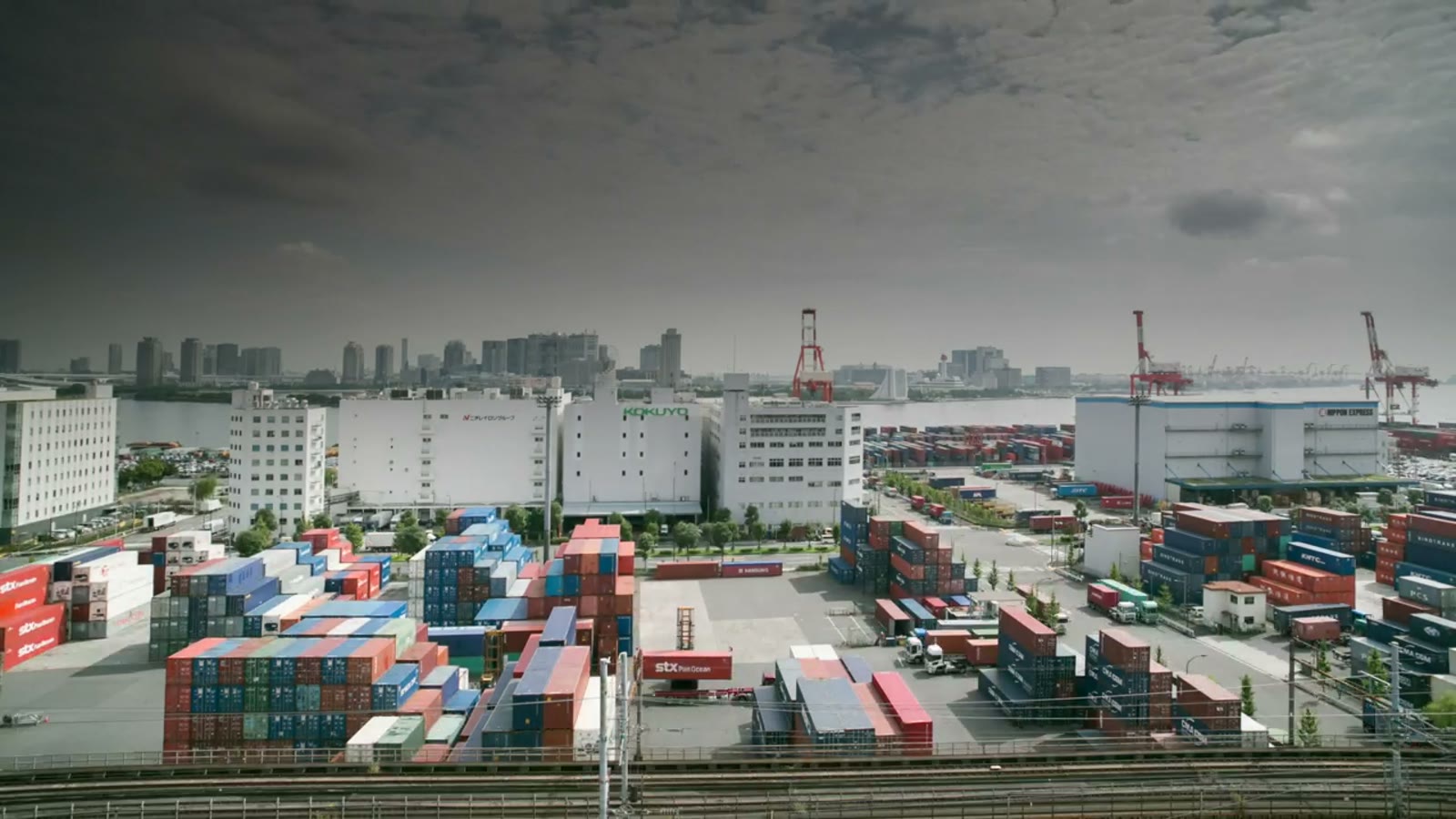
Descartes reported on 10 February 2025 that US container imports had reached 2,487,470 TEUs in January, a record for that calendar month. The completed January figure was not available on this article’s preserved 16 January archive date. The tariff order discussed below was signed on 1 February, rather than established by Day One orders. These dates do not prove the motives behind every importer’s shipment.
The Wells Fargo trade desk put numbers on what that actually looked like at the invoice level. Between 6 January and 13 January, Chinese supplier quotes on chemicals, electronics components, and mechanical parts into US buyers ran 20 to 25 per cent above the December contract average. Suppliers weren’t raising prices out of greed, though some were. They were pricing in the uncertainty of whether shipments loaded on 20 January would clear US customs before or after the 4 February effective date, and whether the tariff would be retroactive to on-water cargo (spoiler: it wasn’t, but nobody was certain on 10 January). So the quotes reflected a 20 per cent insurance premium against tariff exposure, and US buyers were paying it rather than gambling on January sailings hitting the 4 February wall.
If you’re reading this with chemical orders still open against Chinese-origin FOB terms, you have a short window to run the front-loading ROI. The Maersk and Hapag-Lloyd Ningbo-to-LA transit is 14 to 17 days on east-bound strings. Add three days at origin for container loading and stuffing, and four to six days for US customs clearance and final mile. An 18 January sailing date was not a statutory cutoff. Eligibility for the historical transit exception depended on the actual loading, final-transit and entry conditions described below.
The Record That Broke Under Tariff Pressure
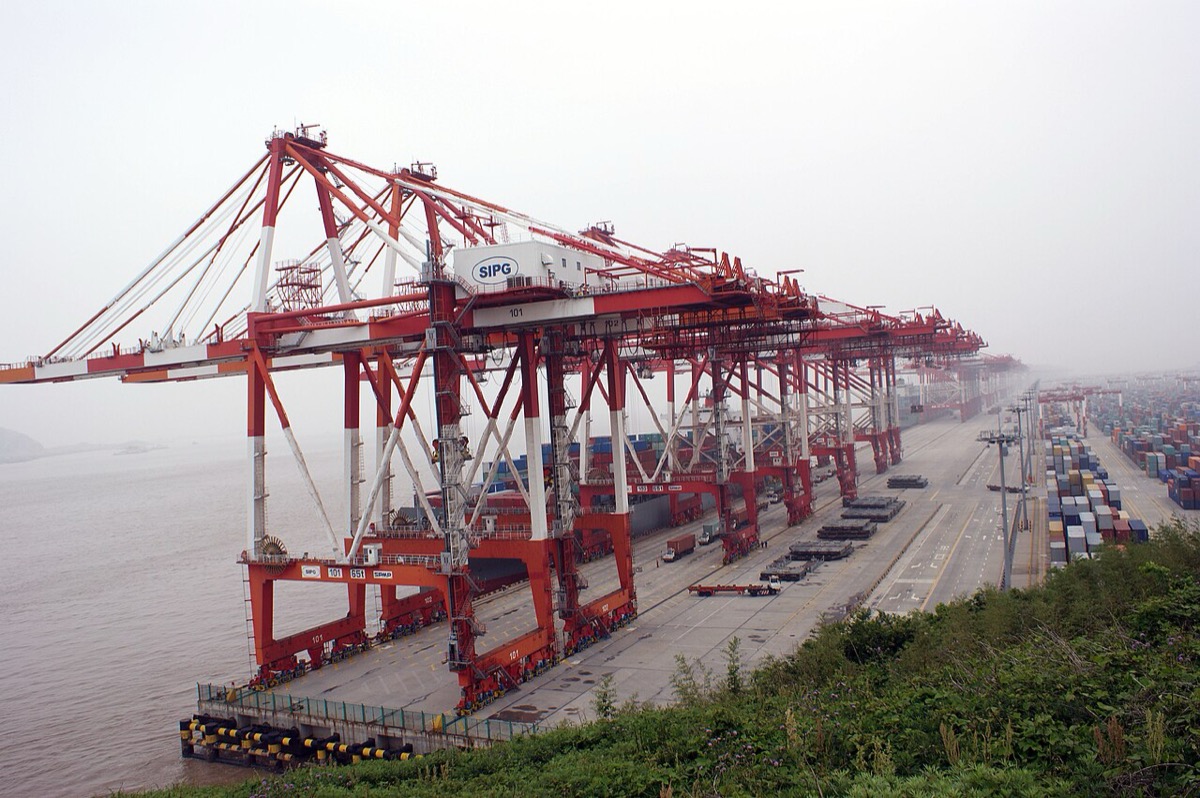
Descartes’ February report put January imports at 2,487,470 TEUs, up 5.1% month on month and 9.4% year on year. This was a record January, not the largest month of all time. The article’s former attribution to a 13 January NRF/Hackett report and its December 2.14 million/16% comparison were incorrect.
Use import measures rather than total port throughput. For January 2025, Los Angeles reported 483,831 loaded-import TEUs; New York and New Jersey reported 378,632 import TEUs, up 10.5% year on year. Savannah’s later full-year table records 206,405 loaded-import TEUs, down approximately 7.6% from December’s 223,497. Port Houston’s March 2025 table records 170,125 loaded-import TEUs, up approximately 13.9% from December’s 149,396. Houston’s figures cover its owned facilities and are unaudited, with estimates possible. These later publications do not establish chemical importers’ motives or a common statistical universe with the national Descartes series. The earlier LA/Long Beach combined figure and 22% monthly comparison, Savannah 540,000/18%, Houston 210,000/11% and NY/NJ 14% monthly comparison are withdrawn.
The capacity story is the real kicker. Drewry’s WCI spot index for Shanghai to LA moved from 4,570 USD per 40 foot equivalent on 2 January to 6,880 USD per FEU on 16 January, a 51 per cent spike inside two weeks. Hapag-Lloyd and Maersk both confirmed sold-out space on 20 and 27 January sailings ex-Ningbo and ex-Yangshan. CMA CGM imposed a peak season surcharge of 800 USD per FEU effective 15 January. If you were still calling your forwarder on 10 January asking about 24 January bookings, you were paying 7,200 to 7,800 USD per FEU all-in on a spot rate that was under 3,000 USD in October.
The 4 February Mechanics You Need to Understand
Executive Order 14195, signed on 1 February and published in the Federal Register on 7 February, invoked the International Emergency Economic Powers Act and the National Emergencies Act to impose a 10 per cent ad valorem tariff on all articles that are products of the People’s Republic of China, including articles from Hong Kong. The legal justification is the fentanyl crisis. The operational effect is that CBP applies the 10 per cent duty at time of entry summary filing on top of every existing Section 301 duty, every Most Favoured Nation tariff, and every AD/CVD in force.
Under the transaction-value method in 19 USC 1401a, the price actually paid or payable excludes costs of international transport, insurance and related services. Applicable additions and evidence still need review; “FOB plus freight” is not a universal US customs value. Where both a 25% and a 10% ad valorem duty apply to the same value, their combined amount is 35%, not a compounded 37.5%. The article has not established the classification or exclusions for every chemical example.
The historical transit exception was in section 2(a), not section 4. CBP guidance required qualifying loading or final transit before 00:01 EST on 1 February 2025 and consumption entry from 4 February but before 00:01 EST on 7 March. It did not exempt cargo regardless of its arrival or entry date. A sailing date alone does not establish eligibility.
A 10 per cent duty on a USD 500,000 dutiable value would be USD 50,000, but the historical exception depended on the full loading, transit, qualifying-entry and certification requirements. The aggregate January volume does not establish why each importer shipped or whether an individual parcel qualified.
The Front-Load ROI on Your Q1 Chemical Book
This historical comparison models holding, warehouse, financing and freight costs only where entry-specific eligibility for an applicable exception has first been established.
The following is a conditional arithmetic illustration, not a verified titanium-dioxide entry. Assume USD 2,480 per MT is the valid customs value, a 25% Section 301 rate applies in both cases, and only the second incurs the historical 10% IEEPA duty. Freight, insurance, fees and other costs remain unverified inputs. The earlier CFR quote and USD 3,720/3,990 prose totals did not match the table and are withdrawn.
| Cost line | Illustration A: eligible for historical exception | Illustration B: 10% duty applies | Delta |
|---|---|---|---|
| FOB Ningbo | 2,480 USD/MT | 2,480 USD/MT | 0 |
| Ocean freight | 220 USD/MT (pre-spike contract) | 280 USD/MT (spot reset) | +60 |
| Insurance, origin | 35 USD/MT | 35 USD/MT | 0 |
| Assumed Section 301 at 25% of customs value | 620 USD/MT | 620 USD/MT | 0 |
| Assumed IEEPA at 10% of customs value | 0 | 248 USD/MT | +248 |
| MPF, HMF | 12 USD/MT | 12 USD/MT | 0 |
| Broker, drayage, terminal | 48 USD/MT | 48 USD/MT | 0 |
| Sum of illustrative rows | 3,415 USD/MT | 3,723 USD/MT | +308 USD/MT |
The assumed rows sum to USD 3,415 and USD 3,723 per MT, a USD 308 difference comprising USD 248 duty and USD 60 freight. On 1,000 MT that is USD 308,000 before holding costs. This does not establish actual margin or eligibility from a sailing date. The stated USD 18-to-24 storage and roughly USD 16 financing estimates stated here are unverified planning inputs, not observed costs.
Assuming 45 days of average holding and USD 55 per MT in holding costs, the illustrative difference becomes USD 308 minus USD 55, or USD 253 per MT. For 1,000 MT that is USD 253,000. This conditional arithmetic does not prove a customs exemption, achievable savings or a permissible shipment deadline.
Longer holding can reduce an assumed saving, but the article has not established a universal nine-month break-even point or a 60-to-120-day optimum. Use verified costs, shelf life and actual entry eligibility for a transaction-specific comparison.
Where the Front-Load Logic Breaks Down
Three categories of chemical inputs where front-loading is the wrong move, and you should know which ones are on your list.
Temperature-sensitive or oxidation-sensitive materials with short shelf lives. Certain specialty amines, organic peroxides, and some biocides have 6 to 9 month usable windows before QC degrades. Front-loading a 3 month buffer on a 6 month shelf life chews through half your margin before the material reaches the compounder. Run the shelf-life math before the duty math.
For a hypothetical 20 MT purchase at USD 45/kg, a 10% duty difference on an assumed valid USD 900,000 customs value is USD 90,000. The stated USD 14,000-to-22,000 storage estimate is unverified, and neither actual exemption eligibility nor a lower ROI than the titanium-dioxide illustration has been established.
Materials where the Chinese supplier’s own front-load inventory is hitting FOB price caps. We watched this on polymeric MDI in the 8 to 14 January window. Wanhua and other major producers were running reactors flat out through the Lunar New Year shutdown to clear pre-tariff allocations, and some secondary traders tried to lift spot FOB by 8 to 12 per cent over contract. If your supplier’s FOB is already inflated by tariff-driven hoarding, you’re paying some of the tariff in FOB and the front-load ROI deteriorates accordingly. Benchmark against the Platts or ICIS weekly assessments before accepting the “rush” quote.
The Retaliation Question and Why It Changes Your March Planning
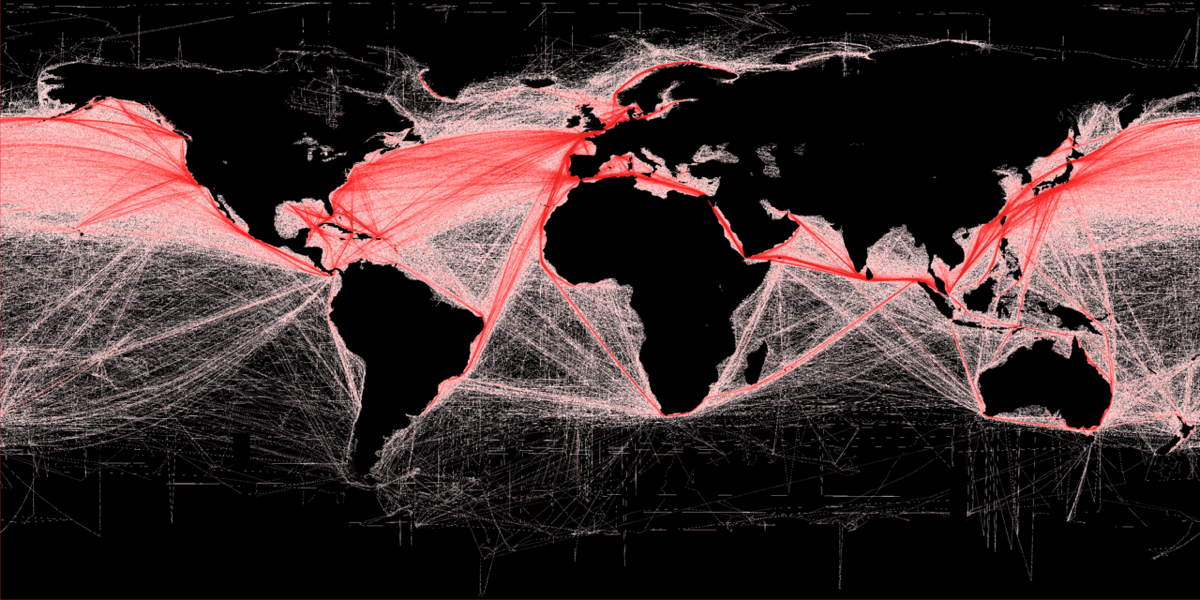
China’s Ministry of Commerce responded to EO 14195 with MOFCOM Announcement No. 10 on 4 February, adding tungsten, tellurium, bismuth, molybdenum, and indium to the export licence requirement list. That’s a separate problem, and we’ve covered the tungsten and tellurium fallout in detail in our 14 February post. But for front-loading logic specifically, the announcement tells you the trade war is not a one-off tariff adjustment. It’s the opening move in what’s likely to be a 12 to 18 month sequence of measure and counter-measure.
That means your front-load horizon shouldn’t stop at Q1 cover. If your inputs include any of the tungsten-tellurium-bismuth-molybdenum family, or any specialty chemistry that relies on those as precursors, the Q2 and Q3 supply risk is not a tariff question. It’s a licence approval question, and MOFCOM export licence processing for newly controlled materials historically runs 45 to 90 days for first-time applicants. Material moving through the pipeline now is material you can rely on. Material that needs a new licence issued in March is material you should assume won’t ship until June.
Tariff eligibility and export-licence requirements are separate checks. Later inventory planning cannot use the historical transit exception without meeting its original loading, transit, entry and certification conditions.
Your Next 14 Days
For historical entry review, reconcile loading, transit, consumption-entry and certification records against the applicable CBP requirements. The earlier recommendation to move cargo onto January sailings is withdrawn: the later reporting cited here does not establish a usable shipment instruction. April-to-June inventory planning did not extend the historical exception beyond its March entry deadline.
For any later inventory plan, obtain current warehouse, hazardous-goods handling and financing quotes. The article has not verified market-wide warehouse availability or shown that an April-to-June purchase would qualify for the historical tariff exception.
And for any MOFCOM-sensitive inputs, call your Chinese supplier on a Mandarin-speaking line and ask directly whether the export licence for your material is already issued or needs renewal. That one phone call is worth more than every analyst report you’ll read this month.
A transaction-specific review needs the original entry records, applicable tariff provisions and documented costs. The original call to contact Sourzi by 24 January is withdrawn and is not a current offer; the illustration is not proof of tariff savings.