Last Wednesday, President Biden and President Xi met for four hours at the Filoli Estate in Woodside, California, a country house about thirty miles south of San Francisco, and emerged with a joint readout that ran to roughly 2,300 words. They agreed to restore military-to-military communications that China cut after the Pelosi Taiwan visit in August 2022. They agreed to establish a formal working group on fentanyl precursor chemicals, with China committing to schedule specific precursors including 4-AP, ANPP, and norfentanyl under its own drug control regime. They agreed to open a senior-level dialogue on artificial intelligence safety and risk. There were two pandas, and the pandas got almost as many headlines as the policy.
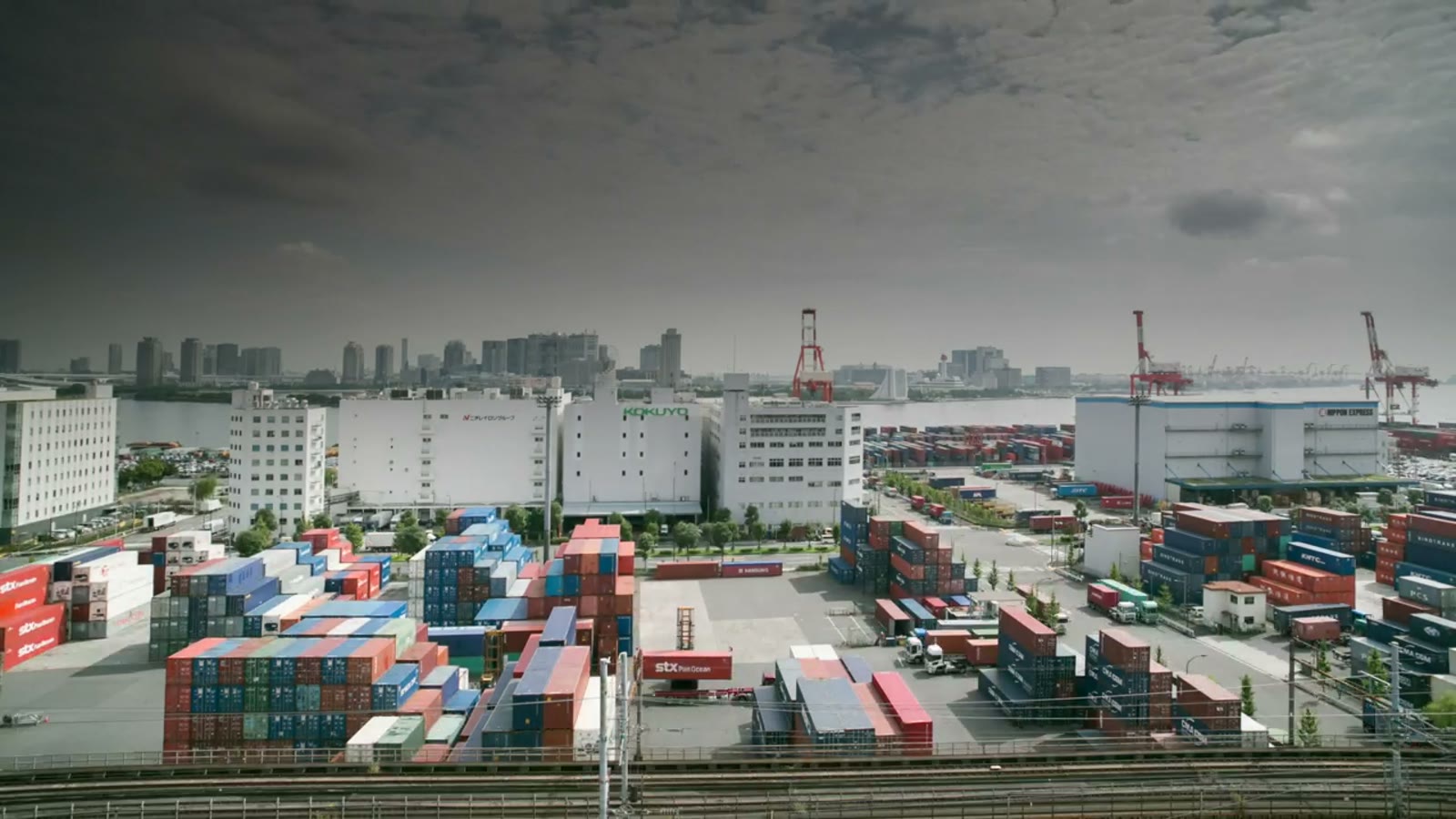
What the readout did not contain was any reference to Section 301. No tariff reduction. No expanded exclusion list. No tolling agreement to buy time on the four-year statutory review that USTR Katherine Tai has been running since September 2022. For US chemical importers who have been paying 25% ad valorem on List 3 and 7.5% on List 4A since 2018 and 2019 respectively, the Woodside summit delivered exactly nothing on the single trade-policy lever that actually affects landed cost.
That is not a surprise. It is a clarification. For two years, every importer with a forward-purchasing decision has been asking the same question: is the Biden administration going to roll back the Trump tariffs. After Woodside, the answer is clearly no, not in 2023, and almost certainly not in 2024 given the election calendar. If you have been delaying a long-term supply agreement with a Chinese supplier in the hope of tariff relief, you can stop waiting. Build the tariff into your base case and commit.

What the Readout Actually Said and What It Pointedly Did Not
The joint readout identified five deliverables. Restored military-to-military communications at the theatre commander level and senior policy level, with a first call expected within 30 days. Counternarcotics cooperation including the precursor scheduling just mentioned and a working group on illicit drug finance. An AI safety dialogue, with initial technical meetings expected in Q1 2024. Expanded people-to-people exchanges, including a target of 50,000 US students studying in China over five years. Agricultural trade cooperation, including commitments from Chinese importers to resume certain US agricultural purchases that had softened through 2023.
The readout contained standard language on Taiwan, with each side restating its long-held position. It contained language on South China Sea maritime safety. It contained language on North Korea and on Russia-Ukraine. What it did not contain was any of the following: a Section 301 tariff reduction, an expanded Section 301 exclusion process beyond the narrow COVID-related extension that USTR announced in September, a tolling or deferral of USTR’s four-year statutory review, any commitment from China on Phase One purchase shortfalls, or any reference to US export controls on semiconductor equipment or advanced chips.
Treasury Secretary Janet Yellen’s separate bilateral with Vice Premier He Lifeng, which ran parallel to the summit, produced a restart of the US-China Economic Working Group and the Financial Working Group, but those are talk-shops. They do not have authority to adjust tariff lines and have not produced trade-policy deliverables in the prior dialogue incarnations.
If you are a chemical importer trying to read policy signals, the signals from Woodside are that the security and humanitarian file is being stabilised and the trade file is being left exactly where it sits. List 3, List 4A, and every Section 301 exclusion that has not been specifically extended remain in force.
What You Are Actually Paying: A Landed Cost Walk-Through
Here is the arithmetic on a representative 20-foot container of List 3 chemical product, using isopropyl alcohol as the worked example. IPA from Chinese producers such as Zhejiang Xinhua or Shandong Dadi is a standard commodity import, and the HS classification 2905.12 falls within Section 301 List 3 at 25% ad valorem.
| Line item | Tariff in force, November 2023 | Hypothetical tariff rollback to MFN |
|---|---|---|
| FOB Shanghai Yangshan, USD/MT | 1,080 | 1,080 |
| Ocean freight Shanghai to Houston, USD per 20 ft (19 MT) | 1,680 | 1,680 |
| Freight per MT | 88.42 | 88.42 |
| Marine insurance, 0.12% of CIF | 1.40 | 1.40 |
| US customs duty, MFN (HS 2905.12.0050) | 0 | 0 |
| Section 301 List 3, 25% ad valorem on entered value | 270.00 | 0 |
| Harbor maintenance fee, 0.125% | 1.35 | 1.35 |
| Merchandise processing fee, 0.3464% capped | 3.74 | 3.74 |
| Drayage Port of Houston to Texas customer DC | 520 | 520 |
| Drayage per MT | 27.37 | 27.37 |
| Landed cost, USD/MT | 1,472.28 | 1,202.28 |
The Section 301 line in the left column is doing real work. It is USD 270 per MT of landed cost on a product with an FOB of around USD 1,080, which is a 25% uplift on the customs value and an 18% uplift on the landed cost. If you are running a 400-tonne per month programme, that is roughly USD 108,000 per month in Section 301 duty or USD 1.3 million per year. That duty is not coming back.
The “hypothetical rollback” column on the right is what Woodside did not deliver. If you have been building that right-hand column into your 2024 business plan, you need to move it to the left column by end of this week.
Why USTR Is Not Cutting Tariffs, in One Paragraph
USTR opened the statutory four-year review of the Section 301 tariffs in May 2022 and formal request-for-comment windows have run through 2023. Katherine Tai’s public posture has been that the tariffs are a strategic asset that creates leverage and that any adjustment must serve broader US economic and security objectives. In practice, that means selective. The September 2023 announcement extended the narrow COVID-era exclusions on 352 product categories through the end of 2023, but that is a fraction of the universe of tariffed lines and does not include the core commodity chemicals in List 3. The political reality through 2024 is that no US administration running for re-election will take a meaningful Section 301 cut into an election cycle against an opponent who has said publicly that he will raise tariffs further.
The industry coalitions that have filed for List 3 rollback, including the American Chemistry Council’s Section 301 working group and several downstream-user coalitions, have been told informally that USTR’s preliminary findings on the four-year review will be released in Q1 2024 but that the findings are unlikely to include broad rate reductions. Expect a narrow exclusion process, possibly re-expanded, and expect the core tariff structure to remain in place.
Where the Real Margin Comes From if Tariffs Are Not Moving
If the tariff is fixed, the question becomes what other levers actually reduce landed cost. Based on the work we’ve done with US chemical importers through 2022 and 2023, the real margin sits in four places.
First, classification review. A surprising number of imported chemical products sit on HS lines that could arguably be classified differently, and the tariff differential between two adjacent HS subheadings can be material. A Customs ruling request through the 19 CFR 177 process, filed before the next shipment, takes 30 to 90 days and is free. If you have not had your top ten imported SKUs reviewed by a licensed customs broker or trade counsel in the last two years, that is your first move.
Second, country-of-origin work. Section 301 applies to goods of Chinese origin. Substantial transformation in a third country, properly documented, changes the origin determination and removes the List 3 or List 4A liability. This is not a paper exercise. Substantial transformation must be real manufacturing activity that changes the name, character, or use of the article. For some intermediates, running the final reaction step or a specification-defining distillation in Thailand, Vietnam, or Malaysia is technically and commercially feasible. For others it is not. The work is to figure out which is which and what the capital cost of moving is against the duty saving.
Third, first-sale programme. If your Chinese supplier sells to a Hong Kong or Singapore trading intermediary which then sells to your US entity, under the right contractual and documentary structure you may be able to declare US customs value on the first-sale price rather than the second-sale price. The differential can run 5% to 15% of value. The documentation burden is real, and CBP has tightened first-sale enforcement, but for high-volume programmes it remains available.
Fourth, duty drawback. If any portion of your imported product is ultimately exported, either directly or embedded in a manufactured article, you can recover up to 99% of the duties paid. Drawback claims are three-year-lookback and there is real money sitting on the table for any importer whose finished products cross the border outbound. Section 301 duties are eligible for drawback.
The Fentanyl Precursor Angle Chemical Importers Should Watch
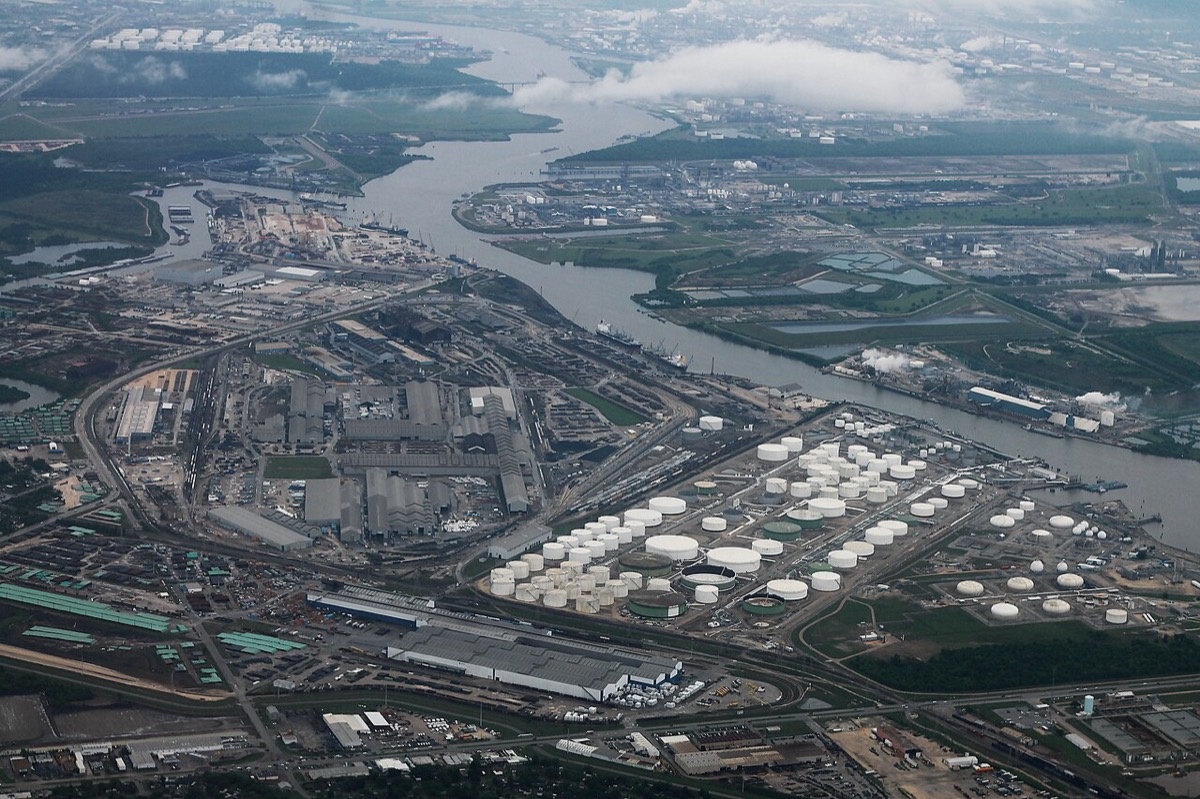
The one Woodside deliverable that could have a real chemical-industry impact over the next 12 months is the fentanyl precursor cooperation. China committed to schedule specific precursors under its own drug control regime, which means Chinese manufacturers and exporters of those precursors will need to obtain domestic licences to produce and export. In practice, that is an export licence regime layered on top of whatever currently exists.
The precursors named publicly include 4-anilinopiperidine (4-AP), N-phenyl-N-(4-piperidinyl)propanamide (norfentanyl), and several ANPP-family compounds. These are niche products and most legitimate chemical importers do not touch them. However, the broader class of piperidine chemistry overlaps with a range of pharmaceutical intermediates, agrochemical intermediates, and specialty chemical feedstocks. If your sourcing programme includes piperidine derivatives, N-methyl piperidine, or any Schedule I or II precursor analogues, expect your Chinese suppliers to face new licensing friction in 2024 and expect DEA and CBP to run more active inspections on incoming shipments of pharmaceutical intermediates with ambiguous end-use.
File a DEA registration review this quarter if you are in this space. Make sure your CAS numbers on customs entries are accurate, not rounded to a generic description. Build a two-source sourcing plan so that a single Chinese licence delay does not strand your US customer.
What the 2024 Election Calendar Means for Your Planning
The US election is on November 5, 2024. The relevant policy signal for chemical importers is that whichever candidate wins, Section 301 is unlikely to go down. Former President Trump has said publicly that he will impose a 10% universal baseline tariff on imports and that he will raise the Section 301 tariffs on Chinese goods to 60%. President Biden’s administration has said publicly that the current tariffs will remain as a strategic asset. Neither of those positions contains a downside scenario for importers.
The realistic distribution of 2024 outcomes for Section 301 chemical tariffs is: 60% probability that existing rates stay in place through 2024 and into 2025 under either administration; 30% probability that an expanded exclusion process is announced in Q1 or Q2 2024 under a second Biden administration; 10% probability of a material escalation under a second Trump administration that takes List 3 from 25% to 50% or higher. The median outcome is “no change.” The downside tail is “materially worse.” The upside tail is “narrow exclusions.”
That distribution means you should be planning 2024 budget with List 3 duties at current levels as the base case and with a 10% to 15% contingency for possible escalation. Do not plan any line item that assumes a rollback.
The Australian Consultancy Angle for Australian Companies with US Operations
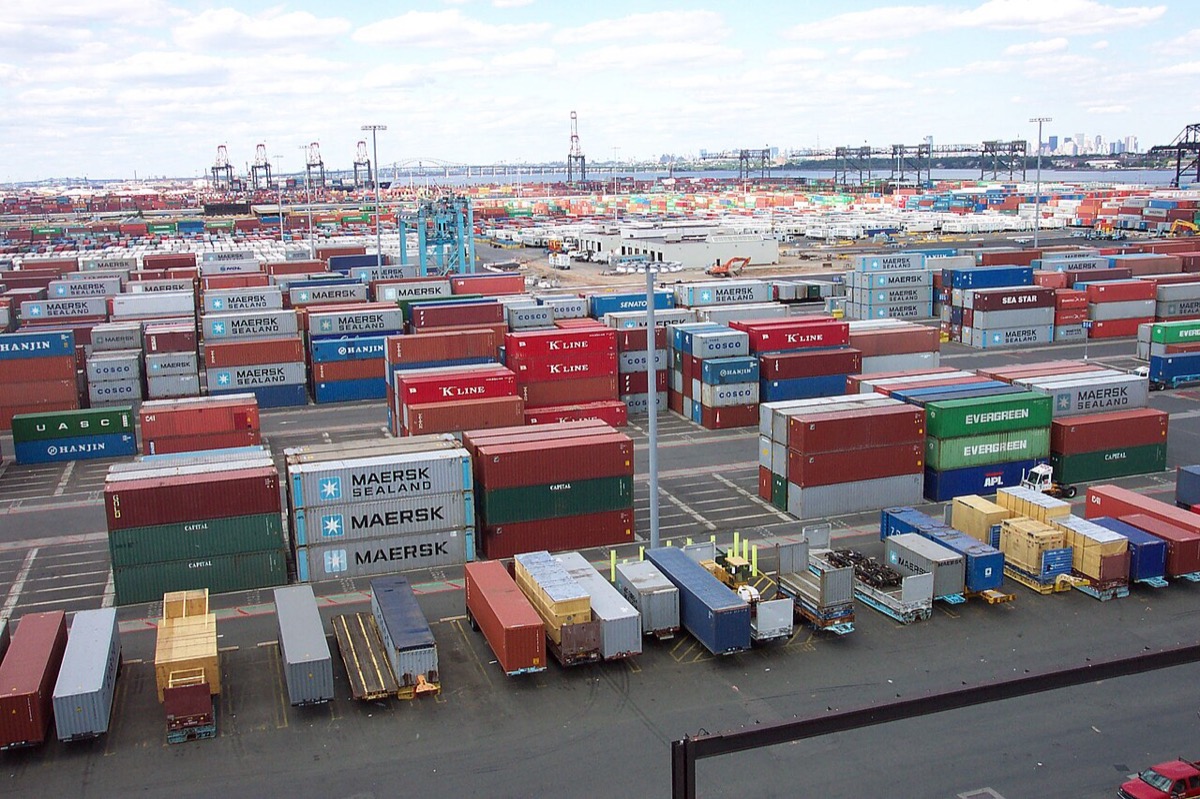
If you are an Australian industrial chemical company with US customers, US-based distribution, or a US subsidiary importing Chinese-origin feedstock, Woodside changes nothing for you and it confirms what you should already be budgeting. The Australia-US Free Trade Agreement does not shield a Chinese-origin product that transits Australia. If your product is substantially transformed in Australia before export to the US, the origin becomes Australian and Section 301 does not apply. If your product is merely repackaged or consolidated in Melbourne before transshipment to Long Beach or Houston, it remains Chinese origin and the 25% applies.
For Australian distributors selling Chinese-origin chemicals into the US market, the margin pressure is real and growing. The Australian dollar at roughly 0.65 against the US dollar this week, combined with the 25% Section 301 hit, means your effective cost of Chinese-origin product landing in a US warehouse is meaningfully above what a US domestic producer can offer on regional product. This is the environment where an Australian consultancy view on sourcing alternatives, origin strategy, and classification work earns its keep.
Action List Through Year-End
Before November 30: audit your top twenty imported SKUs by Section 301 duty exposure and identify which have seen Customs rulings in the last 24 months. Book classification review on the top five.
Before December 15: file any Section 301 exclusion requests for specific end-use cases that might qualify under the narrow COVID-era or supply-chain resilience exclusion categories. USTR has kept a narrow filing window open.
Before December 31: initiate duty drawback claim work for any 2021, 2022, or 2023 exports that embed Chinese-origin dutiable chemical inputs. The three-year statute runs from entry date.
Before January 31: formalise your 2024 budget with Section 301 duty as a fixed line item at current rates, with a 10% to 15% escalation contingency, and build your pricing to customers on that basis.
If you want a specific review of your top five imported HS lines and a written view on whether classification, origin, or drawback strategy can reduce your duty exposure, send your tariff schedule and last four quarters of entry summaries through our contact form. The Filoli pandas were charming. The tariff is still 25%. Build around that.