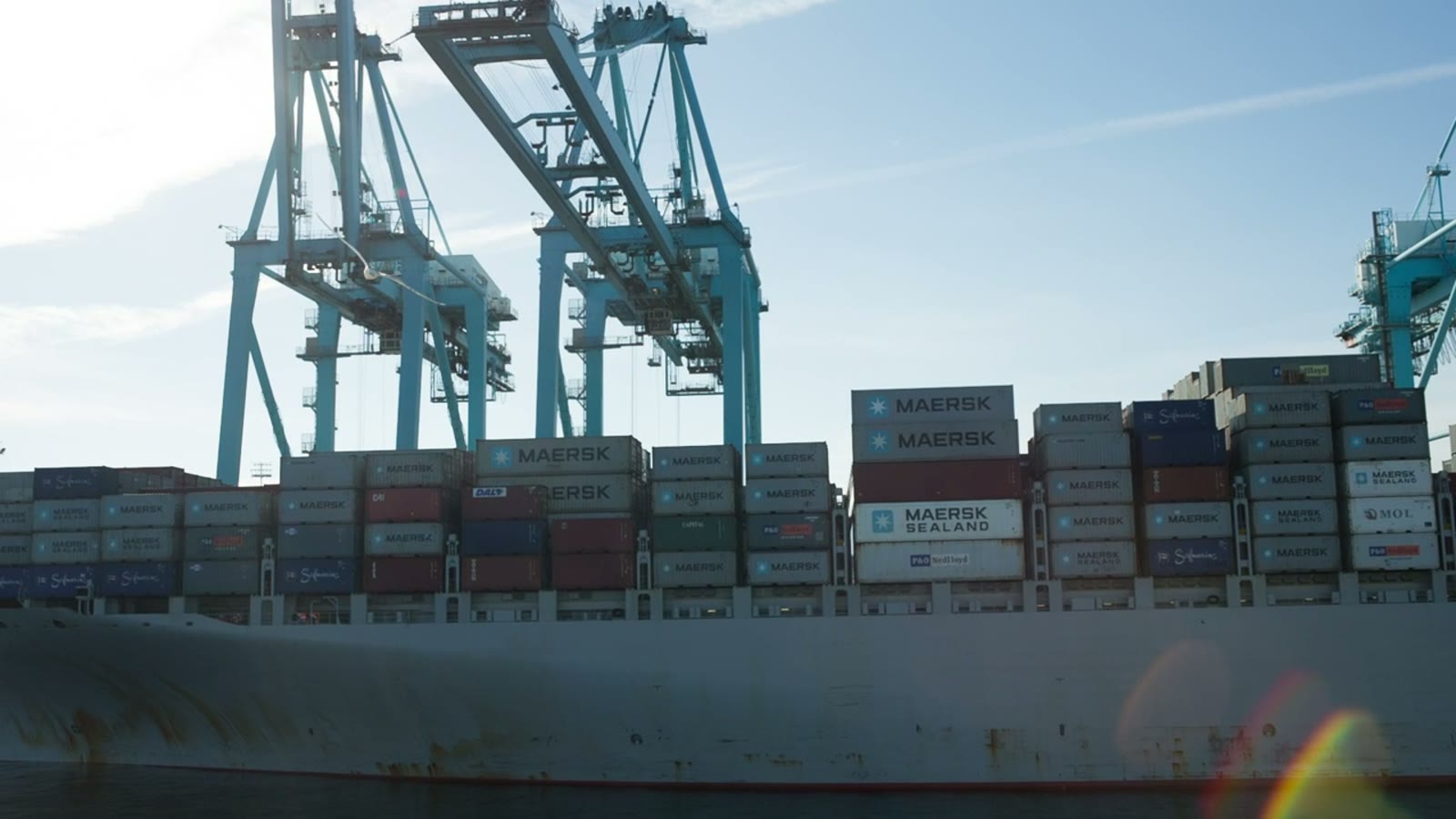
The Panama Canal Authority quietly tightened draft limits again this month, and if you’re moving chemical drums or isotanks from Shanghai or Ningbo to Savannah, Charleston, or New York, you’ve already felt it in your landed cost model. Gatun Lake, the freshwater reservoir that feeds every lock transit, is sitting well below its five-year average for March, and the ACP has started metering how deep a vessel can load before it’s allowed through. That translates directly into surcharges, booking delays, and in some cases a full re-routing decision you’ll need to make before your next purchase order lands.
We’ve run the numbers on a standard 20-foot isotank of a commodity solvent moving from Yangshan to Savannah, and the delta is real. You’re looking at roughly 14 extra days of transit if your carrier diverts around Cape Horn or through Suez, and somewhere between $650 and $900 in additional freight and handling per container depending on the carrier and the week you booked. That’s not a rounding error. On a 20-container order, you’ve just added $16,000 to a deal you priced six weeks ago.
This post walks through what’s actually happening at Gatun Lake, why chemical cargo is getting hit harder than dry containerised freight, what the landed cost math looks like with real numbers, and what you should be doing right now if you’ve got Q2 and Q3 orders still open with Chinese suppliers.
Why Gatun Lake Matters More Than the Canal Itself
The Panama Canal isn’t a sea-level waterway. Every ship that transits is lifted 26 metres up into Gatun Lake, carried across the lake, and then dropped back down to the other ocean. Each lock cycle uses about 200 million litres of fresh water, and that water comes from Gatun Lake and Alajuela Lake. When rainfall in the canal watershed drops, the ACP has exactly two levers to pull: reduce the number of daily transits, or reduce how deep each vessel can load. They’ve pulled both.
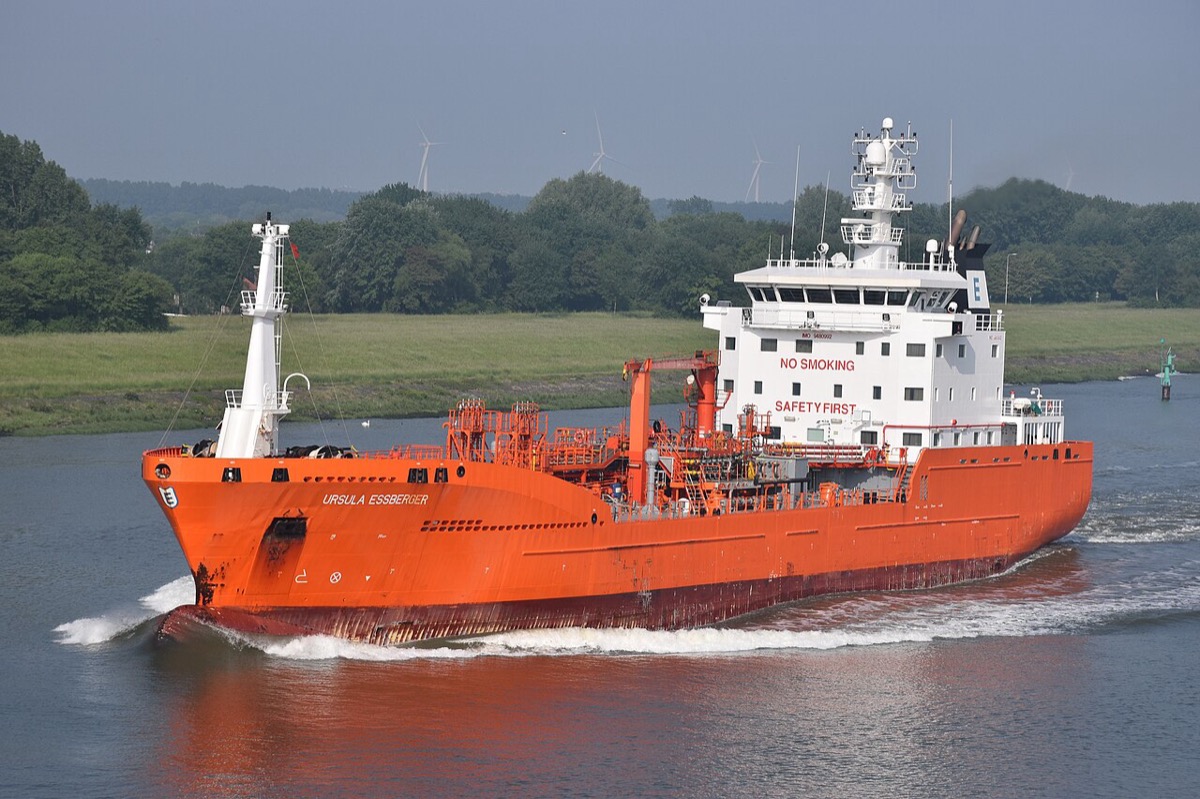
As of this week, the maximum authorised draft for Neopanamax locks has been cut to 13.41 metres (44 feet), down from the standard 15.24 metres (50 feet). For chemical tankers and product tankers carrying liquid cargo in bulk, draft is the binding constraint, because the cargo itself sits below the waterline. A 50,000 DWT chemical tanker that would normally load to 14.5 metres is now either leaving Houston or Corpus Christi partially loaded, paying a significant lightering premium to transfer cargo to a second vessel, or routing the long way around.
For container ships carrying your drums, IBCs, and isotanks on deck and in holds, the impact is indirect but still painful. Carriers are reducing TEU counts per transit to meet the draft restriction, which means less space available on any given string, which means spot rates are firming and bookings are tightening. Hapag-Lloyd, Maersk, and CMA CGM have all issued Panama Canal surcharge notices in the past fortnight, and more are coming.
What the ACP Drought Surcharges Actually Look Like
The surcharge structure is layered, which is why it’s easy to miss until you get the invoice. There’s the base Panama Canal transit toll, which every ship pays and which already went up 5% on 1 January. On top of that, there’s the Freshwater Surcharge, which the ACP introduced in 2020 and which scales with Gatun Lake levels. Then the carriers are layering their own Panama Canal Surcharge, Low Sulphur Surcharge adjustments, and in some cases a Drought Contingency Surcharge that’s separate from the ACP’s own fee.
Here’s what you’re actually paying as of this week on a standard 20-foot isotank from Shanghai to Savannah via the Panama route:
| Charge component | Normal conditions | March 2023 with drought | Delta |
|---|---|---|---|
| Base ocean freight (FAK rate) | $2,850 | $3,100 | +$250 |
| Panama Canal transit surcharge | $125 | $310 | +$185 |
| Freshwater surcharge (ACP) | $40 | $165 | +$125 |
| Drought contingency (carrier) | $0 | $150 | +$150 |
| Low sulphur adjustment | $180 | $215 | +$35 |
| Documentation and handling | $285 | $320 | +$35 |
| Total landed freight per isotank | $3,480 | $4,260 | +$780 |
That $780 delta is the floor, not the ceiling. If you’re moving a hazardous liquid classified under IMO class 3, 6.1, or 8, you’re paying an additional hazmat handling fee that’s also risen by roughly 8% in the past six weeks because fewer carriers are willing to accept the slot risk.
The 14-Day Transit Penalty and Why It’s Compounding
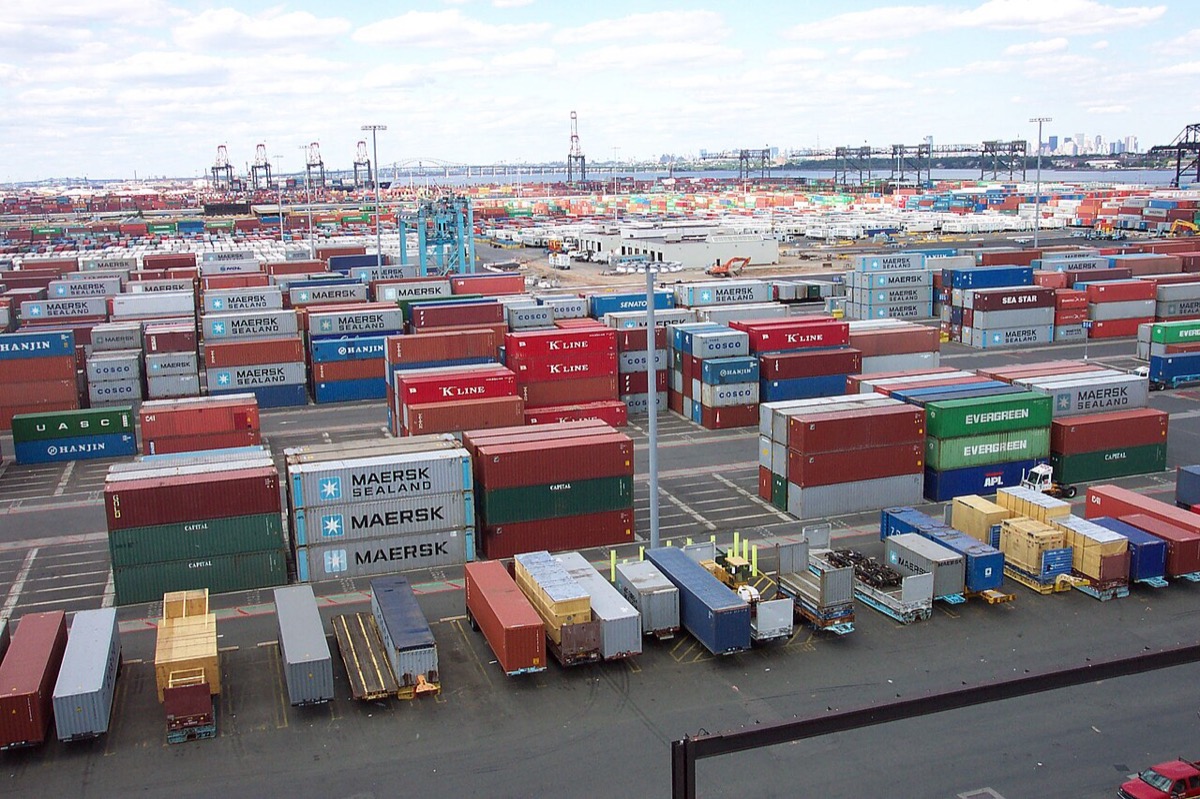
The direct transit penalty from drought-driven slower Panama transits is roughly 3 to 5 days. Vessels are queuing longer at Cristobal and Balboa, sometimes waiting 72 to 96 hours for their booked transit slot because the ACP has cut daily bookings from 36 to 32. That’s the visible delay.
The invisible delay is the re-routing cascade. A decent chunk of chemical tanker tonnage that would normally route Asia-to-USEC via Panama is now routing via Suez or, for the heaviest-laden product tankers, around the Cape of Good Hope. Suez routing adds roughly 8 to 10 days to an Asia-USEC voyage. Cape routing adds 14 to 18 days. When those vessels come out of the Panama rotation, the carriers rebalance by pulling container tonnage off other strings, which means your scheduled departure from Yangshan can quietly slip by 5 to 7 days as the carrier reshuffles.
We had a client last week whose booking from Ningbo to Charleston, confirmed 30 January for 12 March sailing, got rolled twice. It finally sailed 22 March. That’s a 10-day slippage before the vessel has even left Chinese waters, and then the transit itself runs 3 days long. Final delivery pushed from 18 April to 5 May. Seventeen days late on a contract with a 14-day grace period.
Which Chemicals and HS Codes Are Getting Squeezed Hardest
Not every chemical import is equally exposed to Panama routing. If you’re buying inland from the US Gulf and distributing via Houston, your supply chain never touches the canal. If you’re on the US West Coast pulling from China, you’re unaffected. The pinch point is specifically East Coast and Gulf Coast importers who’ve historically relied on all-water Asia-to-USEC routing because it’s cheaper than transloading in LA/Long Beach onto rail.
The categories we’re seeing most affected:
- HS 2901 and 2902 hydrocarbons, particularly benzene, toluene, and xylene isotanks moving from Sinopec and CNOOC terminals
- HS 2915 and 2916 carboxylic acid derivatives, which ship heavily as drummed product
- HS 2917 dicarboxylic acid esters including phthalate plasticisers from Wanhua and LG Chem Chinese joint ventures
- HS 3208 and 3209 coatings and paint resins, which move as IBCs and drums
- HS 3824 mixed chemical preparations, a catch-all category that includes a lot of specialty blends
If your PO is against a Chinese supplier and your incoterms are FOB Shanghai, FOB Ningbo, or FOB Qingdao, you own the ocean leg and you’re the one absorbing these surcharges. If you’re CIF or DDP, the supplier or their forwarder is absorbing them in theory, but expect a renegotiation conversation within 30 days.
The Landed Cost Worked Example You Can Actually Use
Let’s run a realistic scenario. You’re bringing in 20 isotanks of a plasticiser, CAS 117-81-7 (DEHP), from a Wanhua-adjacent supplier in Ningbo to your distribution point in Atlanta via Savannah. Your FOB price is $1,420 per metric tonne, each isotank holds 20 MT, so the goods value is $568,000 for the shipment.
Before the drought surcharges hit, your landed cost per MT looked like this:
| Cost component | Per MT | Per isotank (20 MT) | Per shipment (20 tanks) |
|---|---|---|---|
| FOB goods | $1,420 | $28,400 | $568,000 |
| Ocean freight Shanghai-Savannah | $174 | $3,480 | $69,600 |
| US customs duty (6.5%) | $92.30 | $1,846 | $36,920 |
| Section 301 List 3 (25%) | $355 | $7,100 | $142,000 |
| MPF and HMF | $8.50 | $170 | $3,400 |
| Customs brokerage | $12.50 | $250 | $5,000 |
| Inland drayage Savannah-Atlanta | $35 | $700 | $14,000 |
| Total landed per MT | $2,097.30 | $41,946 | $838,920 |
Now add the drought delta. Ocean freight moves from $3,480 to $4,260 per isotank. That’s an extra $780 per tank, $15,600 on the shipment, or $39 per MT. Your new landed cost per MT is $2,136.30 instead of $2,097.30. If your customer contract is a cost-plus with a 12% margin floor, you’ve just eaten roughly one-third of a percentage point of margin on this order. If it’s a fixed-price contract signed in January, you’re eating the whole thing.
And that’s before you’ve factored in the delay cost. Seventeen days of demurrage risk at Savannah runs $175 per day per container if you blow past your free time window. Twenty containers at seventeen days is a theoretical $59,500 demurrage exposure. You probably won’t hit all of it, but even 30% of that number is $17,850 you didn’t budget for.
What Your Options Actually Are
You’ve got four plausible moves, and the right one depends on your volume, your contract structure, and how much inventory flexibility you have.
First, you can re-route through the US West Coast and transload. Book Shanghai to LA/Long Beach, land there, then move by rail to Memphis or Chicago and truck the last leg. This adds $900 to $1,400 per container in transload and rail costs, but it takes Panama entirely out of the equation. For high-value specialty chemicals where the delay cost exceeds the transload cost, this is often the right call right now. Coordinate with a licenced hazmat forwarder because not every US West Coast transload facility will handle IMO class 3 or 6.1.
Second, you can switch to Suez routing on a carrier that’s already rebalanced. Hapag-Lloyd’s FE4 and Maersk’s TP7 strings are both running reliable Asia-USEC via Suez as of this week. Transit is longer, but it’s predictable, and the all-in cost is currently within $200 of the Panama-routed rate including the drought surcharges. Predictability matters for JIT customers.
Third, you can renegotiate incoterms for your Q2 and Q3 orders. Pushing from FOB to CIF or DAP moves the ocean leg risk back to the supplier. Chinese chemical suppliers, particularly the larger ones like Wanhua, Sinopec, and the Formosa Ningbo facility, have been reasonably accommodating on this in the past fortnight because they’d rather eat some freight volatility than lose the PO.
Fourth, you can buffer inventory. If your warehouse has capacity and your balance sheet can carry the working capital, front-loading a larger order now at the current FOB and current freight lets you average down against the worse freight you’re likely to see in Q3 if the drought continues. The ACP has already signalled that restrictions will remain in place at least through the dry season, which runs into May in Panama.
The Next 60 to 90 Days Are the Window
Here’s what we’d be doing this week if we were sitting in your chair. Pull every open PO with a Chinese origin and a US East Coast or Gulf Coast destination. Flag anything sailing after 1 April. For each one, run the landed cost delta with the current drought surcharge schedule and compare against a US West Coast transload scenario. For anything where the transload math wins or breaks even, start the conversation with your forwarder now, before West Coast slot space tightens too.
Talk to your customers. The importers we see getting hurt worst are the ones who’ve quietly absorbed the surcharges without having the pricing conversation with their downstream buyers. The drought is public, the ACP restrictions are public, and your customers are reading the same shipping press you are. A well-framed conversation about index-linked pricing or a drought-specific surcharge pass-through is much easier to have now than it will be in June when the numbers are worse.
And start building a Q4 scenario that assumes this doesn’t resolve. The Panama Canal watershed rainfall forecast for the rest of the wet season is below normal. Gatun Lake recovery, even with a normal wet season starting May, is a multi-month process. Plan for these surcharges to still be in the freight rate in October, and plan for them to deepen before they ease.
Your next concrete action: get a revised landed cost quote from your forwarder this week, with the current surcharge schedule applied, and compare it line by line to the quote you had 60 days ago. If you don’t know exactly where your $800 per container has gone, you can’t push back on it with your customers, and you can’t price your next contract correctly.