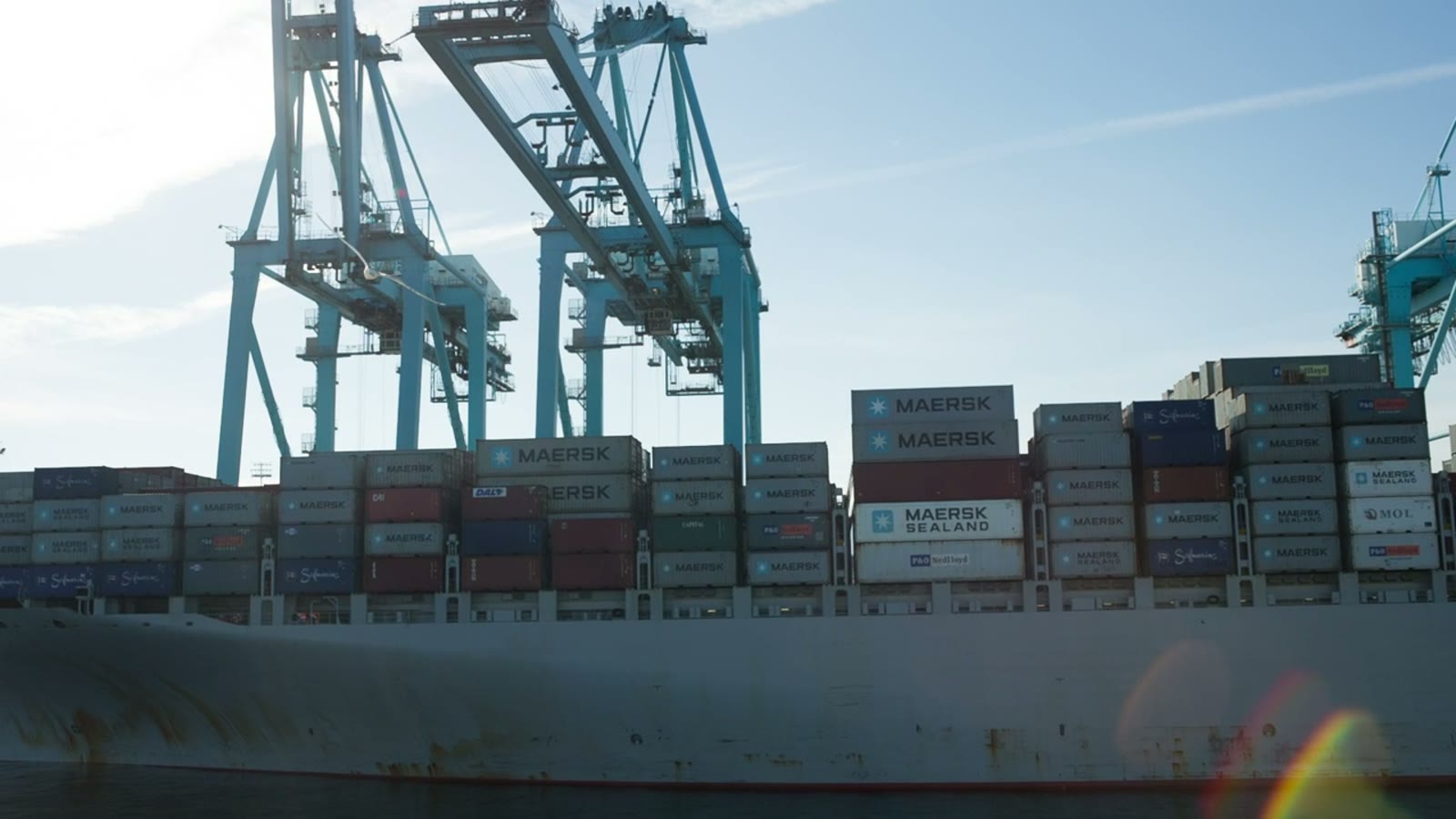
At 0128 local time on 26 March, the 9,962 TEU container vessel Dali lost power on its way out of Seagirt Marine Terminal and drifted into the southern support column of the Francis Scott Key Bridge. The span came down across the Patapsco River shipping channel in seconds. The Port of Baltimore is now fully closed to vessel movements, and the Coast Guard has told the industry to expect weeks, not days, before any controlled transit resumes. If you’ve got chemical cargo routing through Baltimore, or if you’re an East Coast importer who thought you didn’t, this event has already moved your landed cost.
Baltimore isn’t the biggest container port on the US East Coast, but it’s the largest ro-ro cargo port in the country and it handles a material share of US bulk fertiliser and specialty chemical imports. We’re looking at somewhere between 10 and 15 per cent of national ro-ro volumes, a big chunk of East Coast potash and urea imports from Morocco and the Baltic, and a steady stream of isotank and drum chemical cargo that moves on the container strings calling Seagirt. Every tonne of that is now being diverted, and every diversion is adding between $400 and $600 per container to landed freight before anyone’s even talked about demurrage.
This post walks through what the shutdown actually looks like on the water, where your cargo is being diverted to, what the real rerouting cost is per container and per metric tonne, and the short list of actions you need to run this week if you’re carrying open purchase orders into any East Coast port.
What’s Actually Happening at the Port of Baltimore
The channel is blocked. The main Fort McHenry shipping lane sits under the collapsed span, and the Dali is still wedged against the wreckage with containers stacked on its bow. The Army Corps of Engineers and the Coast Guard are running a coordinated salvage operation, but the sequencing is slow by design because the bridge steel has to come off in a way that doesn’t drop more debris into the channel or damage the hull of the Dali further. The initial Coast Guard guidance is that a limited, escorted alternate channel for shallower-draft vessels might be opened within two to four weeks. Full channel restoration is measured in months.
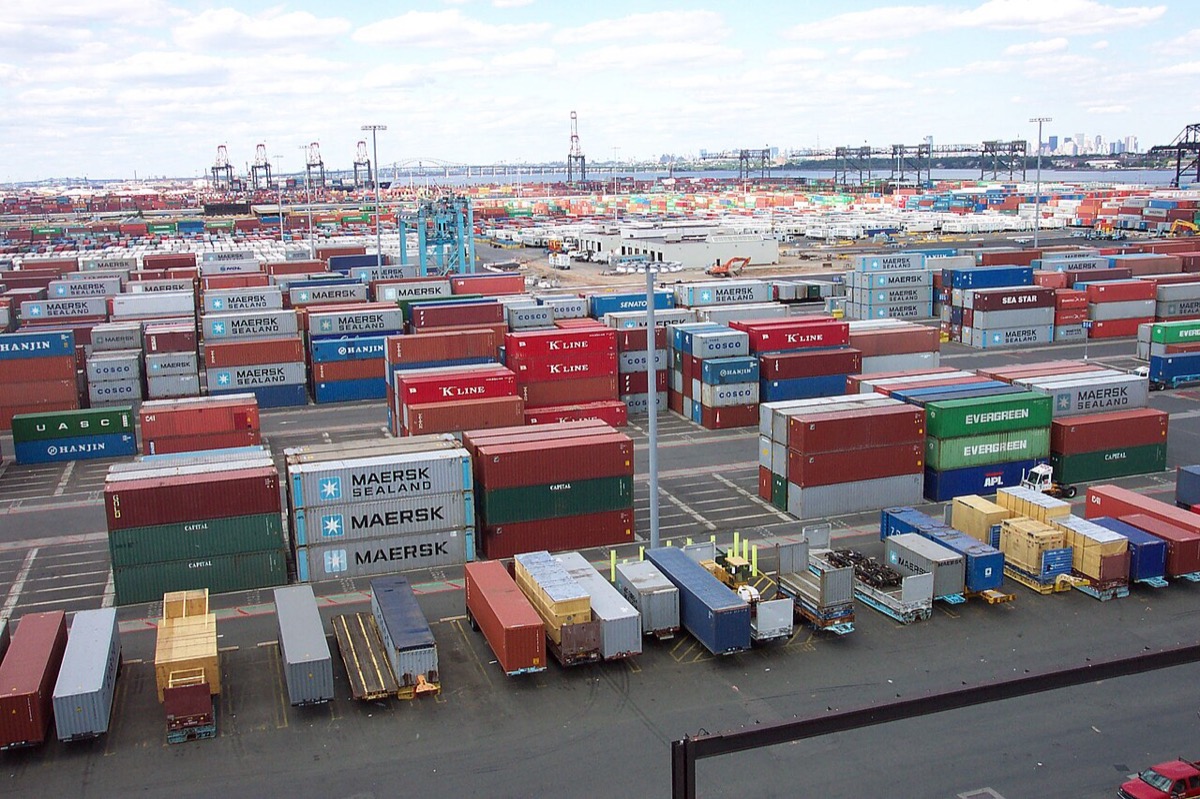
Inside the harbour, there are vessels that were already berthed when the bridge came down. Those ships are trapped. A handful of bulk carriers and car carriers at Sparrows Point and Dundalk are sitting idle, and the carriers holding cargo bookings against Seagirt have already declared force majeure and started omitting Baltimore from their rotations. Maersk was first to issue a customer advisory on the morning of 26 March, followed within hours by MSC, CMA CGM, Hapag-Lloyd, and COSCO. Every one of them is diverting current voyages to either Norfolk, Philadelphia, or New York/New Jersey.
For chemical importers specifically, the immediate problem is twofold. First, the physical cargo that was meant to land in Baltimore has to go somewhere, and the receiving ports are already running hot. Norfolk has capacity but limited hazmat lane space. Philadelphia handles a lot of niche chemical traffic but has tighter gate windows. NY/NJ has the scale but also the most congestion. Second, the inland logistics leg that was built around Baltimore, including the trucking networks into Pennsylvania, Ohio, and the broader mid-Atlantic, has to rebuild itself around new port entry points, and carrier rates into those lanes are already firming.
Where the Cargo Is Going and What It’s Costing
Here’s the rerouting picture based on the carrier advisories and the bookings we’ve reviewed for clients this week. The choice of alternate port depends on the carrier string, the final inland destination, and in some cases the hazmat classification of the cargo. Norfolk is taking the bulk of diverted container ships on the southerly Asia-USEC strings. Philadelphia is absorbing a lot of the northbound European chemical tanker and drum cargo. NY/NJ is soaking up the remainder, particularly on the transatlantic strings from Rotterdam, Antwerp, and Hamburg.
The cost delta varies by lane, but the shape is consistent. You’re paying more for ocean freight because carriers are rebalancing tonnage. You’re paying a disruption surcharge that most carriers are calling a Baltimore Diversion Fee or Port Omission Fee. And you’re paying meaningfully more for inland drayage and trucking because the alternate port is further from your final destination than Baltimore was.
| Rerouting lane | Alternate port | Added ocean freight | Carrier diversion fee | Extra inland per container | Total added cost |
|---|---|---|---|---|---|
| Shanghai-Baltimore to Shanghai-Norfolk | Norfolk | $180 | $175 | $85 | $440 |
| Rotterdam-Baltimore to Rotterdam-Philadelphia | Philadelphia | $210 | $150 | $120 | $480 |
| Antwerp-Baltimore to Antwerp-NY/NJ | NY/NJ | $240 | $175 | $195 | $610 |
| Hamburg-Baltimore to Hamburg-Philadelphia | Philadelphia | $195 | $150 | $145 | $490 |
| Ningbo-Baltimore to Ningbo-Norfolk | Norfolk | $175 | $175 | $95 | $445 |
Those figures are per 40-foot container or equivalent isotank. If you’re moving drummed hazmat in less-than-container-load configurations, the delta is worse because hazmat LCL consolidators are scarcer at Norfolk and Philadelphia than they were at Baltimore, and the ones that do exist are raising rates. We’ve seen hazmat LCL quotes up 18 to 25 per cent week-on-week for chemical cargo into alternate East Coast ports.
There’s a second cost layer that’s harder to pin down in a table, which is the inland lead time. A container landing at Norfolk that was meant to go to a warehouse in Harrisburg now drives an extra 280 kilometres. A container landing at NY/NJ that was meant to go to Pittsburgh now runs an extra 180 kilometres. Every one of those runs burns an extra driver day at roughly $2.50 to $3.00 per loaded kilometre all in, and the driver availability itself is tight because the trucking community hasn’t had time to rebalance against the new port mix.
The Fertiliser and Bulk Chemical Exposure Nobody’s Talking About Yet
Most of the headlines about Baltimore have focused on cars, because Baltimore is the biggest ro-ro port in the country and the automotive industry has an obvious exposure. But for chemical importers, the quieter story is fertilisers and bulk chemicals. Baltimore is a significant entry point for potash from Canada and the Baltic, urea from the Middle East and North Africa, and ammonium sulphate from a mix of origins. The agricultural planting season in the mid-Atlantic and the Midwest runs through April and May, which means the timing of this closure is about as bad as it gets for the ag supply chain.
On the specialty chemical side, Baltimore handles meaningful volumes of HS 2814 ammonia, HS 3102 and 3105 mineral fertilisers, HS 2827 chlorides, and HS 2836 carbonates. It also handles a steady flow of HS 3824 mixed chemical preparations and HS 2917 plasticiser precursors moving from European and Asian suppliers into mid-Atlantic formulators. If your business buys any of those HS categories and lands them through Baltimore, you need to be on the phone with your forwarder today, not next week.
The rerouting isn’t just about ocean freight. Bulk fertiliser that would normally discharge at Baltimore’s Fairfield Marine Terminal often can’t simply redirect to another East Coast port because not every port has the receiving infrastructure for the specific commodity. Norfolk can handle some bulk fertiliser but has limited storage relative to Baltimore. Philadelphia and NY/NJ have even less. Some of this tonnage is being rerouted all the way to Savannah or to the Gulf Coast, which pushes the inland leg into economics that, for low-value fertilisers, can make the shipment marginally uneconomic.
The Landed Cost Worked Example You Can Actually Use
Let’s run a realistic scenario. You’re importing 40 isotanks of a specialty polyol, CAS 25322-69-4, from a European supplier via Antwerp into your formulation plant in Reading, Pennsylvania. You booked Antwerp-Baltimore with a truck leg of roughly 130 kilometres to Reading. Your FOB Antwerp price is $1,680 per metric tonne, each isotank holds 22 MT, so the goods value is $1,478,400 for the shipment.
Your landed cost before the bridge came down looked like this:
| Cost component | Per MT | Per isotank (22 MT) | Per shipment (40 tanks) |
|---|---|---|---|
| FOB goods Antwerp | $1,680.00 | $36,960 | $1,478,400 |
| Ocean freight Antwerp-Baltimore | $92.00 | $2,024 | $80,960 |
| US customs duty (HS 3907, 6.5%) | $109.20 | $2,402 | $96,096 |
| MPF (0.3464%, capped) | $6.85 | $151 | $6,020 |
| HMF (0.125%) | $2.23 | $49 | $1,960 |
| Customs brokerage | $11.50 | $253 | $10,120 |
| Inland trucking Baltimore-Reading | $28.50 | $627 | $25,080 |
| Total landed per MT | $1,930.28 | $42,466 | $1,698,636 |
Now reroute that same shipment to Philadelphia because your carrier has omitted Baltimore. Ocean freight goes up by roughly $210 per isotank on the Antwerp-Philadelphia leg versus Antwerp-Baltimore. The carrier adds a $150 Port Omission Fee per container. The inland trucking leg from Philadelphia to Reading is shorter in one direction and longer in another depending on routing, but for drum and isotank cargo with hazmat classification, you’re typically paying an extra $120 per container because of the tighter hazmat lane availability out of Philadelphia terminals.
Your new landed cost per MT moves to $1,952.00, an increase of $21.72 per MT. On 40 isotanks totalling 880 MT, you’ve added $19,113 to a shipment you priced six weeks ago. If your formulation contract is fixed price to a downstream customer, you’re absorbing the whole thing. If it’s indexed, you’ve got a case to make, but you need to make it with documentation.
There’s also the demurrage and storage risk. Philadelphia gate windows for hazmat are tighter than Baltimore’s, and if your trucker can’t pick up inside the free time window, you’re looking at roughly $200 per container per day in storage. On a 40-container shipment that slips three days, that’s $24,000 of exposure that wasn’t in your budget.
What You Should Be Doing This Week
Here’s the action list we’re running with clients right now. It’s five items, and they need to happen in sequence, not in parallel.
First, identify every open purchase order with a Baltimore discharge in the next 60 days. Include containerised, isotank, drum, and any bulk parcel tanker bookings. For each one, get the carrier’s current routing guidance in writing, because advisories are changing daily and what was true on Monday is not necessarily true on Wednesday.
Second, for each rerouted shipment, get a revised landed cost quote from your forwarder with the new inland leg, the diversion fee, and any additional surcharges explicitly itemised. If your forwarder can’t produce this in 48 hours, consider that a signal about how they’ll handle the rest of the disruption.
Third, talk to your downstream customers before they call you. If you supply a formulator, a distributor, or a contract manufacturer, they’re reading the same news you are. A proactive conversation about an index-linked surcharge pass-through is far easier to have this week than it will be in three weeks when the invoices land.
Fourth, look hard at your inventory buffer. If you’ve got warehouse capacity and the working capital to carry an extra 30 to 45 days of stock, front-loading a shipment now at today’s rates before the East Coast alternate ports get fully congested is a reasonable move for high-value specialty chemicals. For commodity chemicals with thin margins, buffering may not pencil, so do the math before committing.
Fifth, get clarity on your insurance coverage. Most marine cargo policies exclude port closure as a named peril, but some specialty policies include extended delay coverage that could help offset demurrage and storage exposure. Your broker should be able to tell you in a day whether you’re covered and for what.
The 90-Day Outlook and the Structural Question
Salvage is going to run into May at the earliest, and full channel restoration into Fort McHenry is realistically a six-month project. That means any shipment you’re booking for an April through August window should assume Baltimore is not an option. Budget for alternate port routing through at least Q3.
There’s a longer question about whether the East Coast port system permanently rebalances after this. Norfolk and Philadelphia have been trying to grow their chemical cargo share for years. If the Baltimore disruption pushes six to nine months of cargo through those alternate ports, some of that cargo will stick even after Baltimore reopens, because shippers who build new routing workflows don’t always undo them. If you’re making infrastructure or warehousing decisions on a 12 to 24 month horizon, this is a data point.
Your next concrete action this week: pull your Baltimore-exposed PO list, get revised landed cost quotes for each one through Norfolk, Philadelphia, and NY/NJ, and decide by Friday which alternate port you’re standardising on for the next 90 days. The importers who make that call early and communicate it to their customers, carriers, and truckers will absorb a $400 to $600 per container hit. The ones who let the decision drift into April will be paying double that, plus demurrage.