
On 25 September 2025, China’s Ministry of Commerce added three more US companies to the Dual-Use Export Control List. Huntington Ingalls Industries, one of the largest US shipbuilders. Planate Management Group, a defence consulting firm. Global Dimensions, an intelligence and defence services contractor. All three are prohibited from receiving dual-use items from Chinese entities without specific MOFCOM licences, and Chinese exporters who continue dealing with them face enforcement action.
You do not ship submarines from Shanghai, so why does this matter to a US chemical importer? Because the list is not the story. The list is the tip of a corporate due diligence obligation that quietly tightened in 2024 and that MOFCOM is now enforcing with specific targets. Your Chinese chemical supplier’s parent company may already be entangled with a listed entity, and you need a process to find out before CBP or Commerce Department investigators do.
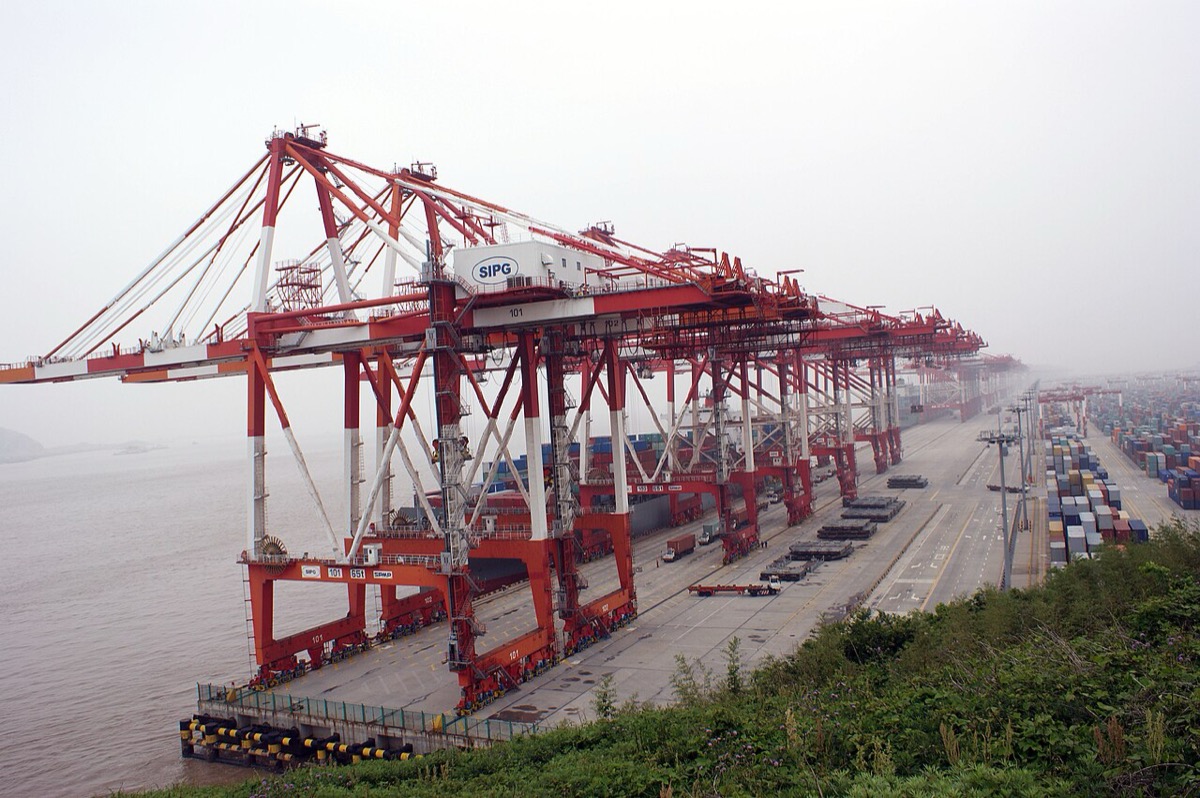
We have been importing chemicals from China for twenty years. In the last 18 months, the compliance envelope on corporate parent structures has tightened in ways that most US importers have not yet absorbed. A supplier in Ningbo that sold you surfactants for a decade may have been acquired in 2023 by a parent holding company that also owns a subsidiary on Commerce’s Entity List. Your annual supplier attestation did not catch it because you did not ask the right question.
What the 25 September Action Actually Covers
MOFCOM runs three parallel lists that constrain Chinese exporters. The Dual-Use Export Control List restricts specific items, including certain chemicals, materials, electronics and software, to named end users. The Unreliable Entity List names foreign companies that face transactional restrictions or outright prohibitions. The Export Control Law, passed in 2020 and tightened through implementing regulations in 2024 and 2025, is the umbrella.
The 25 September addition of Huntington Ingalls, Planate and Global Dimensions goes on the Dual-Use list. The practical effect is that Chinese suppliers cannot ship dual-use items to these three companies without individual licences, and Chinese suppliers who have active relationships with them are under pressure to wind those down. Where it intersects with US chemical importers is in the corporate plumbing. If a Chinese chemical producer has a holding company or affiliated trading arm that historically supplied Huntington Ingalls or its subsidiaries, that Chinese entity now has a compliance problem that can spill into your supply chain.
The spillover risk is not hypothetical. Under US Commerce Department Entity List rules, transacting with a Chinese entity that is under MOFCOM enforcement action for transacting with a US-listed entity can itself be a diversion risk that triggers US-side scrutiny. The two export control regimes increasingly talk to each other through enforcement cooperation even as Beijing and Washington publicly posture against each other.
The Corporate Structure Check You Actually Need
The standard Chinese supplier due diligence that most US importers run is shallow. You get a business licence copy, a tax registration, maybe an ISO certificate, and an annual attestation that the supplier complies with export control rules. That is not enough. The corporate structure check you need has five layers.
Start at the operating entity. The Chinese name, the English trade name, the unified social credit code (18-digit USCC), the registered address. You can pull this from the National Enterprise Credit Information Publicity System, which MOFCOM operates in cooperation with the State Administration for Market Regulation. The USCC is the key. It is the Chinese equivalent of a US EIN, and every operating entity has one.
Move to the shareholders. Chinese companies are required to file shareholder information, and for most limited liability companies the filings are public. The operating entity will have one to ten shareholders, each of which is either a natural person or another company. Pull the USCC of every corporate shareholder.
For each corporate shareholder, repeat the shareholder pull. This is where most corporate structure due diligence stops. It should not. Chinese corporate structures routinely stack three, four or five layers deep, with holding companies in Beijing, Shanghai, Hong Kong or Shenzhen that own operating companies in Jiangsu, Zhejiang or Shandong. The ultimate beneficial owner may be two or three layers above the operating company.
At each layer, run the entity against the MOFCOM Unreliable Entity List, the Dual-Use Export Control List, the US Commerce Entity List, the OFAC Specially Designated Nationals list, and the UK and EU sanctions lists. A clean supplier at layer one can still have a parent or affiliate at layer three that is listed.
Map the affiliate network. Most Chinese chemical producers have affiliated trading arms, sometimes registered in Hong Kong for tax and banking reasons, that handle export documentation. Those trading arms often share ownership with the parent holding company and sometimes with other operating entities that have defence, aerospace or electronics customers. The affiliate map is where the diversion risk lives.
The Blacklist Impact Matrix for US Chemical Importers
Not every supplier connection creates the same risk. Here is the matrix we use when auditing a supplier for US chemical importers.
| Connection Type | Risk Level | Typical Evidence | Action |
|---|---|---|---|
| Operating entity directly on a US or Chinese list | Critical | USCC match on list | Stop shipments, notify compliance |
| Parent holding company on a list | High | Shareholder USCC match | Wind down, alternate supplier |
| Sibling affiliate serving a listed US entity | High | MOFCOM enforcement pattern | Diversion risk review |
| Parent or affiliate under MOFCOM investigation | Medium-High | Administrative action filed | Monitor, quarterly review |
| Supplier uses trading arm with defence customers | Medium | Commercial registry search | Request segregated account |
| Supplier’s bank is a state policy bank serving defence | Low-Medium | Banking records | Evaluate on contract renewal |
| Supplier’s key personnel linked to listed entity | Low | LinkedIn, PRC registry | Annual attestation update |
The matrix is a screening tool, not a verdict. A high-risk connection does not automatically mean you drop the supplier. It means you document the risk, evaluate mitigants, and build a contingency supplier relationship so you are not exposed if the connection deepens.
Where Huntington Ingalls Actually Matters for Chemistry
Huntington Ingalls builds aircraft carriers and submarines, which does not sound like a chemical importer problem. The connection runs through specialty chemistry used in naval coatings, propulsion systems, cooling circuits and weapons platforms. The specialty chemistry includes certain fluoropolymers, certain hydraulic fluids, certain epoxy resins, certain corrosion inhibitors and certain thermal management fluids. Chinese producers of those chemistries have, in some cases, supplied Huntington Ingalls subcontractors historically.
If you import a specialty fluoropolymer from a Zhejiang producer, and that Zhejiang producer’s parent holding company also owns a subsidiary that historically sold a different fluoropolymer grade to a US naval contractor, you have an inherited diversion risk on your file. MOFCOM enforcement on the parent can restrict the Zhejiang producer’s export capacity even for your commercial grade. You could lose your supply chain overnight through no action of your own.
Planate Management Group and Global Dimensions are both defence consulting and services firms rather than hard-tech customers. Their chemical footprint is smaller, but they sit on the US Department of Defense contractor list and have historically engaged Chinese data providers, Chinese consulting subcontractors and Chinese supplier relationships for specific programmes. The MOFCOM listing prohibits Chinese firms from certain categories of cooperation, and the ripple effect flows through to any Chinese firm whose parent structure touches them.
The Practical Workflow for a Corporate Parent Check
You do not need a law firm to run the first pass of a corporate parent check. You need four hours per supplier and access to the right databases.
Get the Chinese operating entity’s USCC from the supplier. Any reputable Chinese manufacturer will give you this on request. It belongs on every commercial invoice and every export declaration. If a supplier resists, that is a signal in itself.
Pull the entity record from the National Enterprise Credit Information Publicity System. The system is bilingual, and a free search by USCC returns the current shareholder list, the registered capital, the legal representative, any administrative penalties, and basic affiliate information. Screen the results against all sanctions lists and watchlists.
For every corporate shareholder above one percent, pull their record. Repeat until you reach either a natural person, a government entity, or a foreign-incorporated company. Document the structure in a simple tree diagram.
Run the whole tree against the MOFCOM Unreliable Entity List and the Dual-Use Export Control List in Chinese. The lists are maintained in Chinese with English translations that sometimes lag. For the most current state, check the Chinese version of the MOFCOM website directly.
Run the same tree against US Commerce’s Entity List, OFAC SDN, UK HM Treasury consolidated list, and EU consolidated list. Bureau Veritas, SGS, and specialist compliance firms like Kharon and Sayari can run automated screening if your supplier base is large enough to justify the subscription.
Document the result in a supplier file that includes date of check, databases searched, results returned, and residual risk level. Repeat every six months for active suppliers and every twelve months for inactive but approved suppliers.
The Landed Cost of a Bad Corporate Parent Discovery
Skipping the corporate parent check to save the four hours per supplier is the false economy. The cost of discovering a listed parent after you have built a commercial relationship runs into seven figures on any meaningful import programme.
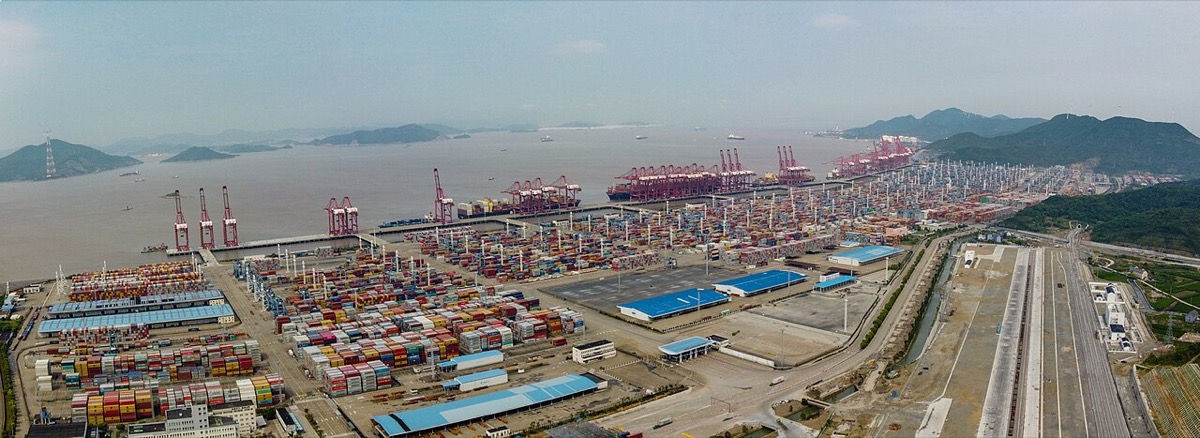
A typical fact pattern looks like this. A US chemical importer buys 800 tonnes per year of a specialty chemical from a Jiangsu producer at $3,200 per tonne. Annual spend is $2.56 million. CBP or Commerce opens an inquiry into the parent company after a separate enforcement action surfaces the connection. The importer has to pause shipments for six to twelve weeks while documentation is submitted and reviewed. Inventory runs down. US customer contracts are at risk. The importer eventually has to requalify an alternate supplier in Shandong or Zhejiang, which takes another six months of technical qualification and three months of regulatory paperwork.
The direct cost of the event is typically $600,000 to $1.5 million between lost margin, requalification costs, expedited freight on interim shipments, legal fees and customer relationship damage. The indirect cost, the permanent loss of a customer who decides the supply chain is unreliable, can be two or three times that.
Against that risk, the cost of a six-monthly corporate parent check across a supplier base of 25 Chinese manufacturers is roughly $18,000 per year in analyst time plus another $15,000 in database subscriptions if you do it in-house, or $40,000 to $60,000 if you outsource the whole programme. Either way, the maths is not close.
Your Next Move This Week
Pull your top ten Chinese chemical suppliers by annual purchase volume. For each, confirm you have the USCC on file and confirm you have run a shareholder check in the last twelve months. If either is missing on any of the ten, that supplier is the priority for the next thirty days.
Send a written request to each supplier for their current ownership structure including all shareholders above five percent and any recent corporate reorganisations. Give them fourteen days to respond. A supplier who cannot or will not respond is a supplier who belongs at the top of your contingency sourcing list.
Sourzi runs supplier corporate structure due diligence for US chemical importers sourcing from Shanghai, Ningbo, Qingdao, Tianjin and the Pearl River Delta. If your supplier compliance files are older than six months, or if you have never traced parent ownership beyond layer one, we should talk this week.