The US Commerce Department published its final affirmative anti-dumping determination on methylene diphenyl diisocyanate from China on 17 March 2026, and the numbers are brutal. Wanhua Chemical, which supplied roughly 97% of Chinese MDI imports into the US during the second half of 2024, carries a final dumping margin of 507.44%. The “all others” rate sits at 305.18%. Commerce will instruct CBP to collect cash deposits at those rates the day the order publishes in the Federal Register, which we expect inside 10 business days.
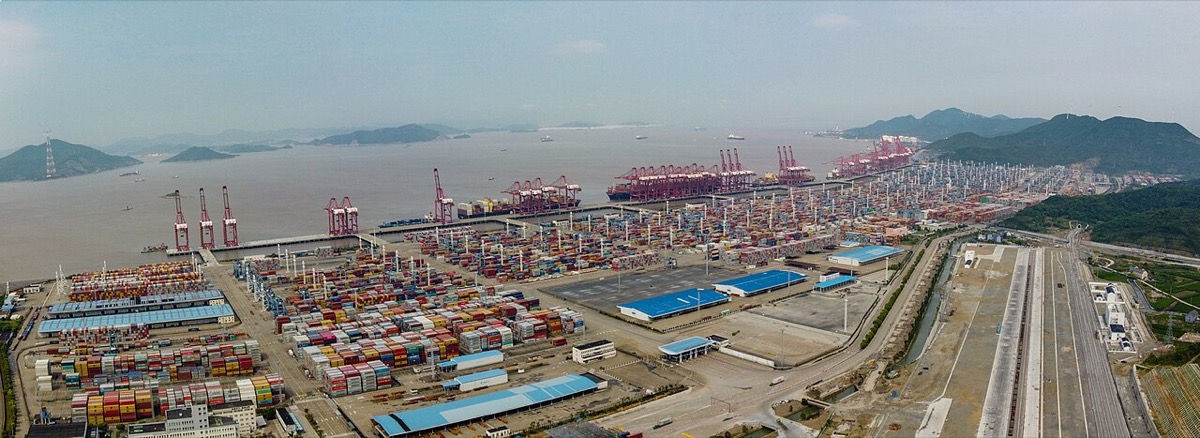
Four days earlier, on 13 March, Commerce issued its preliminary affirmative determination on vanillin from China on the back of Solvay’s petition. The rates are even wider: 520.63% to 551.07% depending on respondent. Cash deposits on HS 2912.41.00 start at entry on the provisional order date. If you’re buying MDI, vanillin, or anything adjacent out of Shanghai Yangshan or Ningbo-Zhoushan, your landed cost model just broke. Commerce is now maintaining 727 active AD/CVD orders, and roughly 38% of them touch Chinese chemical HS lines. This isn’t a spike. It’s the new baseline.
What the 507% MDI Margin Actually Does to Your Next Container
Let’s do the arithmetic you’ll be redoing all week. A 20-foot container of bulk MDI runs about 20 tonnes. Take a Wanhua Chemical FOB Yangshan offer at USD 2,150 per tonne, which is where the market cleared in early March 2026. That’s USD 43,000 of product value per container before freight. Add ocean freight Shanghai to LA/Long Beach at USD 1,850 per 20-foot box, marine insurance at 0.35% of CIF, harbour dues, and you’re at roughly USD 46,800 CIF.
Under the old MFN duty of 6.5% on HS 2929.10.80 plus the Section 301 List 3 tranche at 25%, you were landing MDI at something like USD 61,500 per container before inland trucking. Bolt on the new 507.44% AD cash deposit against Wanhua and the CIF value alone triggers USD 237,500 in deposits at entry. That’s a single 20-foot container. CBP holds the cash until Commerce completes its first administrative review, which under 19 USC 1675 typically runs 12 months after the anniversary of the order.
Here’s how the MDI final AD determination stacks up by respondent. You need this table bookmarked because your broker is going to ask which HTS and which manufacturer flag applies.
| Respondent | Final AD Margin | CVD Rate (parallel case) | Combined Deposit Rate | Effective Landed Uplift on USD 2,150/MT FOB |
|---|---|---|---|---|
| Wanhua Chemical | 507.44% | 14.22% | 521.66% | +USD 11,216/MT |
| Covestro Polymers (Shanghai) | 318.00% | 9.85% | 327.85% | +USD 7,049/MT |
| BASF Polyurethanes (Chongqing) | 310.77% | 8.40% | 319.17% | +USD 6,862/MT |
| All Others / China-wide | 305.18% | 8.40% | 313.58% | +USD 6,742/MT |
| Sadara (Saudi Arabia, reference) | 0% (non-subject) | 0% | 0% | Base |
| BorsodChem (Hungary, reference) | 0% (non-subject) | 0% | 0% | Base |
Your customs broker needs the manufacturer certificate of origin, the mill certificate, and the Wanhua lot traceability on every entry line now. If your supplier ships Wanhua-origin MDI through a trader in Singapore or Vietnam, CBP’s Enforce and Protect Act team will treat it as transhipment and backdate the 507.44%. Sourzi clients running the Melbourne-to-Houston lane through Savannah have already had two entries flagged in the past fortnight for exactly this pattern.
Why Vanillin Is the Canary, Not the Outlier
Solvay filed the vanillin petition in September 2025, which under statutory timelines (19 USC 1673a) put the preliminary determination in the back half of March 2026 almost to the day. The case covers natural and synthetic vanillin under HS 2912.41.00 and CAS 121-33-5. Rates range from 520.63% on the mandatory respondents to 551.07% for non-cooperating exporters and the China-wide rate.

Why does this matter if you’re importing MDI, TPU, or polyether polyols? Because the petition architecture is the same across every Chinese chemical class. A US producer with a dying margin files under the Tariff Act, names specific Chinese exporters and a China-wide rate, and Commerce applies adverse facts available where respondents don’t cooperate fully. Adverse facts available is how you get to 500%-plus margins. It’s not that Commerce thinks Wanhua is dumping MDI at six times its home-market price. It’s that Commerce used the highest petition rate because the questionnaire responses didn’t clear the threshold.
The vanillin case tells you who’s next. Solvay has a Genosyl plant in Baton Rouge, Louisiana, running at roughly 60% capacity. When a domestic producer has idle capacity and Chinese imports have grown more than 20% year-on-year, the petition math works. Look at your own import book and ask: which of your Chinese HS lines has a US producer running under 70% utilisation? Those are your next targets.
Here’s the Sourzi AD/CVD watchlist we’re tracking for Australian importers feeding North American customers through tolling arrangements. Petitions we expect to land between now and Q4 2026, based on domestic producer filings, USITC injury scoping sessions, and Commerce’s scope inquiry docket.
| HS Code | Product | CAS | Likely Petitioner | Estimated Petition Window |
|---|---|---|---|---|
| 3907.29.00 | Polyether polyols | Various | Dow, Huntsman | Q2 2026 |
| 2929.10.30 | TDI (toluene diisocyanate) | 584-84-9 | BASF, Covestro | Q2 2026 |
| 3909.50.00 | Polyurethane prepolymers | Various | LyondellBasell | Q3 2026 |
| 2917.36.00 | Terephthalic acid | 100-21-0 | Indorama (US ops) | Q3 2026 |
| 2933.69.60 | Melamine | 108-78-1 | Cornerstone Chemical | Q4 2026 |
| 3903.19.00 | Polystyrene resins | Various | Americas Styrenics | Q4 2026 |
If any of those HS codes is on your purchase order book, start diversifying now. Not in the week the petition files. The day before the Federal Register notice publishes, your container is already on the water and you’ll be paying retroactive deposits.
The 97% Problem: What Wanhua Dominance Means for the Global MDI Map
Wanhua Chemical, headquartered in Yantai, operates 2.8 million tonnes of MDI capacity globally, including the BorsodChem asset in Hungary and a smaller line in Louisiana. In H2 2024, according to USITC import data, Wanhua shipped 97% of Chinese-origin MDI into US ports. That concentration is why Commerce’s individual rate calculation hit Wanhua so hard: mandatory respondent status plus a China-wide rate means the entire market moves on one company’s questionnaire.

For Australian importers who resell into the US via Houston or Savannah, this reshapes the sourcing map overnight. BASF’s Geismar, Louisiana site runs roughly 600,000 tonnes of MDI. Covestro’s Baytown line sits around 400,000 tonnes. Huntsman’s Geismar asset adds another 500,000 tonnes. Sadara in Saudi Arabia contributes 400,000 tonnes available for US import under the GCC trade relationship with no AD exposure. BorsodChem in Hungary ships roughly 300,000 tonnes to Western markets. Add Dow’s legacy Freeport, Texas operations and you’re looking at a US-plus-allied supply of around 2.2 million tonnes against US demand of roughly 1.6 million tonnes per year.
The math says there’s enough non-Chinese MDI for the US market, but it’s priced for scarcity. Covestro moved its US MDI list price up 18% in the four weeks before the final determination. BASF quietly added a 12% surcharge for Q2 contracts. Sadara is quoting FOB Jubail at a 22% premium over Chinese offers from last September. If you’d locked a contract in October 2025 at Wanhua rates, you might have survived this. If you’re buying spot today, you’re paying the full Covestro premium plus freight from Houston.
The CBP Side: Entry Mechanics, Cash Deposits, and the 12-Month Trap
This is where most importers lose money they didn’t expect to lose. Under 19 USC 1673e, Commerce’s final determination triggers the actual order, and CBP starts collecting cash deposits at entry equal to the final weighted-average dumping margin. That money sits with CBP for roughly 12 to 18 months while Commerce runs the first administrative review under 19 USC 1675. If that review confirms the margin, your cash deposit becomes the assessed duty and you never see it again. If the margin drops in review, you get the difference back but you’ve carried the cash at your bank’s working-capital rate for more than a year.
Here’s the scenario matrix we build for Australian clients shipping to US customers. It shows the landed cost per tonne of MDI under four plausible six-month paths.
| Scenario | AD Margin Applied | Freight Trend (Shanghai-LA) | CIF USD/MT | Total Landed USD/MT | Versus October 2025 |
|---|---|---|---|---|---|
| Status quo, Wanhua direct | 507.44% AD + 14.22% CVD | USD 1,850/box flat | 2,340 | 14,560 | +540% |
| Covestro Shanghai, mid-rate | 318.00% AD + 9.85% CVD | USD 1,900/box | 2,420 | 10,900 | +408% |
| Sadara Jubail reroute | 0% AD | USD 2,150/box (longer route) | 2,920 | 3,250 | +52% |
| BorsodChem Hungary reroute | 0% AD | USD 2,600/box | 3,180 | 3,540 | +66% |
Under the first two scenarios, your customer’s formulator math doesn’t work. They’ll either accept a 400%-plus price increase, which they won’t, or they’ll qualify a second supplier. Sadara or BorsodChem both clear at a premium of 50 to 70% over last September’s Chinese spot, which is painful but it’s not a business-ending number. That’s the bridge you build in the next 60 days.
What Australian Importers Should Do This Week

First, pull every open PO with HS 2929.10 or 2912.41 and confirm the manufacturer of record with your broker today. If the mill certificate lists Wanhua, Covestro Shanghai, BASF Chongqing, or any China-origin vanillin producer, your landed cost model is wrong and you should not release the next payment milestone until you’ve rebuilt it. CBP entry dates after the Federal Register order publication will attract the full cash deposit. Inbond moves don’t save you. ETA at the US port is what CBP uses for AD/CVD liability.
Second, scope the Sadara and BorsodChem options properly. Sadara ships MDI on Hapag-Lloyd and CMA CGM through Jubail to Houston and Savannah. Lead time runs 38 to 45 days. BorsodChem ships via Koper or Hamburg, transit of 28 to 34 days to US East Coast ports. Neither is cheap, but both are AD-free and both have capacity for the next two quarters. Book the slot before every US formulator in your customer base does the same calculation.
Third, file a scope ruling request with Commerce if your product sits in a grey area. MDI prepolymers, TPU granules, and certain polyether-MDI blends fall under different HTS classifications that may or may not be captured by the AD order. Bureau Veritas and SGS both run scope analysis desks in Australia that will test your sample against the order language. A USD 4,500 scope ruling can save you a six-figure deposit if Commerce agrees your product is out of scope.
Fourth, check your contracts for force majeure and change-in-law clauses. Most Chinese supply contracts signed in 2024 and 2025 don’t list US AD/CVD measures as triggering events. That means you can’t walk away without penalty. Sourzi has template language for Australian buyers that shifts AD/CVD risk back to the mill, and we’ll share it on request. Your March 2026 POs should already carry the new clauses before you countersign.
Commerce is publishing the MDI order inside 10 business days and the vanillin preliminary deposit instructions are already with CBP. If you want Sourzi to pressure-test your landed cost model against the Sadara and BorsodChem alternatives before your next shipment sails, send us your last 12 months of purchase invoices and we’ll run the recalculation against live March 2026 freight quotes from Maersk, Hapag-Lloyd, MSC, CMA CGM, and COSCO. You’ve got a week before the Federal Register lands. Use it.