
Historical correction, 9 October 2026: The 23 December 2025 announcement occurred after the preserved 21 November archive date. The unsupported enforcement totals and category ranges are withdrawn. A documented BASF settlement is distinguished below from those unverified figures, and CDR cycle and threshold assumptions are corrected. Import-certification, new-chemical notification and pesticide-registration statements below have also been qualified against dated regulations. Other operational patterns, private experience and commercial claims remain unverified.
On 23 December 2025, EPA announced expanded import investigations and enforcement following a 19 December visit to the Port of Los Angeles. This occurred after the preserved archive date. The former claims of $4.3 million across 115 actions and a largest single $700,000 penalty have not been established by the primary evidence reviewed here and are withdrawn as verified totals or rankings.
If you import industrial chemicals, specialty intermediates, pesticide active ingredients or formulated pesticide products, this is the moment to audit your TSCA Section 13 import certification file, your CDR reporting posture, and your PMN (Premanufacture Notice) exposure on any new chemical introductions from 2022 forward. The December crackdown isn’t a warning shot. It’s the rollout.
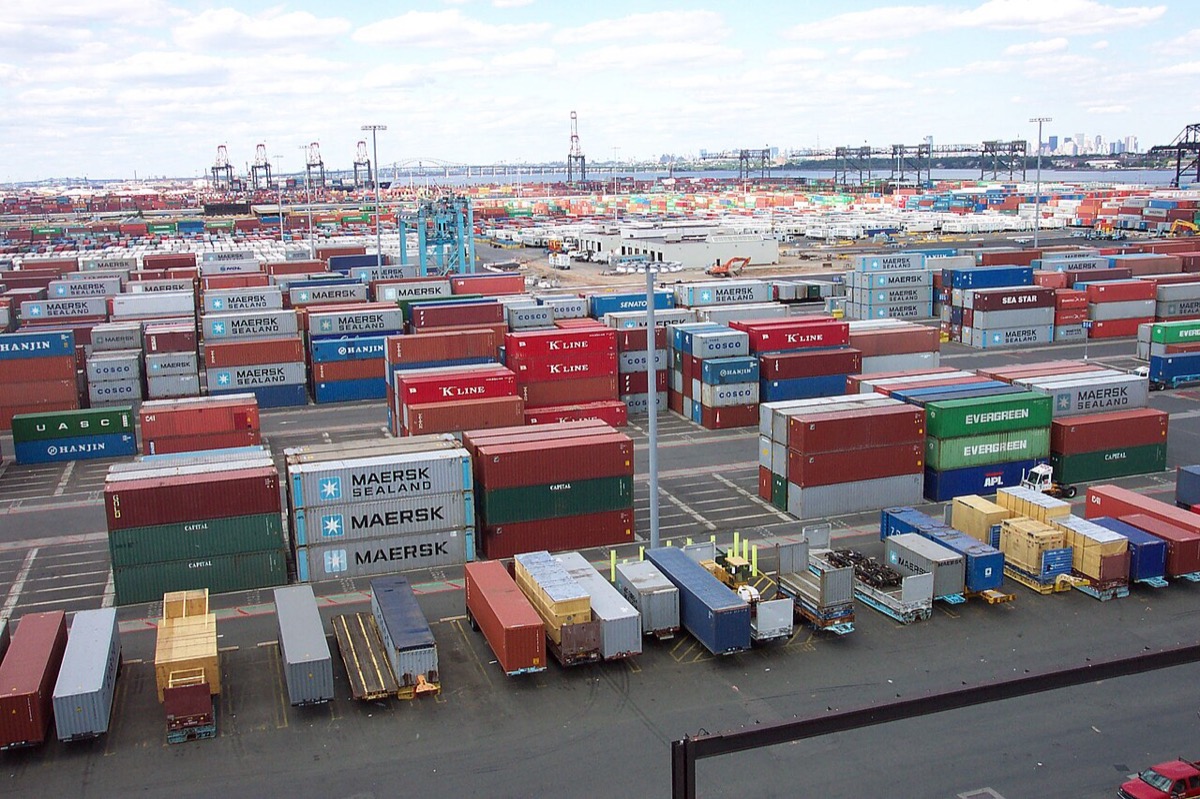
What “Dramatic Expansion” Actually Means in Agency Terms
EPA’s enforcement expansion is resourced from three lines. First, additional criminal investigators in the CID (Criminal Investigation Division) specifically tasked with pesticide and TSCA fraud originating from Chinese manufacturing. Second, expanded cooperation with CBP at the major chemical ports of entry (Los Angeles and Long Beach, Houston, Savannah, New York and New Jersey, Seattle and Tacoma) allowing EPA to flag shipments for hold before cargo release. Third, enhanced data analytics on ACE (Automated Commercial Environment) entry filings, cross-referencing HTSUS codes against CAS numbers declared on Section 13 certifications.
The article has not established the claimed analytics deployment, its relative importance or a most-common failure across 115 actions. The following patterns are potential documentation risks, not verified findings from that alleged action set.
Potential documentation risks include:
- HTSUS code declared as a TSCA-exempt intermediate, but CAS and SDS show a TSCA Inventory-listed chemical that triggers Section 13 certification
- CAS declared on import that doesn’t match the CAS in the certificate of analysis, suggesting either relabelling upstream or falsified import paperwork
- Pesticide active ingredient declared as a generic chemical intermediate to avoid FIFRA registration requirements
No general per-importer penalty range is established here. TSCA and FIFRA are separate statutes; their enforcement outcomes should not be combined into an unsupported TSCA total.
A Documented Settlement and Unverified Totals
The previous table of category counts, penalty ranges and a fiscal-year total has been withdrawn because the cited primary evidence does not establish those numbers. No replacement aggregate is asserted.
EPA’s BASF consent agreement and final order, Docket TSCA-02-2025-9142, records a US$700,000 civil settlement for alleged late CDR reporting involving 334 chemicals in the 2020 reporting cycle, covering 2016–2019. BASF neither admitted nor denied the factual allegations. This is not evidence of a largest penalty, a single-substance lapse or a 2024-cycle violation.
The projected 170 to 220 actions and US$6 million to US$8 million total were also unverified assumptions; they are not an EPA forecast established here.
The CDR Exposure You Might Not Know You Have
EPA’s CDR overview explains that Chemical Data Reporting applies to non-exempt manufacturers, including importers, of reportable substances meeting an applicable annual threshold at a reporting site. The standard threshold is 25,000 pounds; specified TSCA actions can lower it to 2,500 pounds. Substance, activity and company exemptions must also be assessed. The 2024 submission deadline was extended to 22 November 2024, not a window running through 2026.
The 2024 cycle covers 2020–2023. Manufacture and imports of the same substance at the reporting site are combined within each year, not across years. An illustrative 12,000 kg in either 2022 or 2023 exceeds the standard annual threshold, but exemptions and the correct site still require review. Activity in 2024 belongs to the 2024–2027 period for the 2028 cycle. The BASF case above concerns the separate 2020 cycle.
Review the relevant reporting cycle:
- For the 2024 cycle, use records for 2020–2023.
- For the 2020 cycle, use records for 2016–2019.
- Combine annual domestic manufacture and imports of each substance at its reporting site.
- Check whether the applicable 25,000-pound or 2,500-pound threshold was met in any individual year, then assess exemptions.
- Reconcile reportable substances with the corresponding cycle’s filings and investigate differences.
The time needed depends on the records and issues found. If a gap emerges, obtain a qualified assessment of correction and any self-disclosure options. The former assertion of a typical 75% or greater penalty reduction is not substantiated here and should not be treated as an entitlement or promised outcome.

Section 13 Import Certification: The Paperwork That Must Match
Under 19 CFR 12.121, April 2025 edition, covered TSCA chemicals imported in bulk or mixtures require positive certification. Chemicals excluded from TSCA require negative certification when not clearly identified as excluded. Chemicals within articles require certification where a specific TSCA rule or order requires it. The former universal positive-or-negative requirement was too broad.
The three CBP and EPA inspection triggers:
First, an HTSUS code that’s inconsistent with the declared chemical name. If your entry paperwork says HTSUS 2903.xx (halogenated hydrocarbons) but the CoA says an amine, that’s a flag.
Second, establish the actual Inventory status and chemical identity. 40 CFR 720.25 provides for confidential Inventory enquiries where the substance is not identified in the public listing. A missing public CAS match alone does not prove that a substance is new. PMNs for non-exempt new chemicals and significant new use notices under an applicable SNUR are distinct processes.
Third, a certification signed by someone without actual knowledge of the shipment contents. CBP increasingly asks for signer credentials on flagged entries.
Make sure your broker’s blanket Section 13 certification language is specific to what’s actually in the drum, that your SDS and CoA reach the broker in time for ACE filing, and that every unique CAS imported in the last 24 months has been screened against the TSCA Inventory and against the Section 5 new chemicals queue.
PMN and Significant New Use Rule: Where Specialty Importers Get Hit
For a new chemical, assess the notification requirements and applicable exclusions before commercial import. Where TSCA section 5 notice is required, EPA’s determination and associated requirements must be satisfied before commencing. The usual 90-day review period can be extended; its expiry is not automatic permission to import or a guaranteed completion date.
The enforcement pattern we’ve seen in 2025 on PMN violations:
A US importer brings in a Chinese-manufactured specialty additive, usually a coatings or adhesives intermediate, that the supplier describes as “equivalent to” a TSCA-listed substance. The actual CAS, which surfaces through CBP laboratory analysis of a flagged sample, turns out to be a structurally-related but distinct substance. An identity mismatch requires Inventory and exemption review before concluding that a PMN violation occurred. The claimed typical $150,000 to $300,000 penalty is not verified here.
Require reliable chemical identity and composition information from the supplier. Resolve public or confidential Inventory status and applicable exemptions before deciding whether notification is required. Where it is required, complete the applicable section 5 process and comply with resulting conditions before import. This article does not establish a guaranteed 90-day clearance or automatic holds on future shipments.

FIFRA Pesticide Enforcement: The Chinese Manufacturer Focus
EPA’s December announcement addressed illegal pesticide and chemical smuggling. Pesticide registration requirements have specific exceptions beyond emergency and experimental use, including qualifying transfers under 40 CFR 152.30, July 2025 edition. Determine whether registration or a lawful exception applies to the actual product and transaction; an exception does not remove its own conditions or other import obligations.
The 2025 enforcement wave has targeted two specific patterns. One is the importation of unregistered generic active ingredients under an industrial chemical HTSUS code. Two is the importation of formulated pesticide products, often sold through online marketplaces, with either no EPA registration number or a fraudulently displayed registration number belonging to another product.
For a product requiring registration, verify the registration holder, number, formulation and applicable approved labelling. Where an exception is relied on, verify its conditions and the applicable import and labelling requirements. Do not assume that every lawfully imported pesticide must have its own product registration number.
The former US$500,000 example for a single 2025 FIFRA registration action has not been verified from a primary case record and is withdrawn. Do not use it as an established example or general penalty estimate.
What You Do This Week
Five actions. Not a planning exercise. Actually do them.
First, collect records covering the complete cycle being reviewed: 2016–2019 for the 2020 submission and 2020–2023 for the 2024 submission. A generic 36-month lookback does not cover those periods.
Second, screen every unique CAS against the current TSCA Inventory. An unmatched public CAS requires chemical-identity, confidential Inventory and exemption review before deciding whether a PMN is required.
Third, assess annual manufacture and imports per substance and reporting site, including the applicable threshold and exemptions, then reconcile against the matching CDR cycle. Have qualified advisers assess any filing gap and disclosure decision.
Fourth, re-read your Section 13 certification language, test it against the actual chemistry in your drums, and update if your importer-of-record certifications have been running on autopilot.
Fifth, determine whether each pesticide requires registration or qualifies for a specific exception, then verify the applicable registration, labelling and import conditions before shipment.
The documented settlement illustrates the importance of checking reporting records; it does not validate the article’s former aggregate statistics or guarantee that a six-week audit eliminates exposure. Any review should distinguish TSCA reporting and certification from separate FIFRA requirements and assess the actual facts.