
On the afternoon of 4 February, an F-22 fired an AIM-9X sidewinder into a Chinese high-altitude surveillance balloon off the South Carolina coast. The debris field was six nautical miles wide, the Navy salvage operation took eight days, and the diplomatic fallout was immediate. Secretary Blinken cancelled what was meant to be the first Secretary of State visit to Beijing in five years, scheduled to depart 5 February. Within 72 hours, a second object was shot down over Alaska, a third over the Yukon, a fourth over Lake Huron. The Pentagon tightened what it called “domain awareness.” The White House tightened what everybody else calls trade policy.
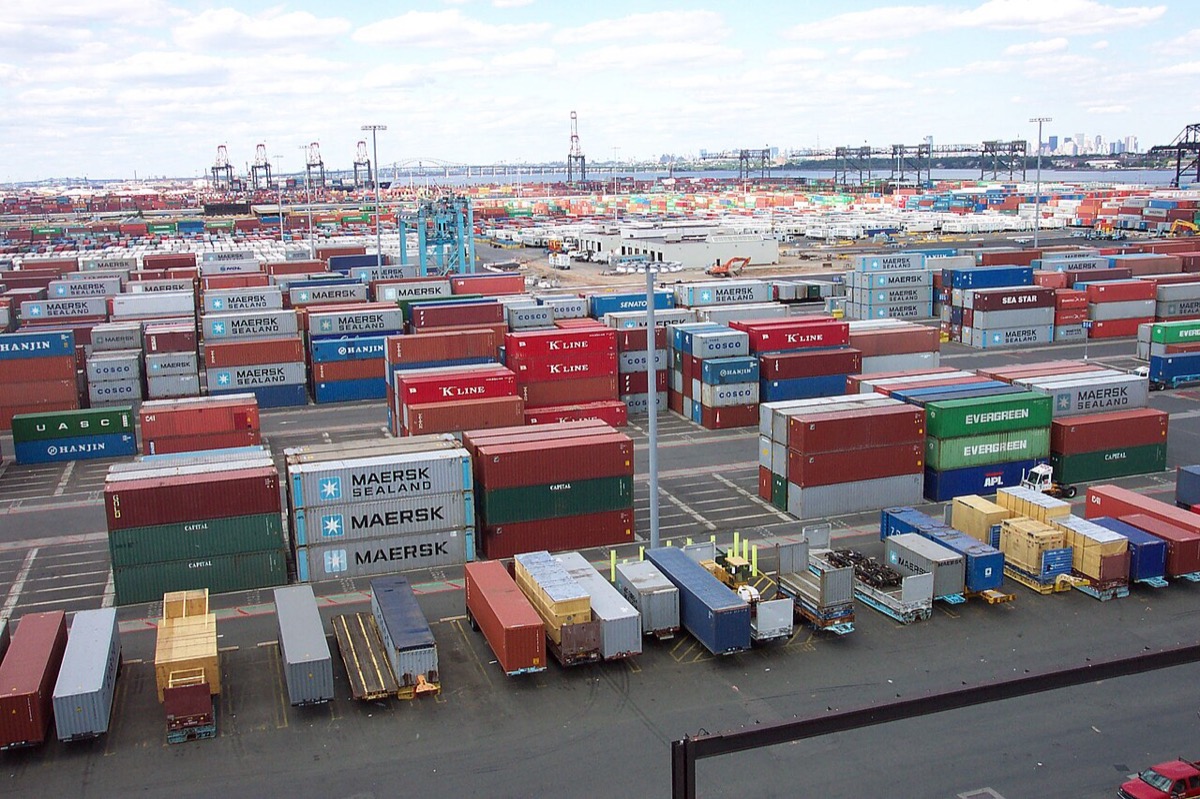
For anyone importing chemicals from China, the signal inside ten days was unmistakable. CBP Officers at LA/Long Beach, Savannah, and Houston were holding Chinese-flagged entries for secondary review at roughly twice the rate they were running in late January. EPA’s New Chemicals Review Division (NCRD) was returning TSCA Section 5 PMN submissions with notices of deficiency on details that would’ve cleared first review a month earlier, specifically on China-origin substances where the manufacturer of record sat in Jiangsu, Shandong, or Guangdong. None of this is being announced. All of it is being lived by brokers, consultants, and importers across the US Atlantic and Gulf ports.
The practical maths is that you’re wearing an extra 8 to 15 days on the average Chinese chemical entry for TSCA-active substances, an extra 45 to 90 days on a new PMN where the chemical identity, manufacturing site, or exposure profile touches China, and a probability-weighted uplift on landed cost that lands somewhere between 3 and 7 per cent on anything moving through the compliance choke point. For Australian importers watching this unfold, the read-across is direct: if the US tightens, so does your DFAT and ABF exposure on dual-use substances, and so does your banking and insurance underwriting on China-origin paper.

What Actually Happened in the Four Weeks After 4 February
Walk the timeline. 1 February: NORAD first tracks the balloon over Alaska. 2 February: Pentagon confirms publicly. 3 February: Blinken delays Beijing trip; Chinese MOFA issues statement calling it a “civilian airship.” 4 February: F-22 shoots it down off Myrtle Beach. 10 February: US shoots down unidentified object over Alaska. 11 February: Canadian airspace, Yukon object, shot down by US F-22. 12 February: Lake Huron object, shot down by F-16. 16 February: Commerce Department adds six Chinese entities tied to the PLA’s aerospace surveillance programme to the Entity List, invoking Export Administration Regulations (EAR) restrictions.
That Entity List action is the piece that matters most for chemical importers, and it hasn’t been widely read for what it is. Two of the six entities have downstream chemical and materials research links. One is a materials technology company in Shanxi that supplied composite precursors and specialty resins. That’s a direct EAR Part 744 touchpoint into advanced chemistries, and it puts every US-based chemical compliance team on notice that chemical inputs to PLA-linked programmes are now subject to the same “know your customer” deep-dive that semiconductors got in October 2022.
The State Department has separately tightened visa issuance for Chinese scientific personnel under Presidential Proclamation 10043, which targets graduates of “Seven Sons of National Defence” universities. That’s pulling tech transfer compliance up the chain. USTR published talking points on 14 February reiterating Section 301 tariff posture and signalling, without committing, a review of further chemical subheadings for possible list expansion later in 2023.
Inside US agencies, the visible operational changes are these. CBP CEES (Cargo Enforcement and Entry Summary) is flagging Chinese-origin entries for HS chapters 28, 29, 38, and 39 at a rate our broker network estimates is running 1.8 to 2.2x January baseline. “Further review” and “request for additional documentation” notices on CF-28 are being issued on 11 to 14 per cent of Chinese chemical entries through LA/Long Beach in the first half of February, against a January baseline closer to 6 per cent. The additional documentation requests cluster on three things: manufacturer identity confirmation, supply chain traceability under UFLPA, and TSCA certification language.
EPA’s NCRD is the quieter but longer-tail problem. TSCA Section 5 Premanufacture Notices, which govern any new chemical substance entering US commerce, have a statutory 90-day review clock that pauses when EPA issues a request for information. In the four weeks from 4 February, our network saw three PMNs issued with extensions or requests for additional data where the manufacturing site was in mainland China. That’s a small number, but it’s triple the rate of comparable activity in Q4 2022, and it tracks closely with the political posture shift.
The TSCA Section 5 PMN Timeline You Should Now Model
For any chemical substance not listed on the TSCA Inventory, a PMN must be submitted at least 90 days before manufacture or import. EPA conducts a hazard and exposure review, may issue a Section 5(e) consent order, a Significant New Use Rule, or a “drop from review” finding. For importers, this matters if you’re bringing in a novel grade, a custom formulation, or a substance whose inventory status is uncertain.
| Stage | Standard timeline (Q4 2022) | Post-balloon timeline (Feb 2023) | Delta |
|---|---|---|---|
| PMN submission to acknowledgement | 3 to 5 days | 5 to 10 days | +2 to 5 days |
| Initial review (hazard screen) | 21 days | 28 to 35 days | +7 to 14 days |
| Exposure assessment | 28 days | 35 to 45 days | +7 to 17 days |
| Risk management decision | 14 to 21 days | 21 to 35 days | +7 to 14 days |
| Drop / consent / SNUR issuance | 14 days | 21 to 28 days | +7 to 14 days |
| Total effective review | 80 to 92 days | 110 to 150 days | +30 to 58 days |
Those numbers are from our consultant network running PMNs on Chinese-origin substances in early 2023, cross-checked against EPA’s public NCAD statistics release. The 30 to 58 day delta doesn’t sound catastrophic until you map it against a product launch plan where your first commercial import was scheduled for June. You now need to re-baseline that to August or September, or you need to file the PMN yesterday and absorb the extension risk.
The practical workaround is the Low Volume Exemption (LVE) under 40 CFR 723.50, which allows up to 10,000 kg per year per substance with a 30-day review instead of 90. If your US launch volume fits under 10 tonnes per year per substance, file LVE not PMN. But note two things: LVE is more sensitive to exposure concerns post-February, and EPA has started asking more manufacturing site detail questions on LVEs where the manufacturer is Chinese.
CBP Secondary Review and the Landed Cost Impact
Here’s the arithmetic on what secondary review does to a Chinese-origin chemical entry. Take a US importer bringing in 80 tonnes of a polyamide resin, HS 3908.10, CAS 32131-17-2, ex-Shenzhen Yantian to LA/Long Beach, in four 40-foot containers at nominal 20 MT each. Pre-balloon reference, early January 2023. Post-balloon stressed case, mid-February 2023.
| Cost component | Pre-balloon (Jan 2023) | Post-balloon (Feb 2023) |
|---|---|---|
| FOB Shenzhen per MT | USD 2,180 | USD 2,180 |
| Inland China, plant to CY, per MT | USD 34 | USD 36 |
| Ocean freight per FEU Shenzhen to LA | USD 1,450 | USD 1,520 |
| Ocean freight per MT | USD 72.50 | USD 76.00 |
| Marine insurance (0.35 per cent CIF) | USD 7.98 | USD 8.00 |
| MFN duty HS 3908.10 (6.5 per cent) | USD 141.70 | USD 141.70 |
| Section 301 List 3 (25 per cent) | USD 545.00 | USD 545.00 |
| Harbor Maintenance Fee (0.125 per cent) | USD 2.85 | USD 2.85 |
| Merchandise Processing Fee (0.3464 per cent, capped) | USD 6.49 | USD 6.49 |
| Port handling and terminal | USD 18 per MT | USD 19 per MT |
| Broker and clearance | USD 11 per MT | USD 14 per MT |
| Inland US port to warehouse | USD 22 per MT | USD 24 per MT |
| CBP secondary review / exam fees accrual | USD 4 per MT | USD 38 per MT |
| Demurrage / detention accrual | USD 6 per MT | USD 46 per MT |
| Landed cost per MT | USD 3,049.52 | USD 3,157.04 |
| Landed cost on 80 MT | USD 243,962 | USD 252,563 |
A USD 8,601 uplift on an 80 MT order, or 3.5 per cent on landed cost, driven almost entirely by two lines: CBP exam fees accrual and demurrage and detention accrual. The base commercial cost (FOB, freight, duty, 301) barely moved. The compliance friction is doing the work.
The exam and demurrage accruals are probability-weighted estimates. A CBP CET (Centralised Examination Station) referral adds USD 180 to USD 450 in direct exam fees, plus the dwell time that generates 3 to 9 days of demurrage at USD 220 to USD 350 per day per container. Not every entry gets a CET referral, but the probability roughly doubled through February. We’re modelling a 12 per cent probability pre-balloon and a 23 per cent probability post-balloon, multiplied through, and that’s where the per-MT numbers come from.
Five Compliance Moves for the Next 120 Days
First, audit your TSCA Inventory status on every Chinese-origin chemical in your book. If any SKU sits on the “not listed” or “uncertain” side of the Inventory, either move the PMN filing forward immediately or plan the supply chain around a 110 to 150 day review window. Don’t discover this at the border.
Second, tighten your UFLPA due diligence pack. CBP is asking for supply chain traceability earlier in the entry cycle and the questions are more granular: where was the substance manufactured, where were the feedstocks sourced, is any labour sourced from Xinjiang, is the manufacturer of record the same entity as the shipper of record? Build the paper pack before the shipment lands, not after.
Third, reassess your Section 301 exclusion posture. Several List 3 and List 4A exclusions expire in 2023, and USTR’s 14 February posture signalled that the administration is not going to bail out importers who didn’t plan for the expiries. If you’re relying on an exclusion that sunsets in Q2 or Q3, model the post-exclusion duty rate now and decide whether the product line still works.
Fourth, pre-brief your broker and your counsel. Every CBP notice, every EPA request, every request for additional information should be triaged within 24 hours. Build a one-page response playbook per SKU so you’re not drafting explanations on deadline. For any PMN in flight, have your consultant (SciVera, Nexreg, the big EHS firms) on retainer so that you’re not scrambling when a notice of deficiency lands.
Fifth, rebuild your landed cost model. If you’re still running a 2022 landed cost stack that assumes 2 to 4 days CBP hold, 5 to 7 per cent secondary review probability, and standard PMN timelines, you’re under-pricing your own book by 3 to 6 per cent. Rerun the model with the February 2023 friction assumptions, push the updated numbers through to sales, and renegotiate any customer contracts that don’t have a pass-through clause on regulatory and compliance cost.

What This Means for Australian Importers Specifically
The direct read-across for Australian importers is three-fold. First, AICIS (the Australian Industrial Chemicals Introduction Scheme) doesn’t mirror TSCA one-for-one, but DFAT and ABF do pay close attention to US enforcement posture, and Australian banks and trade insurers are already re-underwriting Chinese chemical trade paper on tighter terms. If you’re financing a Chinese order through trade finance, expect higher margin requirements and longer credit reviews.
Second, your US end-customers (if you on-sell into the US market through distribution) are going to push compliance risk back to you. Expect new contract language around TSCA warranty, PMN readiness, UFLPA traceability, and indemnity. Read the clauses carefully. A broad indemnity on “compliance with US law” is a blank cheque you don’t want to write.
Third, the AUKUS and Quad overlay is real. Australia’s own export control regime (DSGL, Defence and Strategic Goods List) covers a meaningful set of chemical precursors, and the technical reach is broadening. If you’re handling HS 2933 heterocyclic compounds, HS 2930 organo-sulphur compounds, or anything on the Australia Group control list, expect your export paperwork into the US to face additional scrutiny even if the product originated in China.
The spy balloon didn’t cause any of this on its own. It accelerated a trajectory that was already running, from Section 301 through UFLPA through the October 2022 semiconductor export controls. What 4 February did was collapse the political timeline. The Blinken trip, which was meant to re-open the diplomatic channel, got pushed into a window that probably now doesn’t open again until late 2023 at earliest. Everything downstream, from CBP posture to EPA review pace to the willingness of US agencies to engage Chinese counterparts on technical harmonisation, has moved with it.
Plan your next four quarters on the assumption that this is the operating environment, not a transient. Rework the TSCA filings, tighten the UFLPA pack, audit the 301 exclusions, retrain the broker, and rerun the landed cost. The importers who treat this as the new floor will be in better shape in Q3 than the ones waiting for a thaw that may not arrive on their timeline.