
The MOFCOM announcements that rolled out between November 7 and 9 read like a retreat, and in one sense they are. The six escalation measures from October 9, the ones that scared everyone senseless including the FDPR-style provisions and the lithium battery technology controls, are suspended for 12 months through November 10, 2026. The gallium, germanium and antimony export ban to the United States is also suspended. Your semiconductor-adjacent and flame retardant chemistry pipelines got oxygen back.
Now read what wasn’t suspended. Announcement No. 18 from April 4, the one covering seven heavy rare earths including dysprosium, terbium, gadolinium, samarium, holmium, lutetium and yttrium, is still fully in force. The licence regime your catalyst, phosphor and specialty coating programmes have lived with since April did not go away. It just stopped getting worse.
If your chemical portfolio touches any of those seven elements, the October suspension is not your story. The April 4 controls are, and they’re going to shape your formulation decisions, inventory positions and supplier contracts through 2026 and almost certainly beyond.

The Element-by-Element Matrix: What’s Open, What’s Closed
You need this on one page, taped to the wall of your procurement office. Track it weekly.
| Element | Symbol | April 4 Announcement 18 | October 9 package | Status from Nov 10 | Typical chemical application |
|---|---|---|---|---|---|
| Dysprosium | Dy | Controlled | Suspended | Licence required, case-by-case | Permanent magnet alloys, catalyst dopant |
| Terbium | Tb | Controlled | Suspended | Licence required, case-by-case | Green phosphors, solid-state fuel cells |
| Gadolinium | Gd | Controlled | Suspended | Licence required, case-by-case | MRI contrast, neutron absorber |
| Samarium | Sm | Controlled | Suspended | Licence required, case-by-case | SmCo magnets, catalyst chemistry |
| Holmium | Ho | Controlled | Suspended | Licence required, case-by-case | Nuclear control rods, optical glass |
| Lutetium | Lu | Controlled | Suspended | Licence required, case-by-case | PET scanner crystals, catalysts |
| Yttrium | Y | Controlled | Suspended | Licence required, case-by-case | YAG lasers, phosphors, ceramics |
| Europium | Eu | Not in Apr 4 | In Oct 9 | Suspended, flowing | Red phosphors, fluorescent lamps |
| Erbium | Er | Not in Apr 4 | In Oct 9 | Suspended, flowing | Fibre optic amplifiers, pink glass |
| Thulium | Tm | Not in Apr 4 | In Oct 9 | Suspended, flowing | Medical lasers, portable X-ray |
| Ytterbium | Yb | Not in Apr 4 | In Oct 9 | Suspended, flowing | Fibre lasers, stainless steel |
| Scandium | Sc | Not in Apr 4 | In Oct 9 | Suspended, flowing | Aluminium alloys, fuel cells |
| Gallium | Ga | Not in Apr 4 | US ban, now suspended | Flowing | GaAs, GaN semiconductors, intermediates |
| Germanium | Ge | Not in Apr 4 | US ban, now suspended | Flowing | Infrared optics, fibre optic chemistry |
| Antimony | Sb | Not in Apr 4 | US ban, now suspended | Flowing | Sb2O3 flame retardant, alloys |
Seven elements in the left column of pain. Eight in the right column of relief. Read that table element by element against your bill of materials. If your flame retardant blend uses antimony trioxide, you’re fine. If your phosphor precursor synthesis needs europium and dysprosium, you’re half-fine. If your fuel cell catalyst loading uses gadolinium or lutetium, you’re in the licence queue.
How the April 4 Licence Process Actually Works in Practice
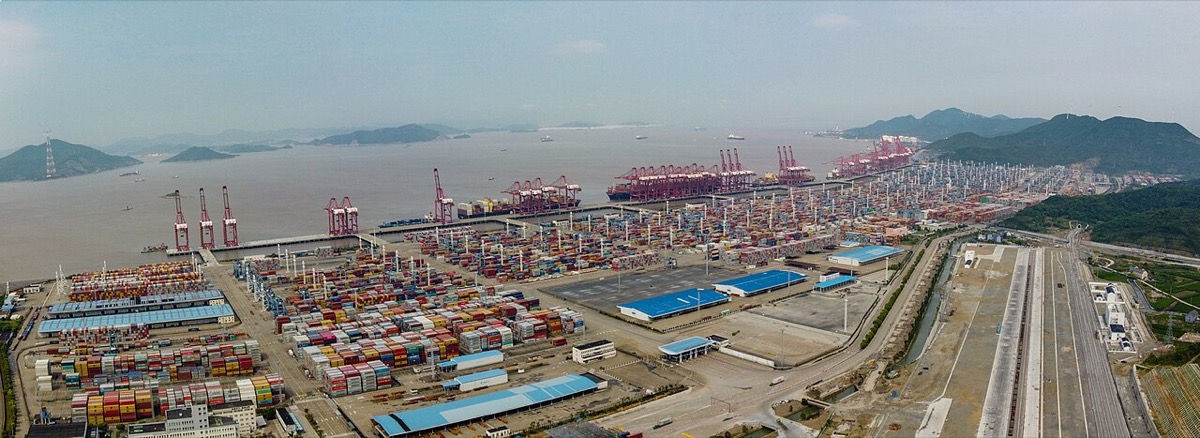
MOFCOM’s Announcement No. 18 doesn’t ban export. It establishes a licence requirement with case-by-case review. Here’s what that actually looks like for a US chemical importer trying to move dysprosium oxide through Ningbo-Zhoushan or Shanghai Yangshan.
The supplier, typically a mid-size Chinese rare earth refinery in Inner Mongolia, Jiangxi or Sichuan, submits the licence application to MOFCOM with full end-use certification. You provide the end-use declaration, plant address, intended chemical process, downstream customer if applicable, and volumes. MOFCOM then runs case-by-case review, which in practice has been 45 to 60 days for low-sensitivity end uses (ceramic glazes, laboratory reagents, non-defence catalysts) and 90 to 120 days for anything adjacent to military, aerospace or semiconductor manufacturing.
Three things surface repeatedly on denied or stalled applications:
First, incomplete end-use declarations. MOFCOM wants to see the process step downstream of your import. “Catalyst formulation” isn’t enough. “Dysprosium-doped cerium zirconium oxide catalyst for automotive three-way converter, CAS 12014-35-6 intermediate, terminal customer XYZ Co. for EPA Tier 3 gasoline engines” is enough.
Second, downstream customer opacity. If your formulated product ships to a US defence prime or a semiconductor fab, that surfaces in the review regardless of whether you declare it. Chinese customs has access to trade lane data that surfaces these relationships. Better to disclose and argue end-use than to be caught in a reconciliation audit six months in.
Third, volume inflation. Applications that request more than 18 months of forward cover draw scrutiny. Keep asks to 12 months or less.
Which Chemical Formulations Stay Constrained
Walk through your product book and flag every formulation that touches one of the April 4 elements. Typical chemical industry exposures include:
Automotive catalyst chemistry. Three-way catalysts and SCR systems use cerium, lanthanum, praseodymium and neodymium (not on the April 4 list) plus dysprosium and terbium as dopants (on the list). Reformulation to dopant-minimised stoichiometries is a 12 to 18 month lab programme. You can’t shortcut it.
Phosphor and display precursors. Red phosphors lean on europium (flowing again) but green phosphors need terbium (licensed). If you’re a specialty chemistry intermediate supplier to LED or display makers, the green line stays constrained.
Petroleum refining FCC catalysts. Fluid catalytic cracking catalysts use lanthanum-stabilised zeolites. Lanthanum isn’t on the April 4 list, which is the good news. Where you might still get tripped is rare earth-promoted specialty FCC formulations that use gadolinium or samarium trim. Check your specification sheets.
Medical imaging chemistry. Gadolinium-based contrast agents (gadobutrol, gadoteric acid and related) sit on the licensed list. US hospital network supply has been running on 4 to 6 month inventory buffers since May. That continues through 2026.
Specialty magnets (downstream chemistry). NdFeB sintered magnets use neodymium (flowing) and dysprosium (licensed). The chemistry supply chain around magnet surface treatment, coatings and precursor alloys is affected by the dysprosium pinch-point.
Nuclear chemistry. Control rod chemistry and neutron-absorbing glass formulations using gadolinium and holmium stay licensed. US utility supply chains have managed this through the DOE stockpile in parallel to commercial imports.
What the Suspension Actually Gives You
The 12-month suspension of the October 9 package means the five newly-added rare earths (europium, erbium, thulium, ytterbium, scandium) flow under normal export documentation through November 10, 2026, without MOFCOM case-by-case licence. The gallium, germanium and antimony US export ban is suspended, which frees roughly 45% of global gallium supply and roughly 60% of global germanium supply that had been redirected to non-US destinations since the ban took effect.
What does that mean concretely? Three things.
One, your GaAs and GaN semiconductor precursor chemistry resumes normal Chinese-origin flow. Trimethylgallium (TMGa, CAS 1445-79-0) and triethylgallium (TEGa) supplies, which had routed through Japanese and South Korean intermediaries, can return to direct sourcing with 20% to 35% cost improvement depending on grade.
Two, germanium tetrachloride (GeCl4, CAS 10038-98-9) for fibre optic chemistry and high-purity germanium metal for IR optics flows again. If you’re supplying the fibre optic cable coating chemistry or IR sensor chemistry markets, rebuild your Chinese-origin supply list.
Three, antimony trioxide (Sb2O3, CAS 1309-64-4) for flame retardant masterbatches returns to pre-ban pricing. Most US downstream plastics compounders had been paying 180% to 220% of 2024 prices through Q3 2025. Expect prices to normalise within 60 to 90 days.

The Risk Map Through November 2026
The 12-month suspension creates real commercial runway on gallium, germanium, antimony and the five October-added rare earths. It does not eliminate risk. Three scenarios could reset the board.
Scenario 1: Taiwan incident. A Chinese military exercise or incident involving Taiwan airspace triggers immediate reinstatement of the October 9 package. Probability is modest but non-trivial. Hedge by maintaining 90 to 120 day inventory on the formerly-banned materials where cash flow allows.
Scenario 2: US action on chip design tool access. If BIS tightens on EDA tools or further restricts SMIC-adjacent entities, MOFCOM retaliation almost certainly includes re-activation of the semiconductor-linked rare earth controls. Watch BIS Federal Register filings.
Scenario 3: Enforcement divergence. Even while the package is suspended, individual export licence applications on borderline end uses can still be denied case-by-case. Suspended doesn’t mean blanket approval.
What You Do This Week
Three concrete actions:
First, audit your bill of materials against the April 4 seven-element list and the broader critical minerals matrix above. Flag every SKU with rare earth exposure. Classify as “licensed, April 4 active” or “flowing, October suspension.”
Second, for every “licensed” SKU, confirm your supplier has valid MOFCOM licence coverage through Q2 2026 minimum. Licences are typically 6 to 12 month instruments. Renewal queues are long.
Third, for every “flowing” SKU, decide whether to rebuild Chinese supply at current normalised prices or maintain the alternative supply chain you built during the ban window. The Chinese pricing advantage on gallium, germanium and antimony precursor chemistry is meaningful, typically 25% to 40%, but redundancy has operational value if the suspension reverses.
If you want a workshop on your specific critical minerals exposure, bring your bill of materials and your last six months of MOFCOM correspondence. We’ll map the element-level risk against your Q1 and Q2 2026 production schedule and flag the pinch points your current procurement plan hasn’t accounted for.