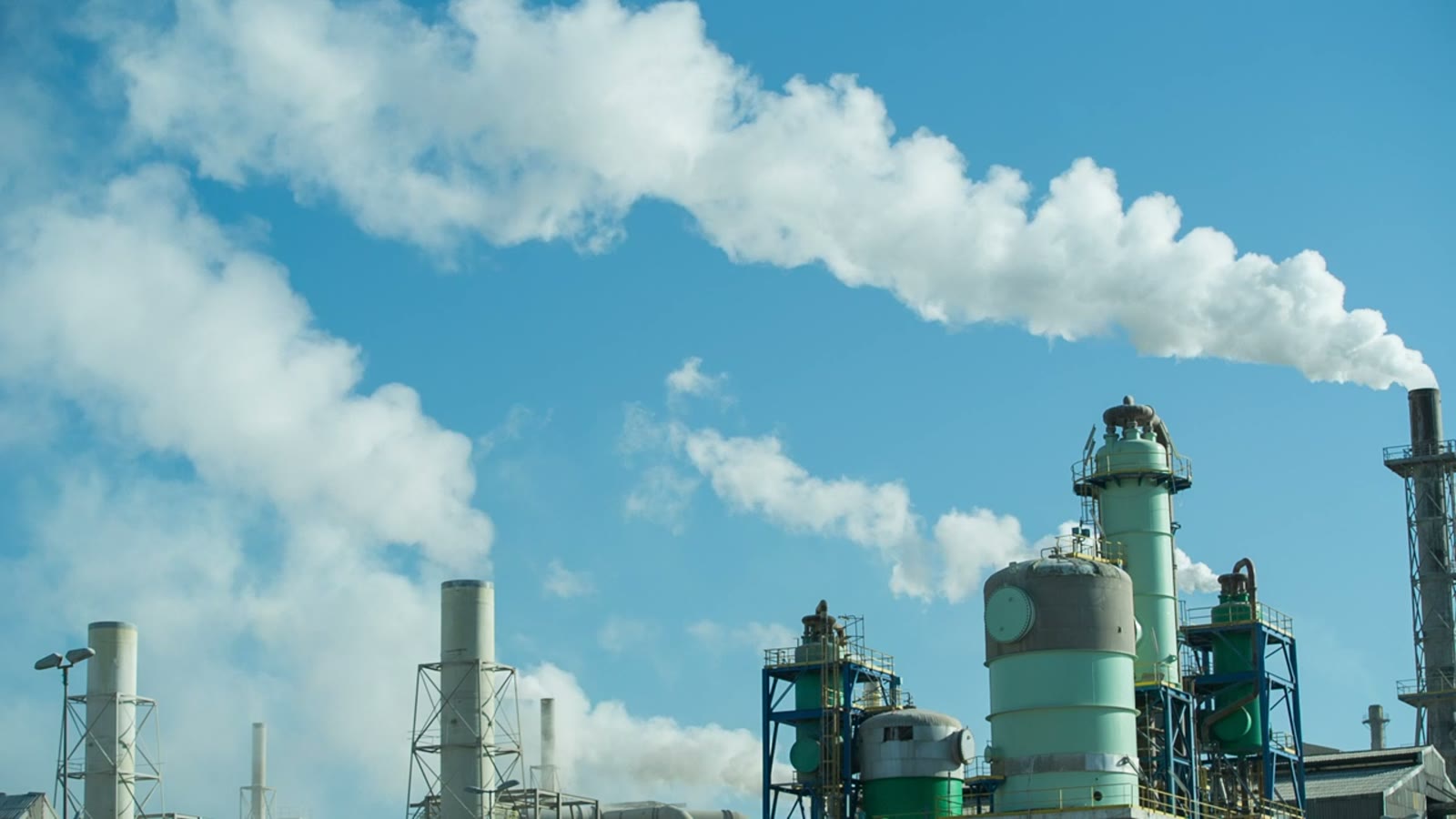
Ammonium sulfate is a major nitrogen fertiliser and one of China’s largest single-product chemical exports. Chinese capacity is approximately 23 million tonnes per year, about 35% of global capacity. The dominant feature of the Chinese ammonium sulfate industry is that most production is by-product from caprolactam (nylon-6 monomer) manufacture, not primary synthetic production. This by-product economics gives Chinese ammonium sulfate a structurally low cost base and makes China the marginal supplier in many international markets.
What ammonium sulfate actually is
Ammonium sulfate is the inorganic salt (NH₄)₂SO₄. It is a white crystalline solid at room temperature, highly soluble in water, mildly acidic in solution. Used principally as a nitrogen fertiliser (21% N + 24% S, providing both nitrogen and sulfur to crops), the product is also a chemical intermediate in some industrial processes and a fire-retardant in some applications.
The product is produced via three main routes:
- Caprolactam by-product (the dominant Chinese route), caprolactam production via the cyclohexanone-Beckmann process generates ammonium sulfate as a co-product
- Synthetic production, direct neutralisation of sulfuric acid with ammonia
- Coke-oven by-product, recovered from the ammonia produced during coal coking; declining route globally
Industrial applications
Ammonium sulfate applications:
- Direct-application fertiliser (the largest single use), granular for surface application
- Bulk-blend fertiliser feedstock, granular, blends with urea, MAP, MOP
- Specialty agriculture (where sulfur is needed alongside nitrogen)
- Industrial chemical intermediate (nitrogen source for some chemical processes)
- Fire retardants (specialty applications)
- Food additive (E517, food-grade specifications)
For volume export, agricultural-grade granular accounts for the bulk of trade.
Chinese production geography
| Region | Source | Major producers |
|---|---|---|
| Henan | Caprolactam by-product | Sinopec Baling Branch; Yueyang |
| Jiangsu | Caprolactam + synthetic | Multiple producers |
| Shandong | Mixed routes | Multiple producers |
| Shanxi | Coke-oven by-product | Coal-chemical complex |
| Hebei | Synthetic + coke-oven | Multiple |
The geography reflects the caprolactam industry, most Chinese caprolactam capacity is in inland and coastal central China, and ammonium sulfate flows from those production sites to coastal export ports.
Packaging and container loading
| Packaging | Fill | Container loading |
|---|---|---|
| 25-50 kg PP bag | 25-50 kg | ~880-1,000 bags per 20’GP (~22-25 MT) |
| 1,000-1,200 kg big bag | 1,000-1,200 kg | 18-20 bags per 20’GP |
| Bulk vessel | 1,000-50,000 MT | Bulk-carrier shipment |
For volume export, 1-tonne big bags is standard. Bulk-vessel cargoes are common for very large parcel sizes.
Regulatory profile
| Destination | Regime | Status | Notes |
|---|---|---|---|
| US | TSCA | Listed | TSCA cover sheet |
| EU | REACH | Registered | Standard SDS reference |
| Australia | AICIS | Listed | Annual declaration |
| China | IECSC | Listed | No NCSN |
Standard documentation; no DG classification; no specific SVHC concerns.
Tariff stack
For US-bound ammonium sulfate from China:
| Component | Status |
|---|---|
| HTS 3102.21 MFN tariff | Free |
| Section 301 List 3 | +25% |
| AD/CVD | None active currently (historic orders have lapsed) |
| Total | ~25% |
For Australian buyers under ChAFTA: zero preferential tariff (MFN already free).
For European buyers: MFN free.
Freight and landed cost
For a 20’GP of granular ammonium sulfate (18 MT in 1-tonne big bags) Qingdao to Houston:
| Component | Cost |
|---|---|
| FOB Qingdao (granular) | USD 110-180 / MT × 18 = USD 1,980-3,240 |
| Origin THC + handling | USD 200-400 |
| Sea freight | USD 2,500-4,500 |
| Marine insurance | USD 10-25 |
| Destination THC + drayage | USD 600-1,000 |
| Section 301 (25% on FOB) | USD 495-810 |
| Total landed | USD 5,785-9,975 |
| Per MT landed | USD 320-555 |
The cargo cost per tonne is small (USD 110-180 FOB), so the freight component dominates the landed cost. For volume buyers (5,000+ MT), bulk-vessel shipping is dramatically more economical.
For a 25,000 MT bulk vessel of granular ammonium sulfate Qingdao to Houston:
| Component | Cost |
|---|---|
| FOB Qingdao | USD 130 / MT × 25,000 = USD 3.25 million |
| Bulk freight (handysize bulker) | USD 30-50 / MT × 25,000 = USD 0.75-1.25 million |
| Marine insurance | ~USD 5,000 |
| Destination port handling | USD 8-15 / MT × 25,000 = USD 200,000-375,000 |
| Section 301 (25%) | USD 812,500 |
| Total landed | ~USD 5.0-5.7 million |
| Per MT landed | USD 200-228 |
Bulk-vessel is roughly half the per-tonne cost of containerised freight.
Operational failure modes
Three patterns recur:
- Caking from moisture absorption. Ammonium sulfate is hygroscopic. Bag damage allowing moisture ingress causes hard caking. Specify multi-trip 13H4 coated bags for tropical or long-tenor routings.
- Bulk-vessel hold contamination. Bulk cargoes need clean dry holds. Common issue with vessels last-loaded with sulfur, fertilisers, or grain.
- Sulfate vs nitrate confusion. Customs and downstream buyers occasionally confuse ammonium sulfate with ammonium nitrate (a different product, with explosive risks). Clear marking on packaging and accurate HS classification on customs declaration is essential.
Quality assurance
Standard documentation:
- Per-batch COA showing total nitrogen, ammonium-N, sulfate-S, moisture, free acid
- SDS per GB/T 17519
- Bill of lading, packing list, certificate of origin
Payment
Standard terms: T/T 30/70, L/C at sight, L/C usance for volume.
When Chinese ammonium sulfate is the right call
Chinese ammonium sulfate is the right sourcing choice when:
- Volume agricultural buyers. Chinese caprolactam by-product economics make Chinese FOB consistently competitive
- Belt-and-Road and South Asia destinations, preferred routing
- Bulk-vessel cargoes. China is set up for bulk fertiliser export
When Chinese ammonium sulfate is the wrong call:
- Specialty grades for industrial applications, synthetic-route producers may offer better consistency
- US imports. Section 301 + freight makes domestic US ammonium sulfate (also a caprolactam by-product domestically) typically cheaper
Caprolactam by-product economics drive Chinese pricing
The Chinese ammonium sulfate price floor is set by caprolactam producer economics. Caprolactam is the precursor to nylon-6 and is produced through a route (HPO process or related) that generates roughly 4 to 5 tonnes of ammonium sulfate per tonne of caprolactam. Chinese caprolactam capacity sits around 5 million tonnes per year, which means the by-product ammonium sulfate stream is around 20 to 25 million tonnes per year, more than half of national consumption.
Because the ammonium sulfate is a by-product of nylon production and not a primary product, the marginal cost of producing it is essentially zero, the caprolactam producer needs to dispose of the ammonium sulfate regardless of fertiliser-market conditions. The producer’s only choice is whether to sell the product domestically, export it, or store it. When domestic fertiliser demand is weak, caprolactam producers push the by-product into export at any price that covers handling and shipping. This is why Chinese ammonium sulfate FOB consistently lands USD 30 to USD 80 per MT below synthetic-route producers globally.
For a buyer running annual contracts, the practical implications are:
- Spot pricing tracks Chinese caprolactam operating rates. When caprolactam plants are running above 90 per cent (typical when nylon demand is strong), ammonium sulfate by-product floods the market and FOB prices fall. When caprolactam plants are under 80 per cent (Q1 retracements, planned maintenance, environmental shutdowns), by-product supply tightens and FOB prices rise.
- Quality is largely consistent across by-product producers. Sinopec, Hubei Sanning, Sinopec Baling, Tianjin Petrochemical, and Henan Yuanhua all run similar caprolactam processes. The ammonium sulfate by-product is comparably specified across producers (typically 21 per cent N, 24 per cent S, low free-acid, granular form).
- The synthetic-route producers (smaller plants that make ammonium sulfate as a primary product, not a by-product) cannot match the by-product price economics. Their product is typically 1 to 3 per cent higher in N content and tighter on impurity spec, but at a 20 to 40 per cent FOB premium that rarely justifies itself outside specialty industrial uses.
Granular versus crystalline form economics
Chinese ammonium sulfate ships in two main forms. Granular (compacted prill, typically 1 to 4 mm) suits direct agricultural application and bulk-vessel handling. Crystalline (loose crystals, typically 0.5 to 2 mm) suits industrial uses (resin synthesis, animal-feed applications) and bagged retail product.
The price differential is typically USD 15 to USD 40 per MT in favour of crystalline, the granular form requires an additional compaction step at the producer’s plant. The freight implication runs the other way: granular has better bulk handling characteristics and lower dust emissions, which save USD 5 to USD 15 per MT in port-handling losses on bulk-vessel cargoes.
For a buyer running:
- Direct agricultural application (broadcast spreading, banded application): granular is the right specification.
- Liquid blend manufacture (NPK liquid fertilisers): crystalline dissolves faster.
- Resin synthesis or industrial input: crystalline preferred for surface area.
- Bulk-vessel handysize cargo into a fertiliser terminal: granular handles cleaner with less loss.
The decision usually defaults to granular for export markets because the buyer-side handling chain assumes free-flowing material.
US, EU, and Latin American market routing
The major Chinese ammonium sulfate export destinations in 2026 are:
| Destination | Annual volume (rough) | Driver | Routing notes |
|---|---|---|---|
| Brazil | 6 to 8 million MT | Soybean and sugarcane fertiliser | Bulk vessel into Paranaguá, Santos. Charterparty volumes routine |
| United States | 1 to 2 million MT | Cotton, soybean, peanut fertiliser | Section 301 +25% applies; bulk vessel into Houston, New Orleans |
| Indonesia and Vietnam | 2 to 3 million MT | Rice, palm oil, rubber | Containerised and small-bulk vessel routes; ChAFTA-equivalent agreements help |
| India | 1 to 2 million MT | Sugarcane, cotton, vegetables | AD investigations periodically; volumes track AD status |
| Australia | 0.5 to 1 million MT | Sugarcane, horticulture, viticulture | ChAFTA preferential tariff; bulk-vessel into Newcastle, Brisbane |
| EU | 0.3 to 0.6 million MT | Specialty fertiliser, industrial use | MFN free; non-CBAM scope at present |
For US buyers facing the Section 301 stack, the practical alternatives are domestic ammonium sulfate (a US caprolactam by-product stream from Honeywell and AdvanSix totalling roughly 4 million MT per year) and Saudi or Russian synthetic-route product (which is uncompetitive on FOB but avoids Section 301). The trade-off depends on basis and on Section 301 cycle expectations.
For Brazilian and South-East Asian buyers without Section 301 exposure, Chinese product is consistently the lowest landed cost. Brazilian buyers typically run 20,000 to 60,000 MT bulk vessel cargoes against pre-negotiated annual volume commitments with Chinese caprolactam producers.
Sulfate-of-ammonia versus blended fertiliser pricing
Ammonium sulfate competes with urea on a per-tonne-of-nitrogen basis but adds the sulfate value. Each tonne of ammonium sulfate provides 21 per cent N (210 kg N) plus 24 per cent S (240 kg S). For crops where sulfur supply is the binding nutrient (canola, sugarcane, soybean on sulfur-poor soils), the sulfur value offsets the lower nitrogen content versus urea.
The break-even calculation for a buyer choosing between urea and ammonium sulfate at a given farm or distributor:
- Cost per kg N from urea at USD 380 per MT and 46 per cent N: roughly USD 0.83 per kg N.
- Cost per kg N from ammonium sulfate at USD 220 per MT and 21 per cent N: roughly USD 1.05 per kg N.
- Ammonium sulfate carries 1.14 kg sulfur per kg nitrogen. If the local market value of agricultural sulfur is USD 0.20 per kg, the sulfur credit is USD 0.23 per kg N applied.
- Net effective cost per kg N from ammonium sulfate after sulfur credit: roughly USD 0.82 per kg N, very close to urea.
When sulfur is genuinely needed in the crop nutrition plan, ammonium sulfate is the lower-cost nitrogen source. When sulfur is not needed (corn on sulfur-rich Midwest soils, for example), urea is meaningfully cheaper per kg N.
Major fertiliser distributors run this calculation per region and per crop and shift their volume purchasing accordingly. A Chinese ammonium sulfate supplier negotiating annual contracts with a US Midwest distributor faces different demand dynamics than one negotiating with a Brazilian sugarcane buyer where the sulfur is a clear and consistent value driver.
Specialty grades and the technical-fertiliser application set
Beyond standard agricultural-grade ammonium sulfate, Chinese producers offer specialty grades for technical and industrial uses. The specialty-grade market is smaller than the agricultural market but commands meaningfully higher per-MT pricing.
The technical specialty grades:
| Grade | Purity spec | Typical end use | FOB premium versus agricultural |
|---|---|---|---|
| Industrial purified | 98% min purity | Resin synthesis, fire retardants | +30 to +50% |
| Pharmaceutical USP-grade | 99.5% min, low heavy metals | Drug formulation, IV solutions | +200 to +400% |
| Animal feed-grade | 98% min, GMP-certified | Compound feed manufacture | +20 to +40% |
| Food-grade | 99% min, FCC monograph | Bread improvers, yeast nutrition | +100 to +150% |
| Battery electrolyte-grade | 99.5% min, low metal impurities | Specialty battery formulation | +150 to +200% |
For a buyer entering the specialty-grade segment, the supplier set narrows from the broad caprolactam by-product producers to a small group of synthetic-route or purified-product producers. Sinopec Baling, Hubei Xingfa, and a handful of dedicated specialty producers cover most of the export volume.
The qualification process for specialty grades typically takes 3 to 6 months because the buyer needs to verify the producer’s quality system, audit the production line, and run multi-batch acceptance testing. Once qualified, a supplier relationship in this segment is generally stable because the qualification investment creates buyer-side stickiness.
For volume agricultural buyers wondering whether to enter the specialty segment, the practical advice is to stay focused on the agricultural-grade market unless the buyer has a specific technical-grade end-use that justifies the qualification cost. The agricultural market is well-served by the by-product supply structure; the specialty segment is more demanding and rewards more sophisticated procurement infrastructure.
Practical sourcing checklist
Before issuing a PO:
- Confirm grade (granular vs crystalline)
- Confirm production route (caprolactam vs synthetic vs coke)
- Confirm spec (N%, S%, moisture, free acid)
- Confirm packaging (1-tonne bag, 25-50 kg bag, or bulk)
- Confirm HS code, 3102.21
- Confirm Incoterms with named place
- For bulk cargo, confirm charterparty laytime (lay days)
- Confirm payment terms
Related sourcing references
For Incoterms: FOB, CIF, CFR, DAP, DDP, FCA, EXW. For freight and port operations: BAF, Demurrage, Detention, Free Time, Lay Days, Terminal Handling Charges. For documentation: Bill of Lading, Certificate of Origin, Commercial Invoice, Packing List, COA. For trade finance: L/C, T/T, Open Account, Sinosure. For chemical regulatory context: GHS, SDS, GB/T 17519. Related material: /hub/urea covers the parallel nitrogen-fertiliser product. Volume buyers running multi-supplier qualification programmes typically maintain at least one Chinese supplier and one non-Chinese supplier per material to manage trade-policy and supply-continuity risk.