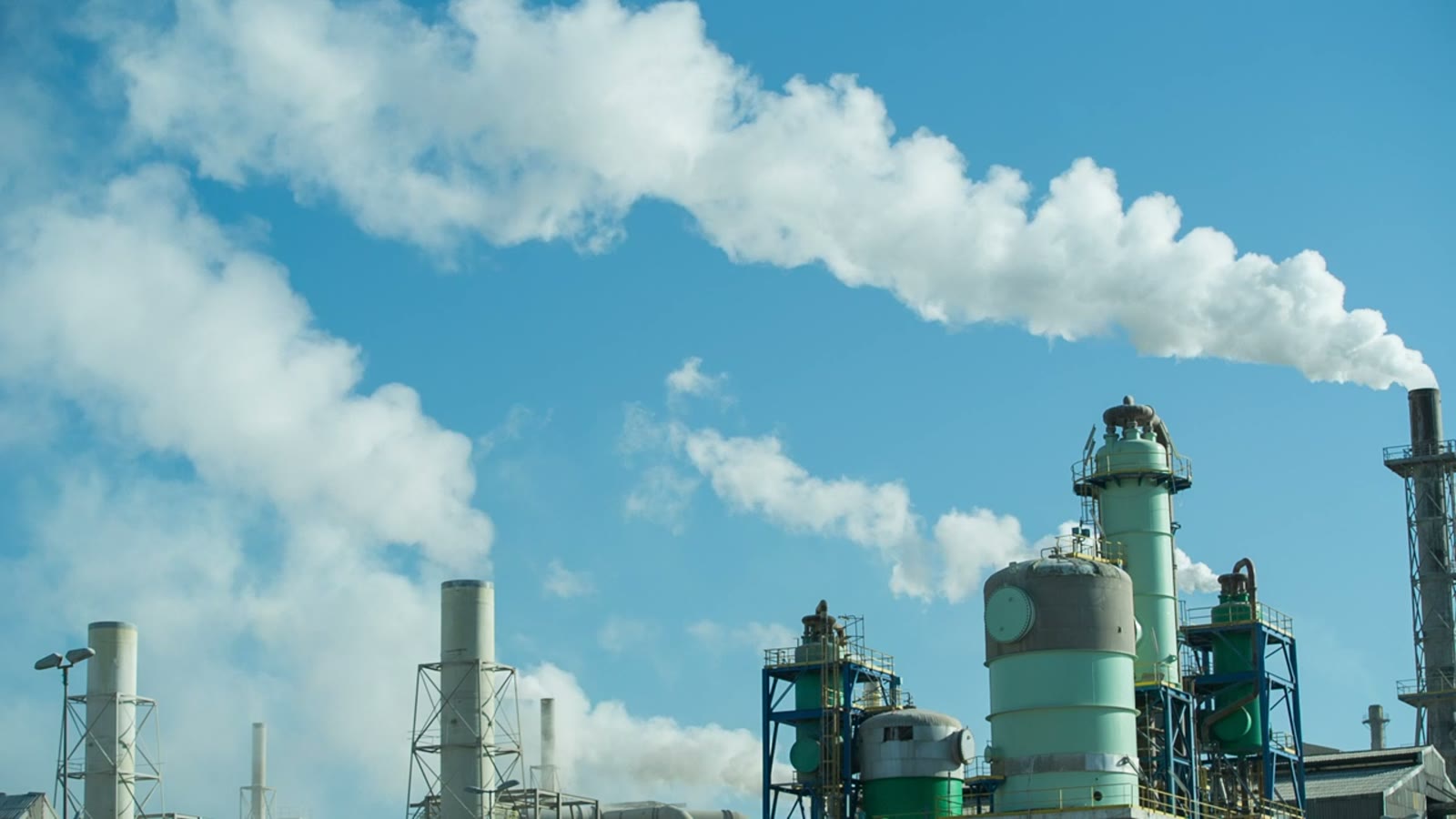
Urea is one of the largest-volume chemical exports globally and historically one of China’s largest. Production is approximately 60 million tonnes per year domestically, much of it for the Chinese agricultural market and the balance for export. China was historically the world’s largest urea exporter, but Chinese export volumes are now subject to quota and policy controls that vary year to year. For international buyers, urea is an interesting case study in commodity sourcing where the FOB price is straightforward but the policy risk and the bulk-vessel logistics dominate the working-capital exposure.
What urea actually is
Urea is the simple organic compound (NH₂)₂CO, the diamide of carbonic acid. It is a white crystalline solid at room temperature, highly soluble in water. The product is the largest-volume nitrogen fertiliser in the world (because it has the highest nitrogen content per kilogram of any solid fertiliser at 46% N), and is also the dominant feedstock for melamine production, the input for AdBlue (diesel exhaust fluid) production, and a chemical intermediate in many synthesis processes.
Urea is produced industrially by reacting ammonia with carbon dioxide at high temperature and pressure, so the urea industry is downstream of the ammonia industry. China’s urea capacity is built on coal-based ammonia (most of the world is built on natural-gas-based ammonia), which gives Chinese producers a different cost structure, competitive in periods of high natural gas prices, less competitive when natural gas is cheap.
Industrial applications and grade selection
Urea applications:
- Direct-application nitrogen fertiliser (the largest single use globally), agricultural-grade
- Bulk-blend fertiliser feedstock, granular urea preferred for mechanical strength
- Melamine production (which goes on to laminates, adhesives, and fire-retardants), technical grade
- AdBlue / DEF (diesel exhaust fluid), automotive-grade meeting ISO 22241-1 / AUS 32
- Cattle feed supplement (non-protein nitrogen), feed grade with biuret limits
- Pharmaceutical and cosmetic (skin-care formulations, urea-based topicals), pharmaceutical grade
- Resin production (urea-formaldehyde for plywood, particle board), technical grade
The grade hierarchy:
- Agricultural grade (46% N min, ~99% urea content, biuret under 1.5%), the dominant export grade
- Industrial / technical grade (99.5%+ urea, biuret under 0.7%, low metal content), for chemical synthesis
- Feed grade (USP-aligned biuret limits, food/feed-safety profile)
- AdBlue grade (AUS 32 / ISO 22241-1), very tight chloride, metal, biuret limits
- Pharmaceutical grade USP, pharmaceutical formulation
For more on how grade designations work, see Technical Grade vs Pure Grade.
Chinese production geography
Chinese urea production is geographically concentrated in:
- Shandong province, multiple large producers; coastal access to Qingdao
- Henan province, large central-China producers; rail access to coastal ports
- Inner Mongolia and Xinjiang, the largest single producers built on coal-based ammonia; export logistics depend on rail-to-coast or rail-to-overland-export routes
- Hebei, Shanxi, Anhui, moderate volumes
- Sichuan and Yunnan, smaller; supply Southwest China
For volume buyers, the typical sourcing is from Shandong (Qingdao port) or from Henan with rail to Qingdao or Shanghai. Inner Mongolia / Xinjiang producers are competitive on FOB price but the inland transport adds USD 20-50 per MT.
Form, packaging, and bulk handling
Urea ships in two forms with different handling characteristics:
| Form | Description | Container/handling |
|---|---|---|
| Prilled urea | ~1.5-3.0 mm spheres, lower mechanical strength | Cheaper; standard for direct-application fertiliser |
| Granular urea | ~2-4 mm spheres, higher mechanical strength, lower dust | Premium; preferred for bulk-blend and mechanised handling |
Packaging:
| Packaging | Fill | Typical use |
|---|---|---|
| 25-50 kg PP/paper bags | 25-50 kg | Retail, small-volume distribution |
| 1,000-1,200 kg big bags | 1,000-1,200 kg | Containerised volume export |
| Bulk in 40-foot container | ~26-28 MT loose | Less common; some Chinese buyers |
| Bulk vessel | ~25,000-50,000 MT per parcel | Dominant for inter-continental volume trade |
For containerised export, 1-tonne big bags in 20’GP containers is the standard. Each 20’GP holds 18-20 big bags at 1,000 kg fill = 18-20 MT cargo. For volume-buyer projects (5,000+ MT), bulk vessel charter is more economical.
Regulatory profile by destination market
| Destination | Primary regime | Urea status | Notes |
|---|---|---|---|
| US | TSCA | Listed | TSCA cover sheet on entry |
| EU | REACH | Registered | Standard REACH SDS reference |
| Australia | AICIS | Listed | Annual AICIS declaration |
| China (domestic) | IECSC | Listed | No NCSN required |
| India | India BIS | Standard | Often subject to CPCB clearance for hazardous chemical handling |
| AdBlue / DEF markets | ISO 22241-1 | Specific spec | Automotive-grade certification by independent lab |
For SDS Section 14 (transport), urea is not classified as IMDG DG. It ships on standard non-DG tariff rates, no MSA China DG packing certificate required.
Tariff and trade-remedy stack
For US-bound urea from China:
| Component | Status |
|---|---|
| HTS 3102.10 MFN tariff | Free |
| Section 301 List 3 | +25% (active on most fertilisers including urea) |
| Anti-dumping duty | None active on Chinese urea specifically |
| Countervailing duty | None active |
| Total duty | 25% on FOB value |
For an Australian buyer under ChAFTA: MFN rate already free; ChAFTA does not change the duty.
For an EU buyer: MFN rate free.
For Brazilian, African, and Latin American buyers: typically the MFN rate plus any country-specific fertiliser policy.
The Section 301 stack has been disruptive to US imports of Chinese urea since List 3 took effect. Many US buyers have shifted to Russian, Trinidadian, Egyptian, and Saudi alternatives. Chinese urea is currently not the cheapest landed option for US-bound cargo.
The export quota / policy risk
This is the distinguishing feature of urea sourcing from China. Since 2007 the Chinese government has periodically imposed:
- Seasonal export taxes (e.g. 30-40% during planting seasons to keep product domestic)
- Export quotas that limit the total tonnage exportable in a given period
- Outright export suspensions during fertiliser supply emergencies
The most recent significant restriction was 2021-2022 when China tightened export quotas to manage domestic supply, contributing to a global urea price spike. The export policy can change with little notice.
For a buyer considering Chinese urea:
- Confirm current export policy with the supplier and with industry sources before booking
- Build policy-risk premium into the contract, typically 5-10% above FOB to account for the possibility of policy-driven supply disruption
- Diversify sourcing, for ongoing supply, do not depend on Chinese urea as the sole source
Russian, Trinidadian, Egyptian, and Saudi producers do not face equivalent export-policy risk and are often the more reliable supply source even at slightly higher FOB prices.
Freight cost and routing
For a 50,000 MT bulk vessel of granular urea Qingdao to Houston:
| Component | Estimated cost |
|---|---|
| FOB Qingdao base | USD 280-360 / MT × 50,000 = USD 14-18 million |
| Bulk freight (handysize bulker) | USD 40-70 / MT × 50,000 = USD 2-3.5 million |
| Marine insurance | 0.05-0.15% × cargo value |
| Destination port handling and storage | USD 10-20 / MT |
| MFN tariff | Free |
| Section 301 List 3 (25%) | USD 3.5-4.5 million |
| Total landed | ~USD 19-26 million |
| Per MT landed | USD 380-520 |
Compare to the US Gulf Coast spot price for granular urea in 2026 (~USD 380-430/MT): Chinese urea is competitive only when the FOB price is at the low end of the range AND the freight is favorable.
For containerised cargo (smaller volumes), the per-tonne freight is higher (USD 80-130/MT) and only makes sense for cargoes under 5,000 MT.
Operational failure modes
Three patterns recur:
- Bag failure during multi-handle transport. Urea is hygroscopic. A bag that loses integrity during port handling can cake into a single mass once the cargo absorbs ambient moisture. Recovery requires breaking up the cake. Specify multi-trip 13H4 bags rather than 13H1 single-trip when buying volume.
- Bulk-vessel hold cleanliness. Bulk vessels carrying urea need clean, dry holds. A vessel last-loaded with cement or sulfur can leave residues that contaminate the urea cargo. Independent surveyor inspection of holds before loading is the standard practice on volume bulk shipments.
- AdBlue spec drift across batches. AdBlue requires very tight chloride and metal limits. A factory’s standard agricultural-grade urea may pass AdBlue spec on one batch and fail on the next. For AdBlue buyers, every batch needs independent ISO 22241-1 testing.
Quality assurance
Standard documentation:
- Per-batch COA showing total nitrogen, urea content, biuret, moisture, and any contract-specific parameters (ash, chloride, metal limits for AdBlue)
- SDS per GB/T 17519 on the China side, OSHA HCS / CLP on the destination side
- Packing list tying batches to bags or container loads
- Bill of lading with cargo description and Incoterms
- Certificate of origin. ChAFTA preferential certificate for Australian-bound cargo
- ISO 22241 compliance certificate for AdBlue-grade cargo
For first-shipment relationships, independent pre-shipment inspection is recommended. SGS, Bureau Veritas, and Cargill’s inspection unit are commonly used for bulk urea cargoes.
Payment and trade finance
Chinese urea factories typically accept:
- T/T 30/70 split, most common
- L/C at sight, for new relationships
- L/C 30-60 days usance, for established
- Open account, for top-tier credit-insured buyers
For bulk-vessel cargoes, charterparty payment terms are often integrated with cargo payment (cargo pays at sight against shipping documents; charterer pays freight at completion of discharge).
When Chinese urea is the right call
Chinese urea is the right sourcing choice when:
- Spot supply gap. Chinese factories can deliver volume on shorter lead times than some major exporters
- The buyer is in a Belt-and-Road or RCEP partner country, preferential tariff and CNY-settlement options reduce the all-in cost
- Specific grade requirements that Chinese factories meet at competitive price, some technical-grade and pharmaceutical-grade specs
When Chinese urea is the wrong call:
- Routine US imports. Section 301 +25% makes alternatives cheaper
- Long-term offtake contracts. Chinese export-policy risk argues for diversified sourcing
- AdBlue-grade only, automotive-grade producers in Russia, EU, and US are typically more reliable on spec consistency
Prilled versus granular and why it matters
Chinese factories produce urea in two physical forms. Prilled urea is small, near-spherical particles around 1 to 2 mm in diameter, formed by dropping molten urea down a prilling tower and cooling it on the way down. Granular urea is larger particles around 2 to 4 mm, formed by spraying molten urea onto seed particles in a fluidised bed. The two forms carry the same chemistry and roughly the same urea-content spec, but they behave differently in the field and in transit.
Granular is the global standard for direct application in agriculture. The larger particle size handles better in air-spreading equipment, dissolves at a more controlled rate when band-applied or banded into furrows, and resists wind-drift losses. Prilled is the legacy product, still common in China for domestic agricultural use and for applications where the urea is dissolved or melted before use (industrial chemistry, AdBlue manufacture, cattle-feed compound production).
For a US, EU, or AU buyer, granular is almost always the right specification. Chinese capacity is split roughly 60% prilled, 40% granular, which means that on weeks when granular capacity is fully booked, prilled is what you get offered if you cannot wait. Specify granular explicitly on the purchase order and confirm with the COA before payment.
The freight implication is also worth pricing. Granular has marginally better bulk handling characteristics, less dust, less caking on long voyages. For bulk-vessel cargoes the granular premium of USD 5 to USD 15 per MT typically pays back in reduced port-handling losses.
AdBlue and the technical-grade urea distinction
The Chinese AdBlue / DEF (diesel exhaust fluid) market grew sharply through 2018-2024 as Chinese diesel-fleet emission standards tightened. Chinese factories now produce both agricultural-grade urea and technical-grade urea suitable for AdBlue manufacturing.
The ISO 22241-1 specification for AdBlue-grade urea is tight: total urea minimum 98.5%, biuret maximum 0.30%, ash maximum 0.005%, calcium maximum 0.5 ppm, iron maximum 0.5 ppm, copper maximum 0.2 ppm, zinc maximum 0.2 ppm, chromium maximum 0.2 ppm, nickel maximum 0.2 ppm, aldehyde maximum 5 ppm. Most agricultural-grade urea fails on the metal limits even when the urea content is in spec.
Three Chinese factories with established AdBlue-grade urea capacity:
- Sinopec Jiujiang, dedicated technical-grade line, batch-tested per ISO 22241.
- Yara China, joint venture with Yara International. Premium pricing, premium spec consistency.
- Hualu-Hengsheng (Shandong), large producer with separate technical-grade reactor. Mid-tier pricing, good consistency.
For volume AdBlue buyers, source from one of these three or accept that every batch from a general-purpose factory needs independent ISO 22241 testing before acceptance. The testing cost is USD 200 to USD 500 per batch but saves an entire shipment when the test catches a metal-limit fail.
Bulk vessel chartering for urea cargoes
Volume buyers (typically over 25,000 MT per shipment) charter bulk vessels rather than ship in containers. The vessel-chartering economics are different from container-cargo economics and worth understanding before negotiating.
A handysize bulker (28,000 to 40,000 dwt) is the typical urea carrier. The vessel is fixed on a voyage charter with the urea factory or its appointed agent acting as the disponent owner-substitute, and the buyer named as the receiver in the charterparty. The lay/can window (the vessel arrival window at the loading port) is typically 7 to 14 days. Demurrage runs USD 8,000 to USD 20,000 per day at 2026 rates, depending on vessel size and market conditions.
The cargo specification is incorporated into the bill of lading by reference to the COA. For agricultural cargoes, hold cleanliness is the binding constraint, vessels recently carrying cement, sulfur, coal, or grain need professional cleaning before urea acceptance. Independent surveyors (SGS, Bureau Veritas, ITS) inspect holds before loading and certify cleanliness; the cost is USD 2,000 to USD 5,000 per vessel and is universally absorbed by the buyer.
Discharge-port logistics matter. US Gulf Coast urea berths at Houston, New Orleans, and Tampa can each handle handysize vessels but vary in turnaround speed. Brazilian buyers route through Paranaguá or Santos. Australian buyers typically route through Newcastle or Brisbane. Confirm the discharge berth’s typical turnaround and rate per MT before fixing the cargo.
Practical sourcing checklist
Before issuing a PO:
- Confirm current Chinese export policy (export quota status, export tax)
- Confirm grade specifications (urea %, biuret, moisture, ISO 22241 compliance for AdBlue)
- Confirm form (prilled vs granular)
- Confirm packaging (1-tonne bags, 25-50 kg bags, or bulk)
- Confirm HS code classification, 3102.10
- Confirm Incoterms (FOB, CFR, CIF) with explicit named place
- For bulk cargo, confirm vessel-charter party terms (laytime, freight rate, cargo description)
- Confirm payment terms
- For AdBlue, confirm independent ISO 22241 certificate per batch
Related sourcing references
For freight: BAF, Demurrage, Lay Days. For Incoterms: FOB, CIF, CFR. For documentation: Bill of Lading, Certificate of Origin, Commercial Invoice. For trade finance: L/C, T/T, Open Account.