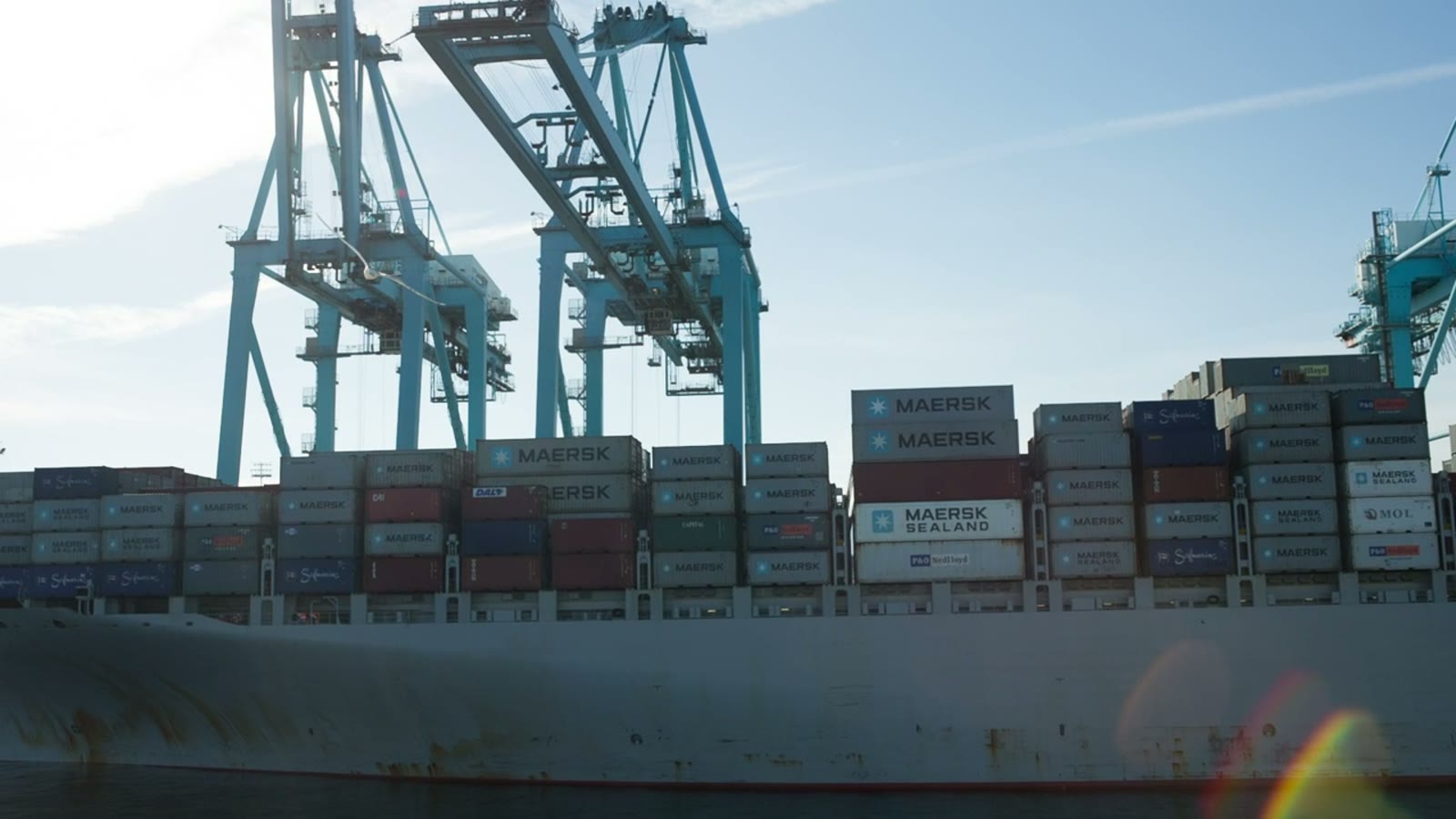
This is a guide to importing industrial chemicals from China to the United States, written for a US importer about to ship their first container, and just as relevant for one shipping their hundredth. It walks the chain end to end: from the moment you write a specification, to the moment the cargo lands in your warehouse, with every documentation step, regulatory check, and cost line that needs to be in place along the way.
Twenty years of running this out of Shanghai Pudong is the basis. Most of the failure modes described here are failures we have either lived through or watched someone else live through. The discipline below is what eliminates them.
Step 1: Specification and factory shortlist
Every chemical import starts with a specification. Not a vague description, a CAS-number-specific statement of what you want, at what grade, in what form, in what package. The spec sheet should fix:
- Substance identity, chemical name, CAS number, molecular formula. CAS number is the discriminator. “IPA” can be reagent grade, electronics grade, or pharmaceutical grade. CAS 67-63-0 is unambiguously isopropyl alcohol; the grade is a separate specification.
- Grade and purity, minimum assay percentage, maximum impurities, residual moisture, residual solvents, heavy metals.
- Physical form, liquid, powder, granule, paste, crystalline solid.
- Package, drum, IBC, bulk bag, ISO tank. Size and material.
- Quantity, annual or per-order, in metric tonnes or unit count.
- Destination port. Houston, Long Beach, Charleston, Newark, etc. Affects freight quote and transit time.
With the spec in hand, the factory shortlist is built from three sources: existing factory relationships you have built over previous orders (most reliable), referrals from sourcing partners who have visited the factory in person (next most reliable), and Alibaba or industry-database listings (least reliable, requires verification).
The verification rule for any new factory: the entity exporting must be a real manufacturer, not a trading company without production capacity. The single most expensive trap in chemical sourcing is a trading company that quotes lower than the factory direct, takes the deposit, and either fails to deliver or delivers from an inferior secondary source. Verify by visiting the factory in person, by demanding production photos and certifications matched to the visit, or by working with a sourcing partner who has the verification already done.
For the substance class we ship most, solvents, pigments, catalysts, polymer additives, paper-industry chemicals, water-treatment chemicals, the legitimate Chinese manufacturer base is concentrated in Shandong, Jiangsu, Zhejiang, and parts of Guangdong. Factories outside these provinces exist but are rarer for industrial chemicals at export-grade specification.
Step 2: Proforma invoice and contract
Each shortlisted factory issues a proforma invoice (PI) covering the substance, quantity, unit price, total value, packaging, payment terms, and Incoterm. The buyer reviews each PI and selects the factory.
Three things to verify on every PI before paying any deposit:
- Bank details on the PI match the factory’s legal corporate account. Chinese factory PI should show a Chinese mainland bank, account name identical to the seller name on the PI, branch in the same city as the factory’s registered address. A Hong Kong account or a personal account is a deposit-fraud red flag.
- MOQ is achievable for your order. MOQ is set by the factory’s batch economics; sub-MOQ orders either don’t happen or get redirected to a sample-order with much higher per-unit pricing.
- The Incoterm is right for your logistics setup. FOB is the default for sea freight from China and works for most US importers with a freight forwarder relationship. CIF is simpler for first-time importers without a forwarder. DDP is structurally problematic for chemical imports because the destination importer-of-record obligation cannot be delegated to the Chinese factory.
The deposit (T/T) is typically 30 percent of the order value, paid against the PI to trigger production. The balance (70 percent) is paid against the B/L copy after vessel sailing, sometimes conditional on a clean SGS or Bureau Veritas inspection certificate, especially for first orders.
For larger first orders (typically USD 80,000+) with new factories, a Letter of Credit at sight may be the better payment instrument, bank-mediated, eliminates deposit-fraud risk, costs 1 to 2 percent of order value in fees but eliminates a meaningful exposure.
Step 3: TSCA and HS classification
For US imports, the regulatory clearance question is TSCA status. Three pathways:
- The substance is on the TSCA Inventory. Standard import pathway. TSCA certification filed at entry by the importer.
- The substance has a cleared PMN with a SNUR. Section 5 PMN cleared the substance for commercial introduction; the SNUR (Significant New Use Rule) defines what uses are covered. Buyer must verify their use fits the SNUR scope.
- The substance is exempt (R&D quantities, articles, qualifying polymers). Importer self-certifies under the applicable exemption.
The lookup is simple: the factory provides the CAS number, the importer searches the TSCA Inventory on EPA’s CDX, and either confirms the substance is listed or kicks off the PMN process. Allow 4 months for a PMN, 30 to 60 days for the importer’s preparation, 90 to 180 days for the EPA review. PMN preparation is not a four-day exercise.
The HS classification question runs in parallel. The international 6-digit HS core is straightforward; the HTSUS 10-digit tail determines the exact US duty rate. For ambiguous substances (chemical intermediates that exist as both raw materials and formulated products, polymer additives that may classify under chapter 29 or chapter 38), the classification choice can move the duty by full percentage points. For high-value or recurring imports, the right move is to file for a binding ruling with CBP through the CROSS system, a binding ruling locks in the classification for that product and gives audit-proof certainty.
Step 4: Section 301 and AD/CVD check
Once the HS code is fixed, the duty exposure is computed. Three components stack on top of standard MFN duty:
- Section 301 tariff at 7.5 percent (List 4A) or 25 percent (Lists 1, 2, 3) for HS codes on the lists. Verify your specific HS code against the current USTR List.
- Anti-Dumping Duty if the substance from the factory’s specific producer is subject to an active AD order. AD rates are producer-specific, a 5 percent AD rate at one producer can be a 60 percent rate at the next. Cross-reference factory name (in Chinese characters and pinyin) against the US Department of Commerce active AD orders.
- Countervailing Duty if the substance is subject to an active CVD order. CVD rates are similarly producer-specific.
A worst-case duty stack on a Chinese chemical: standard MFN 3.7 percent, Section 301 List 3 at 25 percent, AD at 50 percent, CVD at 15 percent, total 93.7 percent before broker, freight, or warehousing. This is real for some specific substances from specific producers. Quantify the stack at the quote stage. Late discovery of a 70 percent duty load is the most expensive mistake in chemical sourcing.
For buyers who re-export portions of their imports, duty drawback recovers up to 99 percent of the duty paid (including Section 301 and AD/CVD) on the re-exported volume. Set up the drawback documentation discipline at the start, not at year-end reconstruction time.
Step 5: DG classification and booking
If the substance is dangerous goods under the IMDG Code, Step 5 is a chain of its own. The factory must produce:
- MSDS in English with Section 14 listing UN number, proper shipping name, hazard class, and packing group
- DG Declaration signed by the shipper, reconciling line-by-line with the MSDS Section 14
- UN-certified packaging with the UN code stamp on every drum, IBC, or pail
- Hazard labels and placards on the cargo and on the container
Class 3 (flammable liquids), Class 6.1 (toxics), and Class 8 (corrosives) cover most chemical DG cargo. The packing group determines packaging strength requirements: PG I most stringent, PG III least.
The carrier booking is more involved than for general cargo. The carrier’s chemist reviews the DG Declaration, verifies the UN number and class, confirms the packing group and packaging match, and checks segregation rules. Booking failures at this stage cost the cargo a sailing slot, typically a 1-to-2-week delay to the next vessel plus rebooking fees.
DG cargo almost always ships FCL, even at small volumes, most consolidators refuse to share containers with DG. Plan accordingly.
Step 6: Pre-shipment inspection
Before the container loads, an independent third-party inspector, SGS, Bureau Veritas, Intertek, or TÜV, visits the factory to verify the cargo. Standard scope:
- Quantity verification against the packing list
- Packaging integrity and damage check
- UN packaging certification verification for DG cargo
- Label and marking verification
- AQL sampling for major and minor defects
- Sample collection for laboratory analysis against spec
- Loading supervision with container photographs and seal recording
Inspection cost for a 20-foot chemical container: USD 250 to USD 800 depending on scope and lab analysis. The cost is asymmetric, a clean inspection is the cheapest insurance you can buy against a contaminated or non-conforming container costing six figures at destination. Run it on every shipment, including repeat orders from familiar factories.
The inspection report should appear within 48 hours of the inspection visit, with the lab certificate appended within 5 to 10 days for routine analysis. Hold the balance T/T payment against the inspection certificate.
Step 7: Sea freight and on-water
The factory hands the cargo to the carrier (under FOB, at the load port; under CIF, the factory has arranged the freight). Vessels load at Shanghai (the dominant export port for the Yangtze River Delta factory base), Qingdao (for the Bohai Sea region. Shandong factories), or Nanjing (for Jiangsu factories that consolidate inland).
Transit times to major US ports:
| Origin | Destination | Transit (typical) |
|---|---|---|
| Shanghai | Long Beach | 14-21 days |
| Shanghai | Houston (via Panama) | 28-35 days |
| Shanghai | Newark | 28-32 days |
| Shanghai | Charleston | 30-35 days |
| Qingdao | Long Beach | 14-21 days |
The factory issues the B/L at the load port (under FOB, the carrier issues to the shipper; the shipper is the factory). Original B/L courier (DHL, FedEx) to the US importer should be timed to arrive 3 to 5 days before vessel berth, ahead of arrival, with buffer for courier delay. Telex release is a faster alternative for established factory-buyer relationships.
Step 8: US customs clearance
US import filings are time-bound and procedural. Three filings happen around vessel arrival:
- Importer Security Filing (ISF / “10+2”), must be filed at least 24 hours before vessel loading at the foreign port. Late ISF filing carries a USD 5,000 penalty per violation. Most freight forwarders handle this automatically, but the importer is on the hook if it fails.
- Customs entry, filed up to 5 days before vessel arrival or up to 10 working days after, depending on the entry type. The customs broker prepares the entry from the commercial invoice, packing list, and B/L. Entry fields: HS code per line, declared value, country of origin, importer of record.
- TSCA certification, filed at entry as a positive certification (substance is in compliance with TSCA) or negative certification (substance is not subject to TSCA, narrow exemptions only).
For DG cargo, additional filings: HMA (Hazardous Materials Acceptance) checks, possible DOT review.
If everything is in order, customs clears the cargo electronically and the container is released for collection. If customs holds for inspection (more likely for DG cargo, for high-value cargo, and for cargo from new importers), demurrage clocks at the port during the hold.
Step 9: Last-mile delivery
The container leaves the port and the detention clock starts. From port to consignee warehouse, three steps:
- Trucking dispatch. Book the trucker before vessel ETA, not after. Trucking from major US ports to inland destinations typically takes 1 to 3 days for east-coast moves, longer for cross-country.
- Warehouse receiving. Confirm warehouse space and receiving labour 5 days before vessel arrival. Drum-by-drum unloading of an 80-drum container takes a full working day, longer if the loading dock is shared.
- Empty return. The container is unloaded; the trucker returns the empty to the carrier-designated depot. Empty depot capacity is occasionally constrained, confirm before unloading begins.
Total avoidable demurrage and detention exposure on a single chemical container: USD 1,000 to USD 2,500 if any link of the chain runs long. Plan tightly.
Cost summary: a typical chemical container
For illustration: a 20-foot container of an industrial chemical (CAS-listed, TSCA-Inventory-listed, HS code with no Section 301, no AD/CVD), shipped FOB Shanghai to Houston, factory price USD 50,000.
| Cost line | USD |
|---|---|
| Cargo (FOB Shanghai) | 50,000 |
| Sea freight (typical, market-dependent) | 1,500 - 3,500 |
| Marine insurance (ICC A) | 100 - 300 |
| Pre-shipment inspection (SGS) | 400 |
| Original B/L courier | 50 - 80 |
| US Customs entry / broker | 200 - 500 |
| Standard MFN duty (3.7%) | 1,850 |
| Trucking port-to-warehouse | 800 - 1,800 |
| Approximate landed cost | 54,900 - 58,400 |
Add Section 301 (List 3 at 25%): another USD 12,500 on a USD 50,000 cargo. Add AD/CVD where applicable: tens of thousands more. Quantify the duty stack at quote stage.
What we do for our buyers
For US importers we work with, the chain above is the work. Factory shortlist and verification, PI review and bank-detail check, TSCA and HS classification cross-check, Section 301 and AD/CVD scoping, DG classification and booking where applicable, pre-shipment inspection booking and report review, B/L tracking and courier management, customs documentation pre-filing review, and trucking coordination at the destination side.
A US importer running their own first container without sourcing support typically discovers two to four of the failure modes listed above, and the discoveries are expensive when they happen. The point of this guide is to make the failures visible at the planning stage, where they can be designed out, not at the destination port, where they cost real money.
If you are about to ship a chemical from China to the US and want a second pair of eyes on the chain, send us your specification. We will look at it the same way we look at our own bookings.