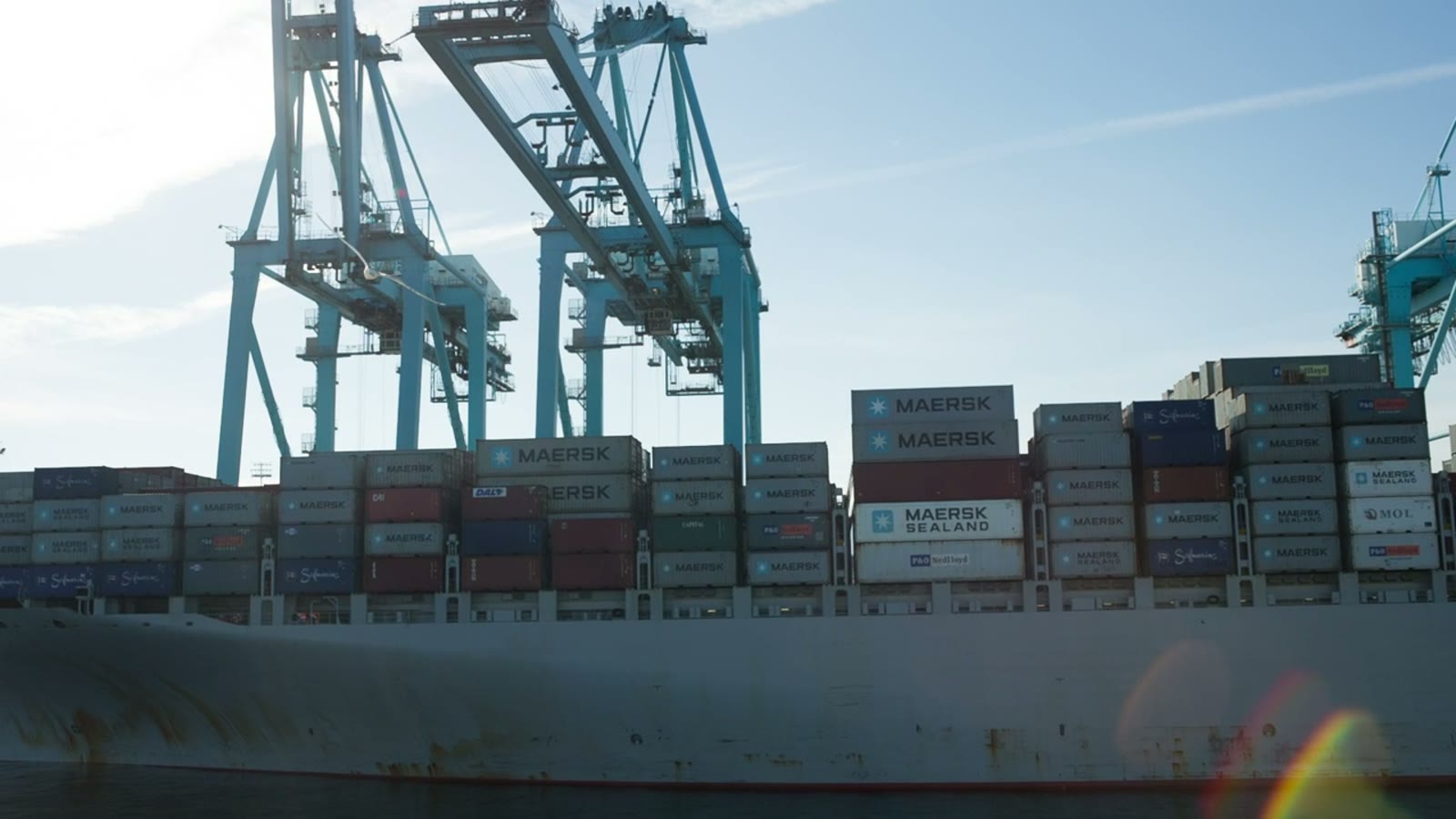
Shanghai announced a two-phase lockdown on 27 March 2022. Pudong, east of the Huangpu River, went into full lockdown on 28 March through 1 April. Puxi, west of the river, was scheduled to follow on 1 April through 5 April. The local authorities framed it as a public-health-driven testing cycle, not a full city shutdown. Two weeks from now you will look back on that framing and laugh. The Pudong lockdown alone covers the manufacturing heart of Shanghai’s chemical and specialty industries, the container-handling backbone of Yangshan deep-water port, and most of the road network that feeds Waigaoqiao on the mainland.
Yangshan and Waigaoqiao terminals are still operating on 30 March. Officially. But the gates are only useful if trucks can physically get to them. Drayage drivers from Pudong cannot move without passes. Drivers arriving from outside Shanghai face PCR testing queues measured in hours, sometimes days. Inland trucking to and from factories in Jiangsu and Zhejiang hit a wall of inconsistent provincial rules. Empty containers are piling up in the wrong places. Full containers are stuck in the wrong yards. Vessels are arriving on schedule and finding 30 to 40% of their expected export cargo is not at the port because the truck that was supposed to bring it is still in a testing queue 40 kilometres away.
If you have chemical shipments on the water from Shanghai right now, or scheduled to load in Q2, you need to understand exactly what is breaking and what it costs. This post walks through the lockdown mechanics, the specific terminal and trucking impact, the factory side in Pudong, Minhang, and Songjiang, what carriers MSC, Maersk, and CMA CGM are already doing about it, and the landed cost hit on a representative chemical shipment.
The Lockdown Mechanics and Why “Port Is Open” Does Not Mean “Cargo Is Moving”
Shanghai’s approach on 27 March was sold as a staged, selective measure. Pudong first, Puxi second, two rounds of mass testing, then a return to normal. Anyone who watched the Shenzhen lockdown earlier in March knows how this plays out. Staged becomes simultaneous. Five days becomes three weeks. Selective becomes comprehensive.
Yangshan and Waigaoqiao both fall outside the residential lockdown zones. Officially the ports run 24/7 and container handling at the quay is continuing. Vessel arrivals are being berthed. Crane operations are running, though with reduced on-shift personnel because port workers who live in locked-down residential zones can no longer commute. Reduced gate productivity flows straight into reduced vessel productivity.
The practical chokepoint is trucking. Drayage in Shanghai depends on a daily flow of around 20,000 to 25,000 container truck movements through the port gates. Those trucks need drivers, fuel, road access, and clean health codes. Under the lockdown rules, drivers need to hold a valid PCR test taken in the past 48 hours, a green health code, and in many cases a factory-area pass to collect or deliver containers to Pudong facilities. The testing capacity was nowhere near sufficient to clear 25,000 drivers per day through the required process.
Shanghai port throughput in March 2022 was on track for approximately 4 million TEU for the month. If trucking capacity is running at 40 to 60% of normal for two to four weeks, you are looking at a 500,000 to 1 million TEU backlog building up before the lockdown even ends. That backlog does not clear the moment lockdown lifts. Recovery takes weeks of overtime gate operations and vessel catch-up.
Factories Are Shutting or Running on Closed-Loop Production
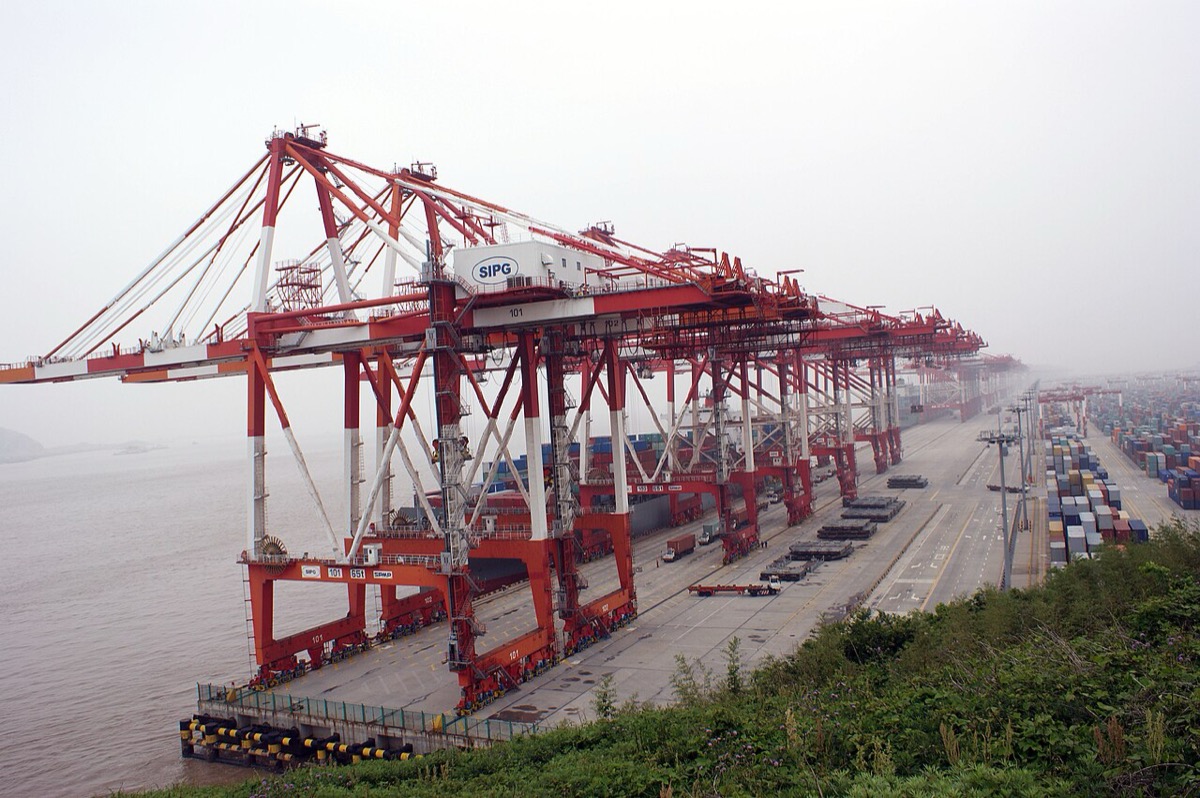
Pudong houses several of Shanghai’s most important industrial districts: Jinqiao Export Processing Zone, Zhangjiang High-Tech Park, and the Chuansha industrial area, plus significant petrochemical and specialty chemical operations in the Shanghai Chemical Industry Park (SCIP) at Jinshan, south of central Pudong. Minhang and Songjiang districts, technically in Puxi and the western outskirts, are also heavily industrial.
Multiple chemical and specialty chemical plants within Pudong went into closed-loop production on 28 March, meaning staff were confined to factory dormitories and kept working. Closed-loop runs until staff rotations become impossible, typically 7 to 14 days before cracks show. Factories that did not have closed-loop capability simply stopped. Specialty chemical, fine chemical, and contract manufacturing sites with smaller workforce footprints hit particularly hard because a single absence takes out a batch.
Export-bound cargo from these plants was already packed, labelled, and waiting on the loading dock in many cases. What broke was the outbound truck movement. Even factories operating in closed-loop cannot ship product if the truck drivers cannot reach the gate with valid health codes to collect it.
Jiangsu and Zhejiang factory operators serving export markets through Shanghai port faced a different but parallel problem. Inter-provincial trucking into Shanghai requires additional health code and testing compliance that has been inconsistently enforced across city checkpoints. A Jiangsu producer who loaded a container on 27 March expecting Shanghai port delivery on 29 March is finding that the truck is stuck at a provincial checkpoint waiting for documentation review.
Carrier Omissions and Why MSC, Maersk, and CMA CGM Are Already Adjusting Schedules
By 30 March, the three largest container lines were publishing lockdown-specific service updates. MSC confirmed schedule adjustments across its Asia-North Europe and Asia-East Coast US loops. Maersk acknowledged congestion at Shanghai and began notifying customers of potential port omissions, in which a vessel skips Shanghai entirely and proceeds to the next scheduled port, typically Ningbo or Qingdao. CMA CGM confirmed similar contingency planning.
Carrier omission means your cargo that was booked on a specific vessel at Shanghai does not get loaded on that vessel. It either waits at the port for the next vessel (typically 7 to 14 days out), gets rerouted to another port for loading (logistically complex and frequently not practical for chemical cargo already packed and inbound), or gets moved to air freight at very short notice and dramatically higher cost.
For chemical importers, the specific concern is that many chemical products ship in ISO tank containers or flexitanks rather than standard dry containers. These require specific handling capability at origin port and at destination, and carrier vessel mix constraints mean rerouting is harder than for a standard 40-foot dry box.
| Carrier | Shanghai service status as of 30 March | Omission risk for Q2 loadings |
|---|---|---|
| MSC | Schedule changes announced, congestion surcharge under review | Moderate to high for 2 to 4 weeks |
| Maersk | Customer notices issued, omission option flagged | Moderate to high |
| CMA CGM | Contingency planning active, Ningbo substitution considered | Moderate |
| COSCO | Operating with reduced gate productivity, domestic carrier with political flexibility | Lower but not zero |
| ONE, Hapag-Lloyd | Monitoring, limited guidance so far | Moderate |
The Chinese New Year Backlog That Never Fully Cleared
This is not the first disruption of 2022. The Chinese New Year holiday period in late January and early February already created a production and shipping pause, and the post-holiday restart was slower than forecast. Labour shortages, continued COVID-era travel restrictions on migrant workers returning to coastal factories, and sporadic regional outbreaks meant that by mid-March, Shanghai and the broader Yangtze River Delta were still clearing Chinese New Year shipping backlog.
In that context, the Shanghai lockdown lands on a port system that is already carrying elevated dwell times and reduced spare capacity. Pre-lockdown vessel waiting time at Shanghai was running around 3 to 5 days, already elevated versus the 1 to 2 days typical of a well-functioning month. Post-lockdown, expect waiting times to move toward 10 to 20 days during the worst weeks, with knock-on effects at Ningbo-Zhoushan and Qingdao as carriers shift cargo east.
Ningbo-Zhoushan, approximately 200 kilometres south of Shanghai, is the natural substitution port and is itself the world’s busiest port by cargo tonnage. Ningbo’s container handling runs around 2.8 million TEU per month. Absorbing even 20% of Shanghai’s diverted volume would push Ningbo beyond sustainable utilisation. Qingdao is further north, another realistic substitution port, but trucking cargo from Yangtze Delta factories to Qingdao adds significant cost and lead time.
What the Lockdown Does to a Chemical Shipment Already in Motion
Think through three representative scenarios for a US chemical importer.
Scenario one: your container with 20 MT of fine chemical from a Jiangsu producer was scheduled to load on a CMA CGM vessel departing Shanghai Yangshan on 4 April. The factory cleared outbound on 26 March. The truck hit the road on 27 March and got as far as the Kunshan-Shanghai border before the driver’s health code was flagged for a new testing cycle. The container is now sitting at a roadside truck yard outside Shanghai waiting for driver rotation and fresh PCR test. Best case, it reaches port on 6 April and rolls to the 11 April sailing. Seven-day delay. Realistic case, 10 to 14 days.
Scenario two: your ISO tank container of specialty chemical from Shanghai Chemical Industry Park at Jinshan was loaded 25 March and moved to Waigaoqiao depot on 26 March. The vessel arrived as scheduled on 29 March. Dwell time at Waigaoqiao for ISO tanks was already elevated and your container missed the loading window by six hours. It is now rolled to the next vessel, departing 5 April. One-week delay, plus the vessel itself will be competing for Pacific route slot at a congested destination.
Scenario three: your next scheduled shipment, 15 MT of intermediate ex-Zhejiang for load at Shanghai in week 2 of April. Vessel was booked, freight paid. Carrier has flagged Shanghai as potentially omitted from that sailing. You are asked to either accept rerouting via Ningbo, with associated inland trucking from your Zhejiang producer, or hold for the next Shanghai-calling vessel 10 days later. Ningbo inland add $400 to $600 per container, but gets your cargo moving.
Landed Cost Impact on a Representative Chemical Shipment
Take a US importer bringing in 40-foot containers of ethyl acetate or similar commodity chemical from a Jiangsu Tier-1 producer through Shanghai port, destined for US East Coast via the Panama Canal. Pre-lockdown economics were tight but workable. Lockdown-period economics look different.
| Cost component | Pre-lockdown baseline | Lockdown-impacted reality |
|---|---|---|
| FOB product, 40ft at 20 MT | $1,150/MT | $1,150/MT |
| Export inland, Jiangsu to Shanghai | $800/container ($40/MT) | $1,400/container ($70/MT) (detour, wait time, driver rotation) |
| Origin port handling and congestion surcharge | $200/container | $550/container |
| Ocean freight Shanghai to US East Coast | $8,500/container | $9,200/container (routing premium, possible omission rollover) |
| Delay demurrage, detention at origin | $0 | $450/container (7-day average origin delay) |
| Destination dwell and detention at US port | $150/container | $300/container (bunched arrivals at East Coast ports) |
| US customs duty, port fees, brokerage | $320/container | $320/container |
| Inland to end customer | $1,400/container | $1,400/container |
| Total landed cost per container | $35,770 (roughly $1,789/MT) | $36,620 (roughly $1,831/MT) |
On a per-MT basis that is $42/MT incremental, or about 2.3% on landed cost. For a programme running 50 containers per month, that is roughly $42,500 per month of extra cost. But the real risk is not the 2.3% number. It is the probability distribution around it. Miss one loading window badly and your container is 6 weeks late. Customer relationships built over years get damaged by a single bad late delivery, and competitors with cleaner supply chains start receiving calls.
What You Do This Week and Next
Pull every chemical order, shipment, and production schedule from Shanghai, Jiangsu, and Zhejiang for the next 60 days. Identify shipments already in motion, booked and awaiting load, and not yet finalised. Build a status update by 2 April and again by 9 April. Your forwarder and Tier-1 supplier need to give you container-level status, not generalities.
On shipments not yet loaded, evaluate Ningbo-Zhoushan and Qingdao substitution where your Tier-1 can arrange inland freight. Ningbo is geographically practical for most Jiangsu and Zhejiang producers. Inland freight delta is typically $400 to $800 per container versus Shanghai. Compare that to a 2 to 3 week delay and the calculation is usually straightforward.
On shipments already loaded, brief downstream customers now. A customer told on 1 April their delivery will be 10 to 14 days late, with a clear explanation, plans around it. A customer told on the scheduled delivery date that their container is still at Shanghai looks for alternative suppliers.
For Q2 overall, build buffer inventory where you can. Two to four extra weeks of safety stock for your top 10 chemicals by volume is the simplest protection against further China disruption. Other Yangtze Delta cities have run similar measures, and the Omicron BA.2 wave is still moving.
The lockdown started on 28 March. By the time this reads fresh, Puxi will be in its lockdown window, closed-loop operations will be showing strain, and drayage capacity will have bottomed out. Recovery from a disruption of this scale historically takes 4 to 8 weeks after restrictions ease. That puts the back end of the impact well into May or early June, which means your Q2 chemical shipments are exposed for the full quarter. Plan like it, and protect your customers accordingly.