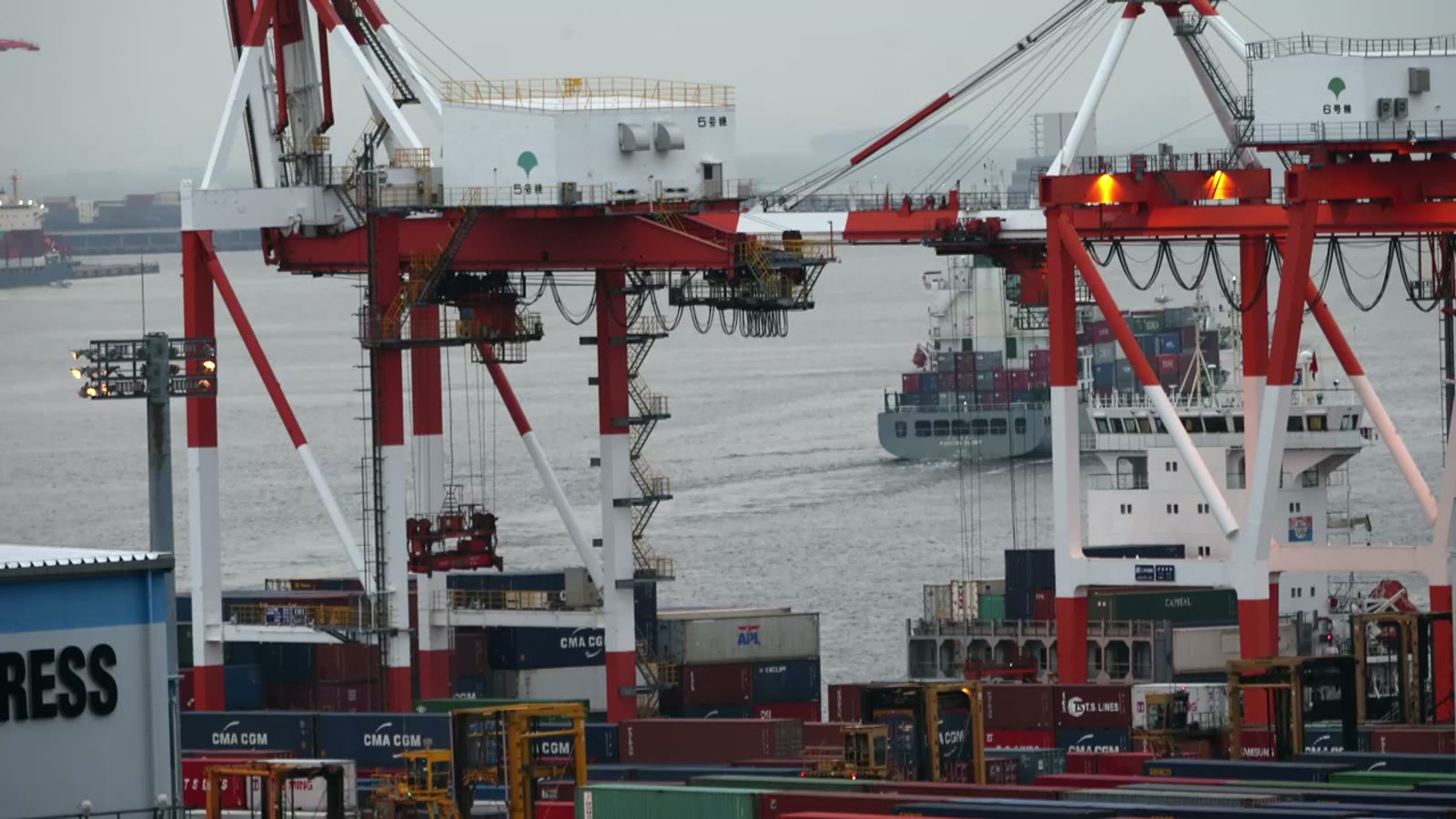
Drewry published its World Container Index for the week ending 11 December 2025, and the composite came in at USD 2,213 per 40 foot container, down 4.1 per cent on the prior week and 31 per cent lower year on year. Shanghai to US West Coast spot closed at USD 2,474 per FEU, below the psychologically important USD 2,500 line for the first time since April 2024. Carriers (Maersk, MSC, CMA CGM, Hapag-Lloyd, COSCO, ONE, Hyundai Merchant Marine) announced General Rate Increases with effect from 1 December 2025 and by 15 December most of those GRIs had been rolled back or absorbed by market discounts. This is a textbook bottom of cycle market, and it’s the cleanest window you’re going to get to lock in 2026 chemical freight contracts.
Here’s the structural picture. The global container fleet grew 16 per cent across 2024 and 2025 combined. Another 9 million TEU of newbuilds are scheduled to deliver through 2026, which is the largest single year delivery wave in container shipping history. Demand growth is running at 3 to 4 per cent. Idle capacity is at 2.1 per cent, which is historically low, but that’s because carriers are running blank sailings and slow steaming to manage the supply glut. The moment carriers try to restore commercial speed and full schedules to capture any demand uptick, effective capacity floods the market and rates fall further. That’s your negotiation leverage.
Why the 1 December GRIs Failed
Carriers typically announce GRIs on the first and fifteenth of each month, and most of those announcements get partially absorbed and partially rolled forward into the published rate. The 1 December 2025 round was different. Every major carrier on the Asia-USWC lane announced GRIs in the USD 600 to 900 per FEU range. Within eight to ten days, most of those increases had been discounted back out through named account quotes, contract override pricing, and early 2026 rate offers designed to lock customers in. By the week of 15 December, the published spot was lower than it had been on 28 November, GRIs notwithstanding.
The reason GRIs are failing to stick is structural rather than tactical. When the supply demand ratio is out of balance toward oversupply, carriers can announce any number they like, but the spot market prices the actual marginal vessel slot, and the marginal slot is being priced by whichever carrier is trying hardest to fill its vessels that week. With nine million TEU of newbuilds coming in 2026, every carrier is going to be trying hard to fill vessels, and GRIs will continue to fail through most of the year.
The implication for your 2026 contract negotiation is that carrier threats about “rising rates” or “capacity tightening” should be treated with deep scepticism. The actual supply curve says otherwise. The practical negotiation posture is to assume that spot will average 15 to 25 per cent below late 2025 levels through the middle six months of 2026, and price your contract floor accordingly.
The Structural Setup for 2026
Four structural factors are driving the market you’re negotiating into. First, fleet supply. The 9 million TEU of 2026 deliveries is a fixed number, the vessels are already in the order book, and most of them are 15,000 to 24,000 TEU mega assets that will be deployed on Asia-Europe and Asia-US strings. That capacity is arriving whether demand justifies it or not. Second, demand. Global container demand is growing at 3 to 4 per cent, which is below the long run trend. Chinese consumer demand is soft, European industrial demand is soft, US goods consumption is rotating from goods to services. None of the major demand pillars are going to surge in 2026.
Third, fuel and environmental compliance costs. IMO 2030 emissions trajectory requirements are starting to cost real money. Carriers are paying for EU ETS compliance on Asia-Europe routes, which is embedded in rates but at a declining dollar per TEU contribution as fuel prices have softened. Scrubber equipped vessels are running at a 40 to 70 USD per TEU cost advantage to non scrubber vessels on the major routes, which cascades into intra carrier pricing. Fourth, port and hinterland costs. LA, Long Beach, Oakland, and Savannah are running smoothly with minimal congestion. Drayage costs are down 8 to 12 per cent year on year as chassis availability has normalised.
| Indicator | December 2023 | December 2024 | December 2025 | 2026 expectation |
|---|---|---|---|---|
| Drewry WCI composite (USD/FEU) | 1,382 | 3,964 | 2,213 | 1,700 to 2,000 |
| Shanghai-USWC spot (USD/FEU) | 1,668 | 4,850 | 2,474 | 1,900 to 2,200 |
| Shanghai-USEC spot (USD/FEU) | 2,518 | 6,109 | 3,680 | 2,800 to 3,100 |
| Shanghai-Rotterdam spot (USD/FEU) | 1,517 | 5,156 | 2,890 | 2,000 to 2,400 |
| Global fleet growth YoY | +6.9% | +8.4% | +7.1% | +8.5% |
| Demand growth YoY | +0.3% | +5.1% | +3.6% | +3.2% est |
The 2026 expectation column is our working base case. It assumes no major disruption (Suez closure re emergence, Panama drought, major port strike) and no positive demand shock. A disruption would push rates up by 20 to 40 per cent temporarily. A demand shock is harder to envision in the current macro environment.
Chemical Freight Specifics: ISO Tanks and Flexitanks
Container freight is only part of the chemical importer picture. ISO tank and flexitank rates move on related but distinct dynamics, and both categories are seeing softening rates through late 2025. A 20 foot ISO tank on the Shanghai to LA lane for IMDG class 3 flammable liquid cargo is currently pricing in the USD 3,400 to 3,900 range, down from USD 5,500 to 6,400 in late 2024. Flexitank rates for non hazardous liquid cargo (food grade oils, glycols, non hazmat industrial liquids) on the same lane are pricing at USD 2,200 to 2,600, down from USD 3,800 to 4,200 a year ago.
The ISO tank market is structurally tighter than the container market because the tank fleet grew more modestly (roughly 9 per cent across 2024 and 2025) and because the dangerous goods handling premium always commands a base surcharge. But the cost stack is still moving down, and the ISO tank lessors (Stolt, Eurotainer, Seaco, Triton) are competing hard for annual volume commitments going into 2026. If your 2025 tank rates were set in mid 2024 when the market was tight, they’re likely 25 to 35 per cent above current market and worth renegotiating immediately.
Flexitank rates are more volatile because the flexitank fitting is a per load cost rather than a depreciating capital asset. Current flexitank fitting costs are USD 520 to 680 per load for a standard 24,000 litre unit on a 20 foot dry container. That cost has softened with the general freight market because dry container rates are the base for flexitank pricing. For a typical Australian importer moving non hazardous industrial liquid cargo in volume (lubricant base oils, glycols, glycerol, surfactant blends), flexitank is often 15 to 25 per cent cheaper than ISO tank on a per tonne basis, and at current rate levels the spread is widest it’s been in three years.
Landed Cost on a Representative Chemical Shipment
Let’s walk through the landed cost math on a realistic Australian importer scenario. You’re bringing 22 TEU of chemical and chemical adjacent cargo from Shanghai Yangshan to Port of Melbourne in Q2 2026. Mix is 14 dry TEU of drummed coating intermediates (non hazmat), 5 TEU of flexitank non hazmat liquid glycol, 2 x 20 foot ISO tanks of IMDG class 3 solvent, and 1 TEU of drummed IMDG class 8 corrosive.
At late 2025 spot, the base ocean freight for Shanghai to Melbourne via transshipment is running at roughly USD 1,850 to 2,100 per FEU for dry non hazmat, USD 2,400 to 2,750 for hazmat dry, and USD 3,600 to 4,100 per ISO tank for class 3 cargo. Applying the 2026 base case (15 to 25 per cent compression), those numbers move to USD 1,400 to 1,650, USD 1,850 to 2,150, and USD 2,700 to 3,200 respectively. Add THC, documentation, origin and destination port fees, inland drayage at both ends, and customs brokerage, and the total landed cost for the 22 TEU parcel moves from roughly USD 72,500 at late 2025 spot to roughly USD 54,800 at the 2026 base case. That’s a USD 17,700 saving on a single mid sized shipment, and if you’re running 30 to 50 of those parcels a year, the aggregate saving is meaningful.
The negotiation posture that captures that saving is to lock a floor, not a ceiling, on your 2026 contract rate. Most Australian chemical importers write their contracts with a carrier minimum quantity commitment (MQC) in exchange for a capped rate, and the cap is the number that gets negotiated. In a falling market, the cap is the wrong variable to negotiate. What you want is a rate that floats down with the Drewry composite, with a carrier commitment to absorb up to two GRIs per year up to a defined maximum. That structure captures the continued compression without exposing you to carrier driven uplift on a quiet month.
How to Structure the 2026 Contract
Five practical contract elements to negotiate for 2026. First, an index linked rate tied to the Drewry WCI or SCFI composite, with a monthly or fortnightly reset. In a falling market, an index linked rate beats a fixed rate every time. Typical structure is carrier base plus 8 to 15 per cent over the index, with a floor set 10 per cent below current spot to protect the carrier. Second, a GRI absorption clause that commits the carrier to absorb the first two GRIs per calendar quarter up to a maximum of USD 300 per FEU each. This prevents the spot market GRI noise from flowing into your contract rate.
Third, an MQC structure that’s realistic and tied to rolling 90 day averages rather than calendar quarter commitments. This lets you under perform in a quiet month without breaching the contract, as long as the rolling average holds. Most carriers will accept this in a weak market. Fourth, separate rate schedules for hazmat and non hazmat cargo with transparent class 3, 6, and 8 surcharge formulas. Blend pricing across hazmat and non hazmat in a weak market tends to favour the carrier. Ask for the breakdown.
Fifth, a dedicated bookings window commitment, ideally a guaranteed slot per week on the carrier’s named service string. In a soft market carriers will give this cheaply. In a tight market they won’t. Locking the dedicated slot protects you against the inevitable 2027 market tightening, because the slot carries forward with your contract relationship.
What to Do This Week
Four actions for the week of 16 December. First, request 2026 contract proposals from your top three incumbent carriers and at least two carriers you don’t currently use. Competitive tension is the main lever you have, and in a weak market every carrier will send an aggressive quote. Second, pull your 2025 shipment history and compute your average per FEU actual paid rate against the Drewry WCI for the same weeks. If your actual paid rate has been running more than 10 per cent above Drewry, you have clear room to compress in 2026. Third, separate your dry container, flexitank, and ISO tank quotes. Most importers receive a single combined quote and miss the category level compression opportunity.
Fourth, if you carry any minimum quantity commitment shortfall exposure under 2025 contracts, negotiate a rollover into the 2026 contract rather than a penalty payment. Carriers hungry for 2026 volume commitments will accept rollovers readily in mid December, less so by end of January when their 2026 books start firming. The GRI cycle that failed to stick in early December is the clearest market signal you’re going to get. Carriers priced for an up market, the market priced for a down market, and the spot number tells you who was right. Use the leverage now, because 2026 will eventually find a floor and the negotiating window will close. The importers who lock in index linked 2026 rates with proper GRI absorption clauses in late December and early January will run materially cheaper freight than the ones who wait for February.