
GACC’s annual release dropped yesterday morning Beijing time, January 14. The headline number is the one every wire service ran with: $1.189 trillion trade surplus for 2025, the first time any country has ever crossed the trillion-dollar threshold. Exports up 5.5 percent to $3.77 trillion, imports down 1.1 percent. What the headlines didn’t unpack is the one line that matters for US chemical importers placing orders this quarter. Imports from China into the US fell to $308 billion, the lowest level since 2009, and 42 percent below the 2018 peak.
That gap between Chinese export growth and the US-specific decline is the capacity reallocation story. Chinese factories didn’t slow down. They just stopped routing as much product to US customers. If you’re reading the quote sheet from your Ningbo supplier next Tuesday and wondering why the price has firmed up 4 percent since November while global chemical indexes are flat, this release is the answer. Your supplier has new customers in markets that don’t stack 30-plus percent in duties on top of their FOB price.
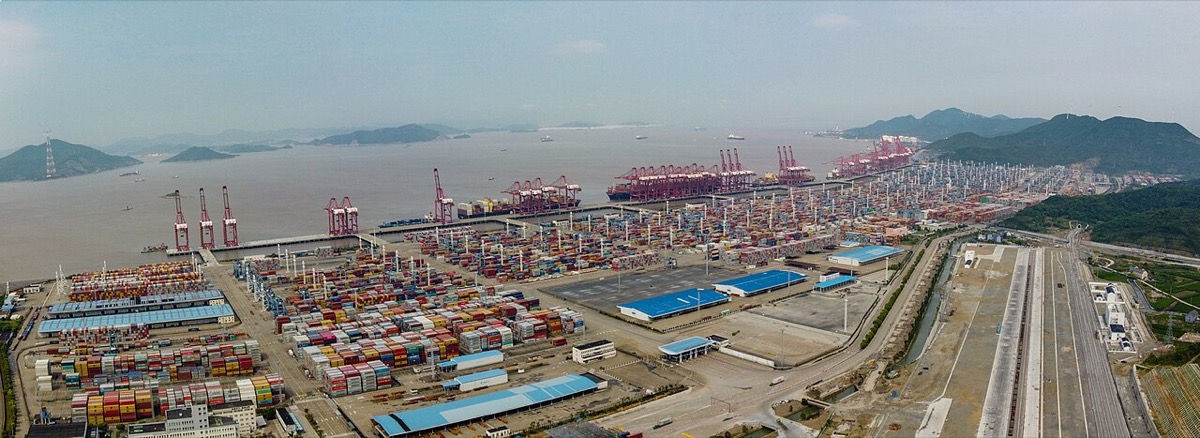
The Headline Number And Why It Matters More Than You Think
A trillion-dollar surplus isn’t just a big number, it’s a structural signal. For comparison, Germany’s all-time record surplus was $330 billion. Japan’s peak was roughly $130 billion. China tripled the historical ceiling in a single year while running a currency that’s been managed against a basket and a domestic demand base that’s still working through property sector adjustments. The way you get there is by rerouting factory output that used to serve the US into markets that now pay more on a landed basis because they don’t have a 27 to 45 percent tariff stack.
The other detail buried in the GACC release is sector-specific. Semiconductor exports grew 24.7 percent year over year. Electric vehicle exports grew 17 percent. Specialty chemical exports to ASEAN grew 11 percent. Exports to Mexico grew 14 percent. Exports to the US fell 13 percent for the full year and were down over 20 percent in the fourth quarter alone.
For chemical importers this matters because the categories growing fastest for Chinese manufacturers are exactly the downstream end-uses that pull on intermediate chemical feedstocks. If Chinese EV battery production is still growing at 17 percent and the electrolytes, cathode precursors, and binder chemistries are being prioritised for Chinese domestic EV supply chains plus export to Mexico and ASEAN, the allocation available to US importers on those same intermediates gets thinner.
Where The Capacity Actually Went: The Four-Region Reallocation
The 2025 GACC data maps to four destination regions absorbing the capacity that used to route to the US. Here’s the approximate flow based on the published year-over-year changes and the cross-referenced ASEAN, Mexican, EU, and Russian customs inputs.
| Destination | 2024 imports from China | 2025 imports from China | YoY change | Implied new capacity absorbed |
|---|---|---|---|---|
| ASEAN (Vietnam, Thailand, Indonesia, Malaysia) | $586B | $651B | +11.1% | ~$65B |
| Mexico | $81B | $92B | +13.6% | ~$11B |
| European Union | $515B | $541B | +5.0% | ~$26B |
| Russia | $115B | $127B | +10.4% | ~$12B |
| United States | $354B | $308B | -13.0% | -$46B |
The US decline of roughly $46 billion is almost mathematically offset by the ASEAN, Mexico, and EU gains. That’s not a coincidence. It’s Chinese manufacturers, including Sinopec downstream derivatives, Wanhua MDI and TDI flows, and dozens of mid-tier specialty chemical producers, shifting customer bases in real time. When a Chinese sales manager tells you “we’re prioritising our Vietnamese customer” the sentence isn’t a negotiating tactic. It’s a P&L reality.
What $308 Billion In US Imports Actually Looks Like By Chemical Category
Strip the $308 billion headline into chemical-relevant categories and the story sharpens. Chapter 28 inorganic chemicals fell roughly 9 percent year over year. Chapter 29 organic chemicals fell 14 percent. Chapter 38 miscellaneous chemical products fell 12 percent. Chapter 39 plastics and articles fell 18 percent. The sharpest decline was in Chapter 39 where the tariff stack combined with capacity destruction in US downstream converters to hit both supply and demand simultaneously.
The Chapter 29 number is the one worth staring at. Organic chemicals into the US from China used to run roughly $24 billion annually pre-2018. In 2025 they came in under $12 billion. That’s not substitution on the margin. That’s a structural reset of the trade corridor for the category that underpins most of the specialty chemistry that US downstream formulators rely on.
What replaced those flows? Partly domestic US capacity that’s been stood up through IRA and CHIPS-driven investment. Partly Korean, Japanese, and Taiwanese alternatives that now sit in the same HS codes without the IEEPA and Section 301 stack. Partly Mexican, Thai, and Vietnamese re-exports where Chinese intermediates get one step of conversion before landing in the US. CBP and USTR are actively scrutinising that last category through the transshipment enforcement initiative announced in late 2025.
The Semiconductor Export Number Is A Warning Flare For Specialty Chemistry
Semiconductor exports growing 24.7 percent is the most important number in the release for anyone importing electronic chemicals, photoresist precursors, ultra-pure solvents, CMP slurries, or wet process chemistries. It tells you three things at once. Chinese semiconductor fabs are ramping output faster than Western policy is containing. Domestic Chinese demand for high-purity chemical inputs is growing in line with fab utilisation. And Chinese specialty chemical producers have a captive, growing, high-margin domestic buyer for the exact grades you want shipped to Houston or LA/Long Beach.
If you’re sourcing photoresist monomers, specialty solvents in the MEK, NMP, or PGMEA families, or any ultra-pure reagent grade from a Chinese supplier, expect allocation conversations to get harder through 2026. Your supplier’s margin on a domestic Chinese fab sale is materially better than on your US delivery even before they apply a risk premium for tariff volatility. Build alternative Korean, Taiwanese, and Japanese relationships now while the spot market has capacity.
What The January 14 Release Changes In Your February Quote Strategy
Three operational changes we’re walking clients through this week.
First, price your February and March POs assuming your Chinese supplier has better alternative customers than they did 12 months ago. The era of pushing for a 3 to 5 percent annual decrease on your baseline grade is done for most categories. The best you’ll negotiate on most Chapter 29 flows is flat, and on allocated grades you’ll take a 2 to 4 percent rise without complaining because the alternative is losing allocation entirely.
Second, lock minimum volume commitments on the grades where the capacity reallocation has hit hardest. If your supplier is now selling 40 percent of their output to ASEAN and Mexico and only 20 percent to the US compared to 35 percent two years ago, the way you keep your slot is by signing a take-or-pay on twelve-month volume. The commitment costs you optionality. Losing the slot costs you the business.
Third, start a structured second-source program on any grade where you’re single-sourced from China. Korea, Taiwan, Japan, and for some categories India are the most credible alternatives for 2026 delivery. The qualification timelines run four to nine months depending on how tight your spec is, which means January 15 is the latest date you can start and still have the second source qualified for Q4 2026 deliveries.
The Data Release Schedule That Matters For The Rest Of Q1
GACC will publish monthly trade data for January on February 14, February on March 14, and a Q1 preliminary on April 13. USTR typically releases Section 301 review updates in late March. EPA’s TSCA PFAS rule implementation guidance updates come through the Federal Register on a rolling basis. CBP’s quarterly informed compliance publications drop in early March. Drewry’s container rate index updates weekly and will show you the North Europe, Mediterranean, and Trans-Pacific divergence in real time. Block a recurring 30-minute slot on your calendar for the Monday following each of those releases. The importers who treat the data calendar as operationally critical are the ones who’ll be pricing Q3 accurately.
The Specific Action For The Next Two Weeks
Pull your 2024 and 2025 purchase history from China by HS code and calculate your personal version of the capacity reallocation. If your Chinese volume fell less than the 13 percent national average, you’re in the cohort of customers your suppliers are protecting, and your 2026 negotiating position is stronger than the headlines suggest. If your volume fell more, you’re in the cohort being deprioritised and you need to either commit deeper or diversify faster.
If you want Sourzi to run that analysis against your import records and benchmark where you sit versus the national flow, book a sourcing review. The January 14 data is the clearest signal in two years about who keeps their Chinese allocation and who loses it across 2026.