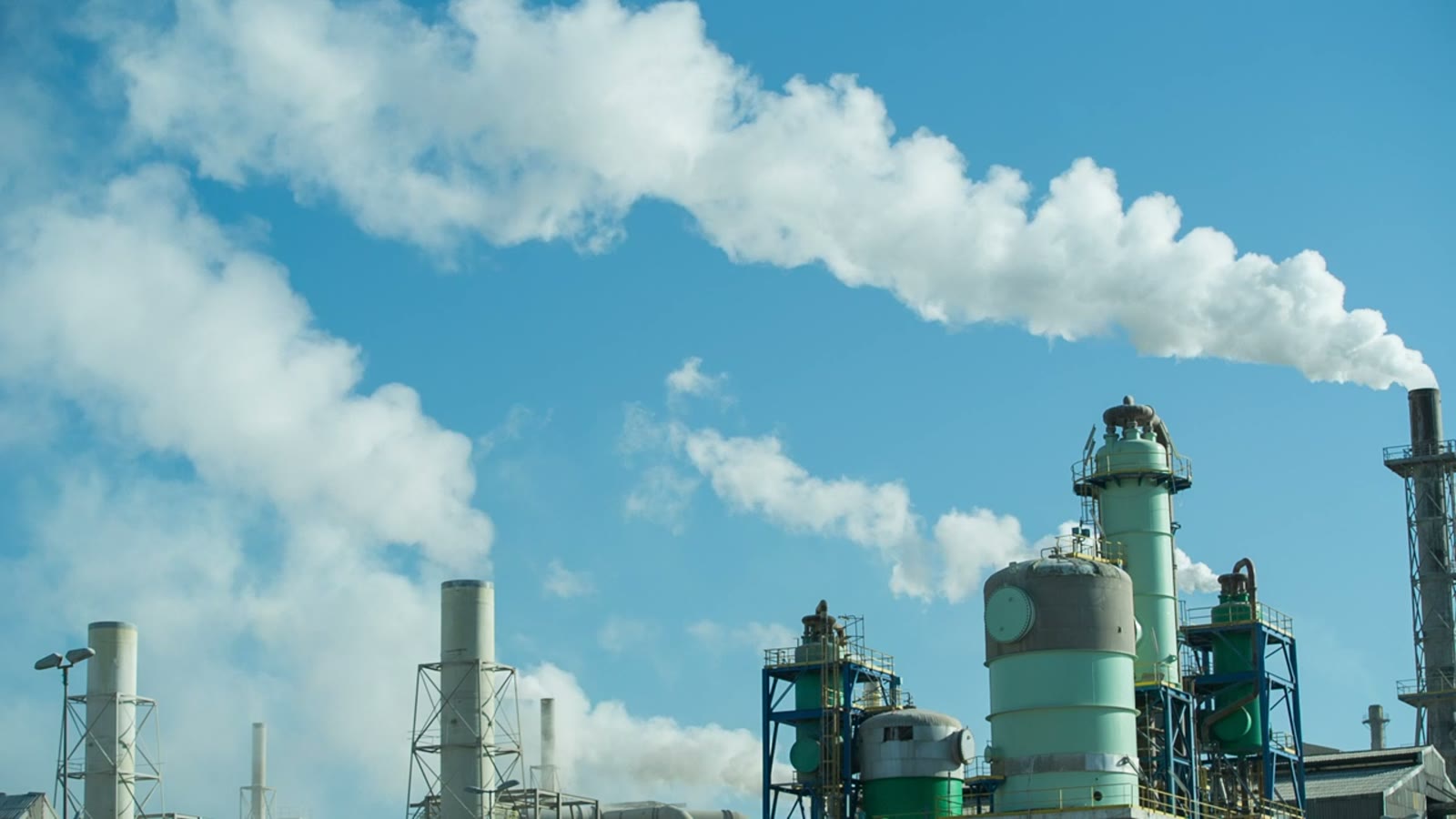
Titanium dioxide (TiO2) is the dominant white pigment globally, accounting for the bulk of opacity in paints, coatings, plastics, paper, cosmetics, and food. China is the world’s largest producer with capacity approximately 5 million tonnes per year, about 35% of global capacity. The Chinese TiO2 industry is structurally split between the sulfate-process (older, dominant in China) and chloride-process (newer, less common in China but growing). For international buyers, China is the source of choice for cost-competitive pigment-grade TiO2, but the active anti-dumping environment globally and the regulatory pressure on TiO2 inhalation toxicity create constraints.
What TiO2 actually is
Titanium dioxide is the white inorganic pigment with the chemical formula TiO2. It exists in three natural crystal forms, rutile, anatase, and brookite, but only rutile and anatase are produced commercially. Both have very high refractive index (rutile ~2.7, anatase ~2.5), which is what gives TiO2 its exceptional opacity and whiteness. The product is white powder at room temperature, chemically inert under most conditions, and stable to UV light (which is why it is widely used in sunscreen and outdoor coatings).
The product is produced from titanium-bearing minerals, primarily ilmenite (FeTiO3) and titanium slag, via either:
- Sulfate process: ilmenite digested with sulfuric acid; iron sulfate by-product is the major waste stream
- Chloride process: TiO2-containing feedstock chlorinated to form TiCl4, then converted back to TiO2 by combustion or hydrolysis
Industrial applications
TiO2 applications:
- Paints and coatings (architectural, industrial, automotive), the largest single use, ~60% of global TiO2
- Plastics (PVC, polyolefins, engineering plastics), opacity and UV stability
- Paper (high-quality printing and packaging paper), opacity and brightness
- Cosmetics and personal care (sunscreen, foundation, lipstick). UV blocking and opacity
- Food and pharmaceutical (food coloring, tablet coatings), high-purity grade
- Inks (printing inks, packaging inks)
- Ceramics (colored glazes, enamels)
- Catalysts (specialty applications)
Grade selection by crystal form:
| Grade | Use |
|---|---|
| Rutile pigment-grade | Paints, coatings, plastics, most volume |
| Anatase pigment-grade | Paper, textile delustrant, some plastics |
| Anatase nano-grade | Sunscreens, photocatalysts |
| High-purity (food/pharma) | Food color, tablet coating |
| Specialty (automotive, electronic) | Premium applications |
Chinese production geography
Major Chinese TiO2 producers and their geography:
| Producer | Process | Location |
|---|---|---|
| LB Group (Lomon Billions) | Sulfate + Chloride | Sichuan |
| Pangang Group | Sulfate | Sichuan |
| Chengdu Henan Group | Sulfate | Sichuan |
| Jinhai Titanium | Sulfate | Hebei, Shandong |
| Shandong Doguide | Sulfate | Shandong |
| Yibin Tianyuan | Chloride | Sichuan |
| CITIC Titanium | Chloride | Yunnan |
Sichuan is the dominant Chinese TiO2 region because of proximity to ilmenite mines. Most Chinese capacity is sulfate-process; chloride-process capacity has been growing but remains a minority.
Packaging and container loading
| Packaging | Fill | Container loading |
|---|---|---|
| 25-kg PP/paper bag | 25 kg | ~880 bags per 20’GP (~22 MT) |
| 1,000-1,200 kg big bag | 1,000-1,200 kg | 18-20 bags per 20’GP |
| 500-kg medium bag | 500 kg | Less common |
For volume export, 1-tonne big bags is standard. Some buyers (particularly in Southeast Asia) prefer 25-kg bags for ease of handling at smaller manufacturing sites.
Regulatory profile
| Destination | Regime | TiO2 status | Notes |
|---|---|---|---|
| US | TSCA | Listed | TSCA cover sheet on entry |
| EU | REACH | Registered | Inhalation toxicity classification under review |
| Australia | AICIS | Listed | Standard |
| China | IECSC | Listed | No NCSN |
| India | India BIS | Standard | Active anti-dumping |
The EU regulatory situation around TiO2 inhalation is evolving. The 2020 EU classification of TiO2 as Category 2 carcinogen by inhalation (for inhalable particles) was annulled in November 2022 by the EU General Court, and the regulatory status remains uncertain. Buyers shipping to the EU should confirm SDS Section 2 classification reflects current EU regulatory state.
Tariff and trade-remedy stack
For US-bound TiO2 from China:
| Component | Status |
|---|---|
| HTS 3206.11 MFN tariff | 6.0% |
| Section 301 List 3 | +25% |
| AD/CVD on Chinese TiO2 | None active currently (verify) |
| Total | ~31% |
For Australian buyers under ChAFTA: zero preferential tariff replaces the MFN rate.
For Indian buyers: AD on Chinese TiO2 is active; rates 20-40% depending on producer.
Freight and landed cost
For a 20’GP of rutile pigment-grade TiO2 (18 MT in 1-tonne big bags) Shanghai to Houston:
| Component | Cost |
|---|---|
| FOB Shanghai (rutile pigment) | USD 1,800-2,400 / MT × 18 = USD 32,400-43,200 |
| Origin THC + handling | USD 300-450 |
| Sea freight | USD 2,500-4,500 |
| Marine insurance | USD 50-90 |
| Destination THC + drayage | USD 600-1,000 |
| MFN tariff (6.0%) | USD 1,944-2,592 |
| Section 301 (25%) | USD 8,100-10,800 |
| Total landed | USD 45,894-62,632 |
| Per MT landed | USD 2,550-3,480 |
Compare to US-domestic rutile TiO2 (~USD 2,800-3,400/MT delivered): Chinese TiO2 is competitive on FOB but the Section 301 stack pushes landed close to or above domestic.
Operational failure modes
Three patterns recur:
- Particle-size variation across batches. TiO2 performance in coatings depends critically on particle size distribution and surface treatment. A buyer running specific paint formulations can detect variation. Specify particle size and surface treatment per batch number.
- Tinting strength drift. TiO2 tinting strength is the key performance parameter for pigment-grade material. Per-batch tinting strength testing is standard practice for volume buyers.
- Moisture absorption during transit. TiO2 is hygroscopic. Bag damage allowing moisture ingress can cause caking. Specify moisture-resistant packaging for tropical or humid routings.
Quality assurance
Standard documentation:
- Per-batch COA showing TiO2 %, particle size distribution, tinting strength, surface treatment, moisture content
- SDS with current EU inhalation-toxicity classification status if EU-bound
- Bill of lading, packing list, certificate of origin
Payment
Standard payment terms apply:
- T/T 30/70, most common
- L/C at sight, for new
- L/C 60-90 days usance, for volume
When Chinese TiO2 is the right call
Chinese TiO2 is the right sourcing choice when:
- Pigment-grade for routine coating and plastics applications. Chinese rutile pigment is competitive on price and adequate on quality
- Asia-Pacific destinations. Chinese FOB is the lowest landed cost
- Buyers who can specify and verify particle size and tinting strength, quality discipline is the difference between Chinese and Western TiO2
When Chinese TiO2 is the wrong call:
- Specialty automotive coatings. Western producers retain edge
- Pharmaceutical/food applications requiring USP-grade. Western or specialty Chinese producers preferred
- EU-bound cargo where inhalation classification matters, regulatory clarity favors non-Chinese for some uses
Sulfate-route versus chloride-route TiO2 in detail
The Chinese TiO2 capacity stack is roughly 70 per cent sulfate-route and 30 per cent chloride-route. The split matters because sulfate-route and chloride-route TiO2 have different impurity profiles and different environmental footprints, both of which feed into buyer-side decisions.
Sulfate-route TiO2 starts with ilmenite ore digested in sulfuric acid. Iron sulfate is removed; titanium oxysulfate is hydrolysed to hydrated TiO2 and calcined. The route can produce both anatase and rutile. The plant economics favour sulfate route on lower-grade titanium ores (40 to 60 per cent TiO2 content). The waste stream is iron sulfate and dilute sulfuric acid; managing the waste is the major environmental constraint.
Chloride-route TiO2 starts with high-grade rutile ore or upgraded slag. Titanium tetrachloride is produced by chlorinating the ore in the presence of carbon, then oxidised back to TiO2 with controlled-atmosphere combustion. The chloride route only produces rutile, but the rutile it produces is whiter, has tighter particle-size control, and lower iron contamination than typical sulfate-route product. Capital cost per tonne of capacity is roughly 40 per cent higher than sulfate route. The waste stream is hydrochloric acid and chlorinated by-products; the route requires sophisticated environmental management.
Lomon Billions (the largest Chinese producer at over 1 million tonnes per year capacity) runs both routes. Their chloride-route product competes head-on with Western chloride-route TiO2 (Chemours, Tronox, Kronos) on quality, and at FOB prices typically USD 200 to USD 400 per MT below the Western producers. CNNC HuaYuan, Henan Billions, and Yuxing Titanium Industry are the next tier of chloride-route producers.
For a buyer running standard architectural-coating or plastics-masterbatch applications, sulfate-route Chinese rutile pigment delivers acceptable performance at the lowest FOB price. For buyers running automotive coatings, high-end industrial coatings, or specialty plastics where colour b* and tinting strength matter, chloride-route Chinese product is the right match and the price differential is typically captured back in reduced re-work costs.
EU regulatory uncertainty and the inhalation classification
The EU Court of Justice in November 2022 annulled the 2020 Commission Delegated Regulation that classified TiO2 as Category 2 carcinogen by inhalation for inhalable powder forms. The annulment created regulatory uncertainty that persists into 2026; the Commission may issue a revised classification with stronger evidentiary support, or may not.
For EU-bound Chinese TiO2:
- Powder form sourcing carries inhalation-classification uncertainty. A revised classification could trigger SDS Section 2 hazard statement requirements, additional labelling, and downstream-user CLH compliance obligations.
- Liquid dispersions and pre-compounded masterbatches do not face the inhalation classification risk because the TiO2 is bound into a non-inhalable form.
- The buyer-side regulatory monitoring matters. EU-bound shipments should ride on SDS documentation that reflects the current EU classification status (no current carcinogen-by-inhalation classification, ongoing review). Major Chinese producers update their EU SDS quarterly.
For US, AU, and other-non-EU markets, the inhalation classification is not currently applicable. OSHA HCS, AICIS, and other GHS-aligned regimes have not adopted an equivalent classification.
Coating and plastics application matrix
TiO2 grade selection is downstream-application-driven. The Chinese product offering across applications:
| Application | Grade preference | Critical spec | Typical Chinese FOB premium |
|---|---|---|---|
| Architectural paint (decorative) | Sulfate or chloride rutile | Tinting strength, colour b* | Base price |
| Industrial coating (heavy-duty) | Chloride rutile, surface-treated | Tinting strength, weatherability | +5 to +10% |
| Automotive coating (OEM) | Chloride rutile, premium grades | Tinting strength, colour b*, dispersion | +15 to +25% |
| Plastics masterbatch (general) | Sulfate or chloride rutile | Particle size, dispersion in resin | +0 to +5% |
| Plastics (engineering polymers, PC, PA) | Chloride rutile, low-Si surface treatment | Heat stability, dispersion | +10 to +20% |
| Paper coating | Sulfate anatase or rutile | Brightness, opacity | Base price |
| Pharma / cosmetics (USP / NF / EP) | Sulfate, micronised, USP-aligned | Heavy metals, microbiological | +30 to +60% |
| Food contact (E171 status) | Restricted in EU since 2022 | EFSA exit; limited Chinese production | n/a EU |
For a buyer specifying TiO2, the practical move is to start from the application’s published grade-fit table (the major paint and plastics resin producers all publish these) and match Chinese grades against the spec. The Chinese producers’ technical-services teams have largely caught up with Western competitors on application-fit support; sample-testing across 2 to 3 candidate grades is the standard practice.
Surface-treatment chemistry and what it actually does
Most commercially-traded TiO2 is surface-treated with a thin coating of inorganic and organic compounds that controls particle dispersibility, weatherability, and end-application fit. Untreated TiO2 is rare in trade because it suffers from photoactivity (catalysing degradation of the binder it sits in) and from poor dispersion in non-polar resin systems.
The standard surface-treatment chemistry uses two layers:
- Inorganic layer, alumina (Al2O3), silica (SiO2), zirconia (ZrO2), or combinations. Typical loading is 1 to 7 per cent of TiO2 mass. The inorganic layer controls photoactivity by passivating the TiO2 surface so it does not generate reactive radicals under UV light.
- Organic layer, organosilanes, polyols, alkanolamines. Typical loading is 0.1 to 0.5 per cent. The organic layer controls dispersion in resin systems by matching the surface energy of the particle to the resin matrix.
For coatings applications, the surface treatment determines the end-product property:
| Treatment level | Application fit | Weatherability rating |
|---|---|---|
| Untreated or 1% inorganic only | Plastics masterbatch (limited UV exposure) | Low |
| 3 to 5% alumina only | Standard interior architectural paint | Medium |
| 5 to 7% alumina plus silica | Exterior architectural paint, industrial coatings | Medium-high |
| 5 to 7% mixed inorganic plus zirconia | Automotive coatings, premium exterior | High |
| 5 to 7% mixed inorganic plus organic premium | Specialty coatings, premium pigments | Highest |
A buyer running specific coating systems should specify the surface-treatment chemistry on the proforma invoice. “Rutile pigment” alone is insufficient; the surface treatment controls roughly 60 per cent of the application performance. Major Chinese producers publish surface-treatment grade grids that map their internal grade designations to coating-system applications.
Anti-dumping risk and supplier diversification
Chinese TiO2 has been the subject of anti-dumping investigations in multiple destination markets over the past decade. India had AD on Chinese TiO2 from 2014 to 2020, lapsed and re-imposed in 2022; the EU has had periodic investigations without final orders; the US has not had AD on Chinese TiO2 directly, but US-domestic producers have lobbied for it through several cycles.
For a buyer running TiO2 procurement, the AD risk is best managed through supplier diversification. The three sourcing tiers worth maintaining:
- Chinese ethylene-route or chloride-route producers (Lomon Billions, CNNC HuaYuan, Yuxing) for cost-competitive volume.
- Asian-pacific non-Chinese producers (Indonesia’s PT Petrokimia, Vietnam’s Hai Phong) for lower-cost diversification without Chinese AD exposure.
- Western premium producers (Chemours, Tronox, Kronos, Venator) for spec-critical applications and as a hedge against Chinese AD imposition.
Maintaining qualified relationships with at least one supplier from each tier costs procurement attention but protects continuity when AD measures hit. The qualification cost is real but typically pays back the first time a Chinese cargo gets stopped at customs over an emerging trade-remedy investigation.
Practical sourcing checklist
Before issuing a PO:
- Confirm crystal form (rutile vs anatase)
- Confirm production process (sulfate vs chloride)
- Confirm particle size distribution and surface treatment specification
- Confirm tinting strength
- Confirm packaging
- Confirm HS code, 3206.11
- Confirm Incoterms with named place
- Confirm payment terms
Related sourcing references
For Incoterms: FOB, CIF, CFR, DAP, DDP, FCA. For freight and port operations: BAF, Demurrage, Detention, Free Time, Terminal Handling Charges. For documentation: Bill of Lading, Commercial Invoice, Packing List, COA, Certificate of Origin. For trade-remedy and tariff: Anti-Dumping Duty, AD/CVD, Section 301, HTS Code, HS Code. For chemical regulatory context: REACH, TSCA, SVHC, GHS, SDS. For trade finance: L/C, T/T, Open Account. The TiO2 supply structure is one of the more dynamic specialty-chemical markets, with regulatory uncertainty, AD risk, and shifting carbon-footprint scrutiny all moving the buyer-side decision matrix. Volume buyers running long-tenor coatings or plastics programmes increasingly maintain a multi-tier supplier base spanning Chinese chloride-route product, Asian-Pacific non-Chinese alternatives, and Western premium producers to manage continuity through the regulatory and trade-policy cycle.