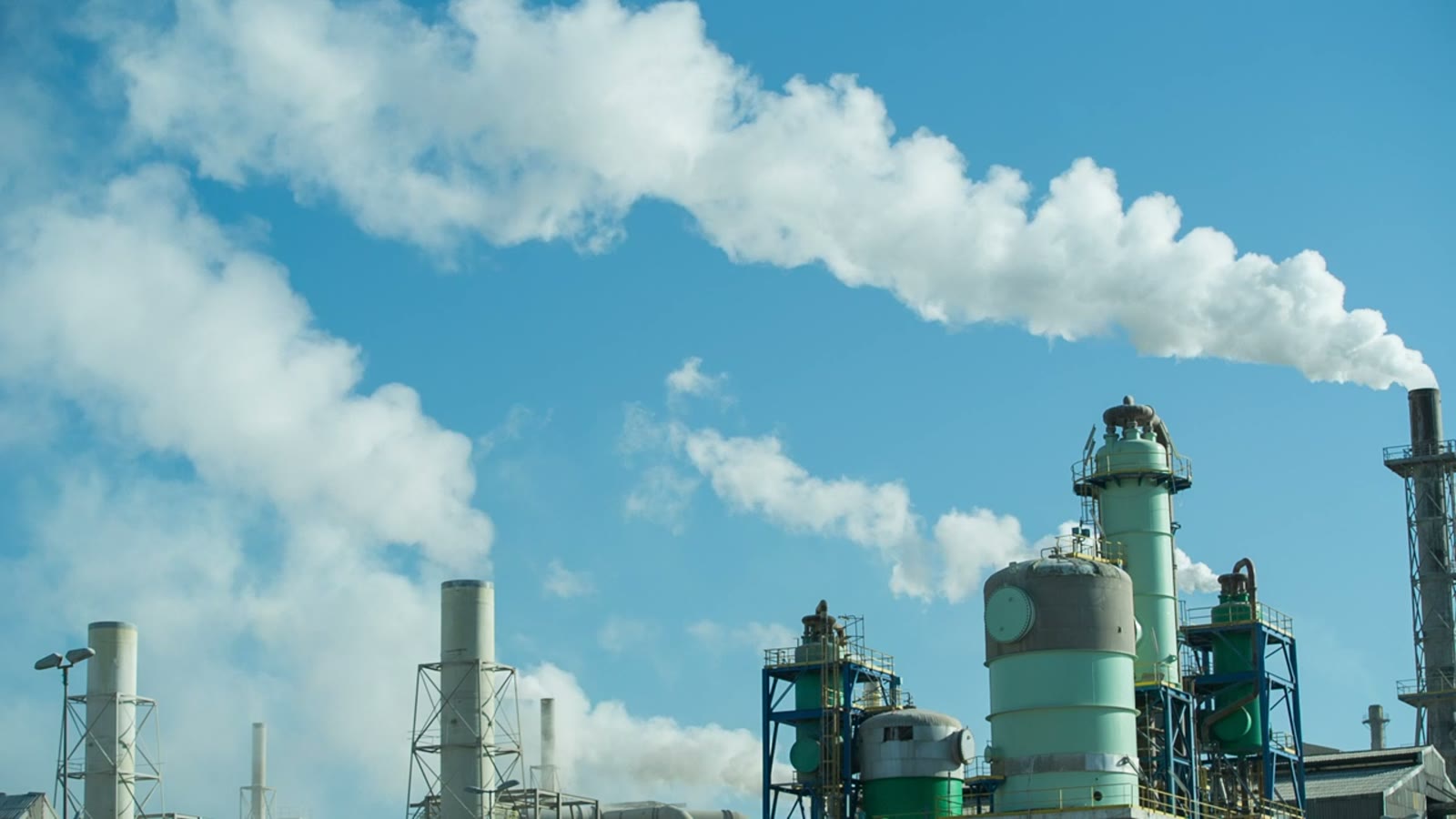
Sulfuric acid is the most-produced industrial chemical in the world by volume, with approximately 270 million tonnes per year of global capacity. China is the largest producer at roughly 100 million tonnes per year, about 40% of global. The Chinese sulfuric acid industry is structurally different from primary-route producers: most Chinese capacity is metallurgical-byproduct (recovered from copper, zinc, and lead smelter SO2 emissions), not produced from elemental sulfur. This by-product economics gives China a structural cost advantage and makes it a marginal exporter into international markets where domestic sulfur supplies are tight.
What sulfuric acid actually is
Sulfuric acid is the strong mineral acid H₂SO₄. It is a colorless, oily, viscous liquid at room temperature, miscible with water in all proportions (with strong exotherm on dilution, always add acid to water, never reverse). Concentrated sulfuric acid is typically 98% H₂SO₄ by weight (the remainder is water). Battery acid is dilute sulfuric acid, typically 35-37% H₂SO₄. Oleum is concentrated sulfuric acid containing dissolved SO₃.
The product is produced industrially via:
- Sulfur burning (the global standard): elemental sulfur burned to SO₂, oxidised to SO₃, absorbed in water to form H₂SO₄
- Metallurgical by-product (the dominant Chinese route): SO₂ recovered from copper/zinc/lead smelter off-gas, then oxidised and absorbed
- Pyrite roasting (declining route): pyrite (FeS₂) roasted to release SO₂
Industrial applications
Sulfuric acid applications:
- Phosphate fertiliser production (largest single use, ~30-40% of global), phosphate rock + sulfuric acid → phosphoric acid
- Petrochemical processes (alkylation in petroleum refining)
- Steel pickling (cleaning steel before galvanising)
- Battery electrolyte (lead-acid batteries), battery-grade
- Chemical synthesis (sulfate salts, sulfonation, esterification)
- Mineral processing (copper leaching, uranium recovery, lithium extraction)
- Paper and pulp (acid sulfite pulping)
- Wastewater treatment (pH adjustment)
For volume export from China, the dominant use case is phosphate fertiliser supply chains.
Chinese production geography
| Region | Source | Major producers |
|---|---|---|
| Yunnan | Smelter byproduct (Cu/Pb/Zn) | Yunnan Tin; Yunnan Copper |
| Hunan | Smelter byproduct + sulfur burning | Hunan Nonferrous |
| Inner Mongolia | Smelter byproduct | Various |
| Xinjiang | Smelter byproduct | Various |
| Shandong | Sulfur burning + smelter | Multiple coastal producers |
| Jiangxi | Smelter byproduct | Jiangxi Copper |
Yunnan, Hunan, and Inner Mongolia produce the bulk of Chinese metallurgical-byproduct acid. Coastal producers (Shandong, Jiangsu) do more sulfur-burning. For volume export, coastal producers dominate because of port access.
Packaging and ISO tank logistics
Sulfuric acid is corrosive and dense (1.84 g/cm³ for 98% concentration). Packaging:
| Packaging | Fill | Container loading |
|---|---|---|
| 200-220 kg lined drum (steel with phenolic lining) | 200-220 kg solution | 80 drums per 20’GP (~16-17.6 MT) |
| 1,000 kg IBC, specialty acid-resistant | 1,000 kg | 16-18 IBCs per 20’GP |
| ISO tank, stainless or rubber-lined | 20-22 MT | 1 tank |
| Bulk vessel | 1,000-30,000 MT | Specialty acid-tanker |
For volume buyers, ISO tank is the standard. The specific ISO tank construction matters, for 98% sulfuric, stainless steel or rubber-lined steel tanks are required. Standard chemical tanks may not be acid-compatible.
Regulatory profile
| Destination | Regime | Status | Notes |
|---|---|---|---|
| US | TSCA | Listed | TSCA cover sheet |
| EU | REACH | Registered | Standard |
| Australia | AICIS | Listed | Annual declaration |
| China | IECSC | Listed | Plus DG transport licence |
Sulfuric acid is IMDG Class 8 corrosive cargo, requiring:
- MSA China DG container packing certificate
- DG declaration on the documentation
- Dangerous chemicals license at the factory
- Hazmat surcharges on freight
UN classification: UN 1830 for >51% concentrated; UN 1831 for oleum; UN 2796 for battery acid.
Tariff stack
For US-bound concentrated sulfuric acid from China:
| Component | Status |
|---|---|
| HTS 2807.00 MFN tariff | Free |
| Section 301 List 3 | +25% |
| AD/CVD | None active |
| Total | 25% on FOB value |
For Australian buyers under ChAFTA: zero MFN, zero ChAFTA, already free.
For EU buyers: MFN free.
Freight and landed cost
For a 22 MT ISO tank of 98% sulfuric acid Qingdao to Houston:
| Component | Cost |
|---|---|
| FOB Qingdao | USD 80-150 / MT × 22 = USD 1,760-3,300 |
| ISO tank lease (acid-rated) | USD 1,200-2,000 per voyage |
| Sea freight + DG hazmat surcharge | USD 3,500-6,000 |
| Marine insurance | USD 30-60 |
| Destination THC + drayage | USD 800-1,200 (DG premium) |
| MFN tariff | Free |
| Section 301 (25% on FOB) | USD 440-825 |
| Total landed | USD 7,730-13,385 |
| Per MT landed | USD 350-610 |
The cargo cost per tonne is small (USD 80-150 FOB), so freight + DG handling dominates. Bulk-tanker shipments (5,000+ MT) drop the per-tonne freight to USD 30-60/MT.
For a 25,000 MT bulk tanker Qingdao to Houston:
| Component | Cost |
|---|---|
| FOB Qingdao | USD 100 / MT × 25,000 = USD 2.5 million |
| Bulk tanker freight | USD 35-55 / MT × 25,000 = USD 0.875-1.375 million |
| Insurance + handling | USD 100,000-200,000 |
| Section 301 (25%) | USD 625,000 |
| Total landed | ~USD 4.1-4.7 million |
| Per MT landed | USD 165-188 |
Operational failure modes
Three patterns recur:
- ISO tank acid compatibility. A standard chemical-cargo ISO tank is not acid-rated. Loading 98% sulfuric into a non-acid-rated tank can corrode the tank shell within hours, destroying the equipment and contaminating the cargo. Always confirm tank-type acid compatibility before loading.
- Heat-exotherm on dilution at destination. When dilute sulfuric is needed at the receiving site, addition of water to concentrated acid generates heat. Improper handling can cause spitting, splashing, or vessel damage. Receiver site needs proper dilution equipment with cooling.
- DG documentation chain. Sulfuric acid as IMDG Class 8 has a tighter documentation chain than non-DG cargo. Missing MSA packing certificate, missing UN code on labels, missing emergency contact on the SDS, all can hold the cargo at customs.
Quality assurance
Standard documentation:
- Per-batch COA showing H₂SO₄ %, free SO₃ (for oleum), iron content, lead content (battery-grade specific), water content
- SDS per GB/T 17519 with full IMDG and DOT classifications
- DG declaration on the bill of lading
- MSA China DG container packing certificate
- ISO tank cleanliness and acid-compatibility certificate
- Bill of lading, packing list, certificate of origin
Payment
Standard terms apply. T/T 30/70 most common for first relationships; L/C usance for volume.
When Chinese sulfuric acid is the right call
Chinese sulfuric acid is the right sourcing choice when:
- Asian-Pacific destinations. Chinese FOB is consistently lowest landed cost
- Bulk-tanker cargoes for phosphate-fertiliser supply chains
- Routine industrial-grade applications where Chinese metallurgical-byproduct acid meets spec
When Chinese sulfuric acid is the wrong call:
- US/EU bulk imports, domestic supply at lower landed cost (Section 301 + freight stack against Chinese)
- Ultra-pure or battery-grade applications, specialty Western producers preferred for tighter metal-impurity specifications
- Buyers without DG handling infrastructure. Class 8 cargo requires hazmat-experienced freight forwarder
ISO tank construction and the acid-compatibility decision
Sulfuric acid is one of the few common bulk chemicals where wrong-tank loading destroys equipment in hours. The standard chemical-cargo ISO tank (T11 designation, mild-steel construction with rubber lining or polymer lining) is not rated for concentrated sulfuric acid service. Loading 98% acid into a T11 tank corrodes the lining and the underlying shell within a single voyage; the tank is written off and the cargo is contaminated with iron and chromium from the failed shell.
The correct construction for concentrated sulfuric acid is T14 designation, with a stainless-steel shell of grade 316L or higher, or a glass-reinforced-plastic-lined steel construction with verified acid service history. Major chemical-cargo fleet operators (Stolt, Den Hartogh, NewPort, Bertschi China) maintain dedicated sulfuric-acid fleets within their portfolios; smaller fleet operators sometimes try to substitute T11 equipment when sulfuric demand exceeds their dedicated stock.
For a buyer:
- Specify T14 construction explicitly on the purchase order and on the freight booking. Do not accept “ISO tank” without the construction specification.
- Verify the tank certificate before loading. The cleanliness and last-cargo certificate accompanies every ISO tank; for sulfuric service, the certificate should also confirm the tank is rated for concentrated acid and that the previous cargo was a compatible acid product (sulfuric, hydrochloric, or phosphoric, not a mixed-product residue).
- Avoid mixed-fleet operators for sulfuric. The premium for a dedicated-acid fleet operator is typically USD 200 to USD 400 per voyage versus mixed-fleet pricing. The savings in cargo-loss risk and equipment-damage liability easily justify the premium.
For oleum (UN 1831, fuming sulfuric acid containing dissolved SO3), the construction requirements are even stricter. Oleum reacts violently with water, and any moisture residue in the tank from prior cleaning generates heat and pressure. Specify dry-tested tanks with documented moisture-free certification on every oleum load.
Smelter-byproduct versus sulfur-burning supply economics
The Chinese sulfuric acid supply structure is unusual globally and worth a buyer’s understanding. Roughly 70 per cent of Chinese capacity is recovered as a by-product of non-ferrous metal smelting (copper, zinc, lead). The remaining 30 per cent is produced from elemental sulfur via the contact process (the global standard route).
Smelter-byproduct economics are different in three important ways:
- Marginal cost is near zero because the SO2 from sulfide-ore roasting must be converted to acid for environmental compliance regardless of acid-market conditions. The smelter has no economic choice to stop producing acid; producing it is part of operating the smelter.
- Pricing tracks copper, zinc, and lead market dynamics rather than sulfur cost. When global copper smelting is running hard (Chinese copper demand strong), Chinese sulfuric acid by-product floods the market. When metals smelting slows, acid by-product supply tightens.
- Geographic concentration follows smelter geography, not chemical-industry geography. Yunnan, Hunan, and Inner Mongolia are the largest acid-producing provinces because that is where the copper, zinc, and lead smelters are. Coastal sulfuric production (Shandong, Jiangsu) is more sulfur-burning than smelter byproduct.
For a buyer routing acid out of China, the practical implications are:
- Cargo originating from coastal sulfur-burning plants (typically Shandong) carries no smelter-related metal contamination. The acid is sulfur-grade and can hit USP-equivalent purity if the plant is configured for it. Shipping cost from Qingdao or Shanghai is the lowest in the country.
- Cargo originating from smelter byproduct (typically Yunnan, Hunan, Inner Mongolia) may carry trace metal contamination from the upstream ore. For technical-grade and most industrial uses, the contamination is below spec limits. For battery-grade or high-purity applications, smelter-byproduct acid often fails on iron, copper, or lead trace limits. Specify and verify the production source.
- The lowest-priced spot offers are typically smelter-byproduct from inland producers. The cost of railing or trucking the acid to a coastal port adds USD 30 to USD 60 per MT and can make the inland-byproduct deal less attractive than the coastal-sulfur-burning alternative.
Battery-grade versus technical-grade specifications
Battery-grade sulfuric acid is a specific high-purity grade for lead-acid battery electrolyte manufacture, typically diluted to 35 to 37 per cent and with very tight metal-impurity limits. The spec versus technical-grade illustrates how sulfuric acid grade selection works.
| Parameter | Technical-grade 98% | Battery-grade 37% |
|---|---|---|
| H2SO4 | 98.0 to 98.5% | 35 to 37% |
| Iron (ppm) | Under 50 | Under 5 |
| Copper (ppm) | Under 5 | Under 0.5 |
| Manganese (ppm) | Under 5 | Under 0.5 |
| Arsenic (ppm) | Under 0.5 | Under 0.05 |
| Antimony (ppm) | Under 1 | Under 0.05 |
| Lead (ppm) | Under 1 | Under 0.05 |
| Chloride (ppm) | Under 50 | Under 5 |
| Reducing substances | Under 100 ppm | Under 10 ppm |
The battery-grade limits are 10 to 100 times tighter than technical-grade. Smelter-byproduct acid almost universally fails battery-grade on iron, copper, and lead. Sulfur-burning Chinese plants configured for battery-grade can meet the spec but the FOB premium runs USD 60 to USD 120 per MT versus technical-grade.
For a battery-manufacturing buyer, the supplier matrix narrows to about 8 to 10 Chinese producers with verified battery-grade capability. Specify and qualify these producers explicitly; do not accept generic “sulfuric acid” against a battery-grade purchase order.
Phosphate-fertiliser supply chain integration
The largest single use of sulfuric acid globally is phosphate-fertiliser production, where sulfuric acid digests phosphate rock to release phosphoric acid. This single use accounts for 30 to 40 per cent of global sulfuric demand and shapes the supply structure for sulfuric trade.
For a buyer not in the phosphate-fertiliser chain, the implication is mostly informational: phosphate-fertiliser cycles drive global sulfuric pricing. When phosphate fertiliser demand is strong (typically Q1 northern-hemisphere planting season), sulfuric acid demand for phosphoric digestion rises and FOB prices firm. When phosphate fertiliser demand is weak (Q3 between northern and southern hemisphere cycles), sulfuric demand softens.
For a buyer that is in the phosphate-fertiliser chain (Mosaic, Nutrien, Ma’aden, OCP, Yara), the supply structure is different. These buyers typically run integrated sulfuric-to-phosphoric production at the same site, with the sulfuric either produced on-site from elemental sulfur or imported as concentrated acid via dedicated pipeline or rail. Chinese exports rarely flow into this segment because the integrated producers prefer captive supply.
For mid-volume Chinese sulfuric exports, the typical buyers are:
- Industrial-process operators running pickling, etching, electroplating, or chemical synthesis. Volume from 100 to 5,000 MT per year per buyer. Containerised or small-bulk-tanker shipping.
- Battery-acid distributors in markets where lead-acid battery manufacturing is concentrated. Volume from 500 to 10,000 MT per year per buyer. Drum or IBC shipping for diluted product.
- Water-treatment chemical wholesalers supplying municipal and industrial pH adjustment. Volume varies widely. Often packaged in IBCs or smaller drums.
- Bulk-tanker buyers running mid-stream chemical processing, regional petrochemical operators in South-East Asia, Middle East, and Latin America. Volume 5,000 to 25,000 MT per cargo. Bulk tanker shipping.
For each segment, the freight, packaging, and DG-handling considerations differ. A buyer entering this market should identify the segment fit before negotiating supply structure with Chinese producers.
Sulfuric acid in the global trade flow
Roughly 5 per cent of global sulfuric acid production is traded internationally; the other 95 per cent is consumed near the point of production because the cost of moving acid is high relative to its value. China is one of the few countries with a structural exportable surplus, which is what makes Chinese sulfuric acid relevant to international buyers despite the unfavourable freight economics. Understanding this helps explain why Chinese FOB pricing can be very low while landed cost into distant destinations is often uncompetitive against local domestic supply.
Practical sourcing checklist
Before issuing a PO:
- Confirm grade (concentrated 98%, oleum, battery-grade, technical)
- Confirm production route (smelter byproduct vs sulfur-burning)
- Confirm packaging (ISO tank construction matters for acid compatibility)
- Confirm HS code, 2807.00
- Confirm UN number and Packing Group
- Confirm Incoterms with named place
- Confirm DG documentation chain (MSA certificate, DG declaration, hazmat-experienced forwarder)
- Confirm payment terms
ISO tank build for sulphuric acid
98% sulphuric acid (UN 1830, SG 1.84) requires T14 stainless (no bottom outlet, frangible disc plus tell-tale gauge) at 21,000 L typical capacity. The 24,000 L T11 is structurally adequate but lands in the IMDG 20% to 80% surge band at 72.5% fill, so the smaller T14 is the standard build. Oleum (fuming sulphuric, UN 1831) ships in the same T14 stainless. Legacy concentrated H2SO4 fleets also include lead-lined T14 (phasing out due to weight penalty and disposal cost). Use the ISO Tank Loading Calculator to compute exact loadable mass for any tank build under the IMDG 4.2.1.9 fill rules. The full ISO Tank Container Reference covers every tank type used on the China sulphuric trade.
Related sourcing references
For Incoterms: FOB, CIF, CFR. For freight: BAF, Demurrage, Free Time, Terminal Handling Charges. For DG handling: IMDG Class 8, DG Declaration, MSA China, Marine Pollutant. For documentation: Bill of Lading, COA, Certificate of Origin.