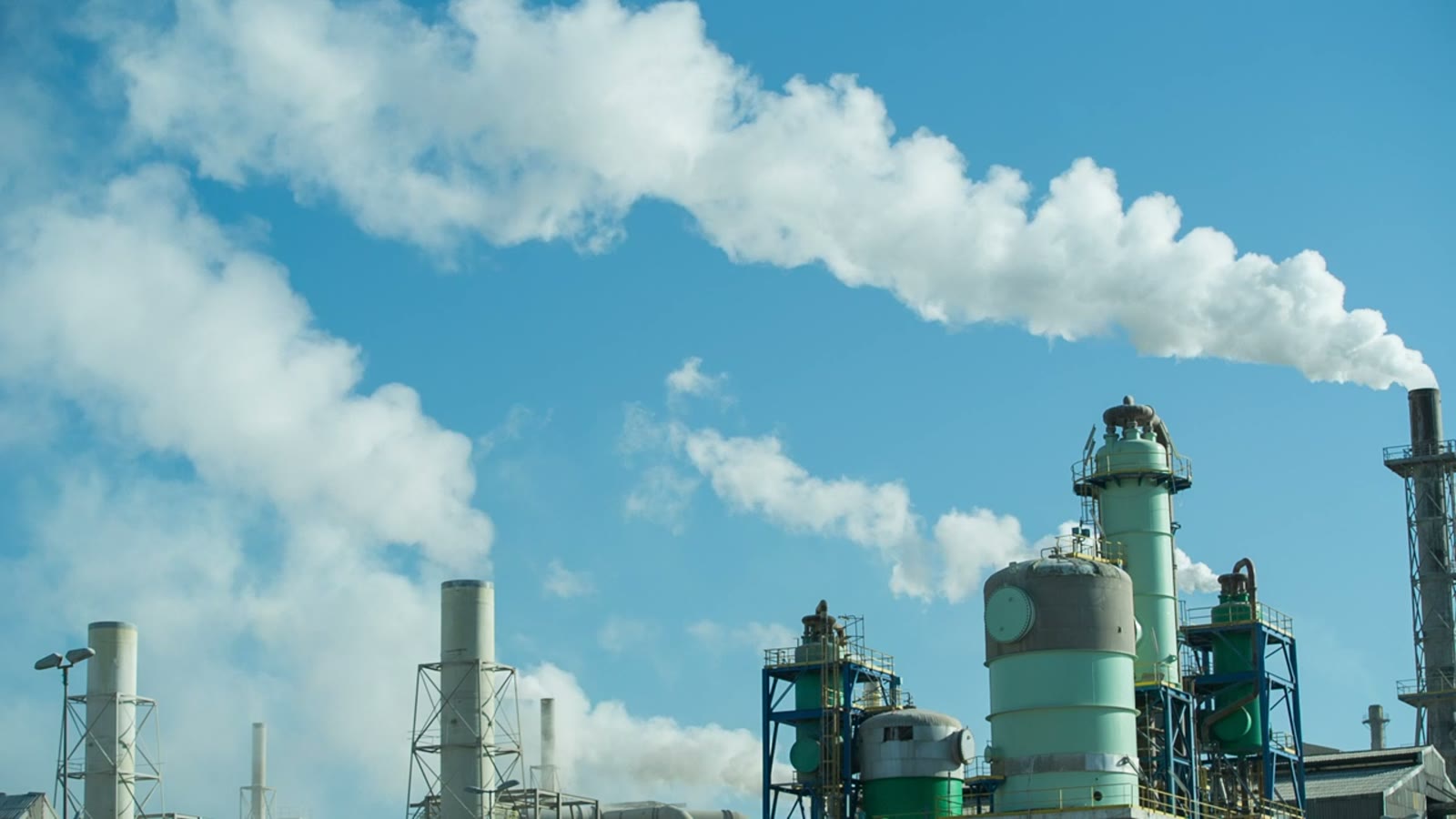
Purified terephthalic acid (PTA) is the principal monomer for polyester production, accounting for the largest single feedstock volume in the polyester chain. It reacts with monoethylene glycol (MEG) to produce polyethylene terephthalate (PET), the polyester resin that becomes textile fiber, beverage bottles, packaging films, and engineering plastics. China’s PTA capacity is approximately 80 million tonnes per year, by far the world’s largest, accounting for about 60% of global capacity. The Chinese PTA industry is also unusually consolidated: a handful of integrated polyester complexes (Hengli, Yisheng, Tongkun, Rongsheng, Sinopec) control the bulk of capacity, and exports flow through these established channels.
What PTA actually is
PTA is the dicarboxylic acid HOOC-C₆H₄-COOH (1,4-benzenedicarboxylic acid). It is a white crystalline powder at room temperature, sublimes at high temperature, low solubility in water, and stable at normal storage conditions. The “purified” in PTA refers to the post-oxidation purification step that removes 4-carboxybenzaldehyde (4-CBA) and other impurities to under 25 ppm, the spec that distinguishes PTA from crude TA.
The product is produced by oxidation of paraxylene (PX, also called p-xylene) with air over a catalyst, then purified. PTA is therefore downstream of paraxylene, which is downstream of refining. Chinese PTA capacity expansion has been one of the structural stories of 2018-2025, with consolidated capacity adding 30+ million tonnes in 7 years.
Industrial applications
PTA goes principally into polyester:
- PET bottle resin (water bottles, soft drink bottles, packaging containers), bottle-grade PTA
- Polyester fiber (textile fiber for clothing, industrial yarn), fiber-grade PTA
- PET film (food packaging films, photographic films, electrical insulation films), bottle-grade
- Engineering polyester (PBT for engineering plastics), typically uses PTA or its dimethyl ester DMT
- Plasticisers (some applications use PTA as a starting material for plasticisers)
Approximately 95%+ of PTA goes to polyester production. Non-polyester uses are minor.
Chinese production geography
PTA capacity is highly concentrated:
| Province | Major producers | Capacity profile |
|---|---|---|
| Zhejiang | Hengli (Dalian, but listed in Zhejiang for some reporting), Tongkun, Rongsheng | Largest single concentration; Yangtze River Delta export hub |
| Jiangsu | Sanfangxiang, Hengli (parts), Tongkun (parts) | Coastal access via Lianyungang and Shanghai |
| Fujian | Yisheng, Sinopec Fujian | Fujian PTA cluster; specialty grades |
| Liaoning | Hengli Dalian, Sinopec | Northeast cluster; Dalian port export |
| Guangdong | Smaller producers; some Sinopec PTA capacity | Pearl River Delta |
The top 5 producers control over 60% of capacity. For volume buyers the typical sourcing relationship is direct with one of these majors via their export trading subsidiary.
Grades and specifications
| Grade | Typical spec | Application |
|---|---|---|
| Bottle-grade (BG-PTA) | 4-CBA under 15 ppm, metals under 10 ppm, color b* under 0.5 | PET bottle resin |
| Fiber-grade (FB-PTA) | 4-CBA under 25 ppm, looser color | Textile fiber PET |
| Premium (low-DEG-byproduct) | Specific impurity profile | Specialty PET applications |
For volume sourcing, most buyers spec bottle-grade because it covers both bottle and fiber use, and the price premium is small. Fiber-grade is meaningful only for low-cost textile fiber applications.
Packaging and container loading
| Packaging | Fill | Container loading |
|---|---|---|
| 1,000-1,200 kg big bag | 1,000-1,200 kg | 18-20 bags per 20’GP (18-22 MT cargo) |
| 25 kg PP/paper bag | 25 kg | ~880 bags per 20’GP (~22 MT) |
| Bulk parcel | 10,000-50,000 MT | Bulk vessel charter |
For volume buyers (50+ MT per shipment), 1-tonne big bags in containers is standard. Bulk-vessel shipments require specialized dry-bulk carriers and are typically for cargoes 10,000+ MT.
Regulatory profile
| Destination | Regime | PTA status | Notes |
|---|---|---|---|
| US | TSCA | Listed | TSCA cover sheet on entry |
| EU | REACH | Registered | Standard SDS reference |
| Australia | AICIS | Listed | Annual declaration |
| China | IECSC | Listed | No NCSN |
| India | India BIS | Standard | Often subject to AD/CVD |
PTA is not a classified DG, has no SVHC concerns, and clears customs on standard non-DG procedures. The regulatory work is on standard documentation rather than substance-level approvals.
Tariff stack
For US-bound PTA from China:
| Component | Status |
|---|---|
| HTS 2917.36 MFN tariff | 6.5% |
| Section 301 List 3 | +25% |
| AD/CVD | None active on China-PTA specifically (verify before booking) |
| Total | 31.5% |
For Australian buyers under ChAFTA: zero preferential tariff replaces the 5% MFN. ChAFTA saves 5% vs MFN.
For European buyers: MFN tariff applies.
For Indian buyers: AD/CVD order on Chinese PTA is active periodically and adds 30-100% to the Chinese FOB cost. India is the most-affected destination by AD/CVD on Chinese PTA.
Polyester chain dynamics
PTA pricing is driven by:
- Paraxylene (PX) feedstock cost, the dominant input. PTA-PX spread reflects production margin
- PET demand, global polyester fiber and PET resin demand
- Chinese PTA capacity utilisation, when capacity is high relative to demand, FOB prices compress
The benchmark price reference is the spot Chinese FOB PTA price published by ICIS, S&P Global Platts, and Argus. Prices typically move in 15-30 day cycles tracking the polyester chain.
For buyers hedging procurement:
- Forward-month contracts are available through major commodity brokers
- The PTA-PX spread is sometimes used as a polyester-chain economic indicator
- Chinese PTA futures trade on the Zhengzhou Commodity Exchange
Freight and landed cost
For a 20’GP of bottle-grade PTA (18 MT in 1-tonne big bags) Shanghai to Houston:
| Component | Cost |
|---|---|
| FOB Shanghai | USD 600-850 / MT × 18 = USD 10,800-15,300 |
| Origin THC + handling | USD 300-450 |
| Sea freight | USD 2,500-4,500 |
| Marine insurance | USD 30-60 |
| Destination THC + drayage | USD 600-1,000 |
| MFN tariff (6.5%) | USD 700-995 |
| Section 301 (25%) | USD 2,700-3,825 |
| Total landed | USD 17,600-26,100 |
| Per MT landed | USD 980-1,450 |
Compare to US-domestic PTA at USD 800-1,000/MT delivered: Chinese PTA is meaningfully more expensive after Section 301.
Operational failure modes
Three patterns recur:
- Big bag UV/handling damage in transit. PTA is hygroscopic and sensitive to moisture absorption that can affect downstream processing. Damaged bags allow moisture ingress. Specify high-quality 13H4 multi-trip coated bags for ocean transit, especially for long-tenor routings (Asia-Latin America).
- Bulk-vessel hold contamination. Bulk PTA cargoes need clean dry holds. Vessels last-loaded with sulfur, fertilisers, or grain need rigorous cleaning. Independent surveyor inspection is standard.
- Inter-batch color variation. PTA color spec (b* value) can drift across batches. A buyer running specific PET color specifications (e.g. ultra-clear bottle resin) can detect color drift in the finished product. Specify per-batch COA with color reading.
Quality assurance
Standard documentation:
- Per-batch COA with PTA %, 4-CBA, metals, color b*, water content
- SDS per GB/T 17519 and OSHA HCS / CLP
- Bill of lading, packing list, certificate of origin
- For bulk vessel: charterparty + draft survey results
For new factory relationships, factory audit of the PTA production line and third-party inspection on first shipments is recommended.
Payment terms
Major Chinese PTA producers typically offer:
- T/T 30/70, most common
- L/C at sight, for new relationships
- L/C 30-90 days usance, for volume relationships
- Open account 30-60 days, for top-tier credit-insured buyers
For very volume relationships (5,000+ MT per year), some producers offer index-linked pricing referenced to a published benchmark (ICIS Asia spot, etc.).
When Chinese PTA is the right call
Chinese PTA is the right sourcing choice when:
- Asian-Pacific destinations. Chinese FOB is the lowest landed cost
- Polyester-chain integrated buyers, buyers operating PET resin or polyester fiber plants benefit from upstream Chinese sourcing
- Specialty grade requirements that Chinese majors meet competitively
When Chinese PTA is the wrong call:
- US bulk imports. Section 301 +25% makes alternatives (Korea, Taiwan) cheaper landed
- Indian destinations during active AD/CVD. Korean / Taiwanese PTA significantly cheaper landed
- Time-sensitive applications, 28-35 day Pacific transit
Bottle-grade versus fiber-grade specifications in practice
The specification gap between bottle-grade and fiber-grade PTA is narrow on paper but loadbearing in operation. Both grades target purity above 99.9%, the difference is in the 4-carboxybenzaldehyde (4-CBA) limit, the metal-impurity profile, and the colour reading.
| Parameter | Bottle-grade target | Fiber-grade target |
|---|---|---|
| 4-CBA (ppm) | Under 25 | Under 25 |
| Acid value (mg KOH per g) | 674 to 676 | 674 to 676 |
| Iron (ppm) | Under 0.5 | Under 1.0 |
| Cobalt residue (ppm) | Under 0.5 | Under 1.5 |
| Manganese residue (ppm) | Under 0.5 | Under 1.5 |
| Colour b* (CIELAB) | Under 1.5 | Under 3.0 |
| Optical density (340 nm) | Under 0.030 | Under 0.045 |
For PET-bottle resin manufacture, the colour b* and optical density are the binding constraints. A bottle-grade PTA that delivers b* around 1.0 produces the water-clear PET resin that beverage and consumer-products buyers demand. A drift to b* around 2.0 produces a yellow-tinted PET that fails brand-owner colour acceptance. For polyester fibre manufacture, the colour spec is more forgiving because dyes mask mild residual yellowing.
The metal-residue spec matters in both end uses but for different reasons. In PET-bottle resin, residual cobalt and manganese (the oxidation catalysts in PTA production) accelerate PET degradation under heat and UV; brand-owners run accelerated-ageing tests on incoming resin lots. In polyester fibre, residual metals affect dyeing uniformity and degrade spinneret hardware over time.
When a Chinese supplier quotes “fibre-grade” PTA at a discount, the discount almost always reflects a wider permissible band on metals and colour. If your downstream use is bottle-grade PET, do not accept a fibre-grade discount.
The PX-PTA-PET integration play
The major Chinese PTA producers are integrated upstream into paraxylene (PX) and downstream into PET resin or polyester fibre. The integration matters for buyer pricing because the producer’s cost stack changes with where margin sits in the chain on a given week.
Yisheng (the largest Chinese PTA producer at over 10 million tonnes per year capacity) is integrated forward into Hengli’s polyester fibre mills. Hengli itself runs both ends of the chain. Sinopec runs PX through to PTA but stops short of PET resin in most plants, leaving the PET conversion to merchant buyers. CNPC runs a similar PX-to-PTA structure.
For a buyer:
- Hengli and Yisheng quote PTA aggressively when their downstream fibre plants are running at over 90% capacity because the fibre demand is pulling product through the chain. Spot PTA from these producers can land 1 to 3 per cent cheaper than from non-integrated producers in those weeks.
- Sinopec and CNPC quote PTA aggressively when PX margin is wide because they capture the spread on the upstream side and use PTA pricing to clear inventory. Spot PTA from these producers tracks the PX-PTA spread closely.
- Smaller PTA producers (under 2 million tonnes per year capacity) typically follow the integrated-producer pricing with a discount of 0.5 to 1.5 per cent. They capture buyers who want a non-integrated supplier or who run multi-supplier qualification programmes.
For a buyer running a quarterly qualification programme across 4 to 6 candidates, the price spread within Chinese suppliers on a given week is typically 2 to 4 per cent, before any buyer-specific terms. Running the tender disciplines all suppliers and captures the spread; staying with a single supplier captures relationship benefits but typically costs 1 to 3 per cent on price.
Sea-freight execution and the bulk-vs-container decision
PTA shipping economics break sharply at around the 5,000 MT cargo size. Below that volume, containerised shipping in 1-tonne big bags is the standard. Above that volume, bulk-vessel chartering becomes economically attractive but adds operational complexity that smaller buyers do not have the infrastructure to absorb.
Containerised PTA in 1-tonne big bags loads at roughly 18 MT per 20-foot container. Sea freight from Shanghai or Ningbo to Long Beach runs USD 2,500 to USD 4,500 per FEU equivalent at 2026 rates, plus origin and destination THC. Per-tonne freight comes out at USD 140 to USD 250 per MT, which is significant against a USD 600 to USD 850 FOB price.
Bulk-vessel PTA loads in handysize bulkers (28,000 to 40,000 dwt). The cargo can be either palletised or shipped in flexible flexitanks for liquid-PTA grades (less common). A handysize voyage from Shanghai to Houston runs roughly USD 30 to USD 55 per MT freight, plus laytime and demurrage exposure. Per-tonne freight is materially lower than container shipping, but the buyer is taking on charter-party risk, vessel-laytime risk, and discharge-port handling complexity.
The cargo-size threshold for bulk-vessel economics depends on the FOB-to-freight spread. In a typical 2026 freight environment, a buyer shipping 8,000 to 10,000 MT or more per cargo captures meaningful per-tonne savings on bulk vessel; a buyer shipping 3,000 to 5,000 MT typically finds containerised cargo simpler and not much more expensive once charter risk is priced in.
For mid-volume buyers running 5,000 to 8,000 MT cargoes, the practical alternative is to consolidate with a freight forwarder running multi-buyer aggregated container booking. Some Chinese freight forwarders specialise in chemical-cargo aggregation and can offer per-tonne freight rates close to bulk-vessel economics by filling a container ship’s chemical-cargo slot.
Recycled PTA and the circular-economy supply emerging
Chemical recycling of PET back to PTA monomer is an emerging supply route that buyers should track for medium-term planning. Several Chinese producers are running pilot or commercial recycled-PTA (rPTA) lines: Shanghai Petrochemical, Zhejiang Hengyi, and Jiangsu Sanfangxiang have all announced rPTA capacity in the 50,000 to 500,000 MT per year range with start-up expected through 2026 to 2028.
The rPTA product specification is identical to virgin PTA on paper, but purity verification is more involved because recycled feedstock can carry residues from PET food-contact use, label adhesives, and colourant. EU Food Contact Materials regulation 1935/2004 and downstream PET-bottle resin specifications increasingly require certified-recycled content; rPTA from a verified mass-balance accounting feed satisfies the certification requirement.
For a brand-owner buyer (beverage, consumer-product) running PCR (post-consumer recycled) content commitments, rPTA-derived PET resin is the supply path. Chinese producers are competitive with European and Japanese rPTA producers on price (typically USD 50 to USD 150 per MT premium versus virgin PTA), and the supply structure is expected to mature through 2026 to 2027. Buyers entering long-term supply discussions should ask each candidate producer about rPTA capacity expansion plans and verified mass-balance certification capability.
Practical sourcing checklist
Before issuing a PO:
- Confirm grade (bottle vs fiber)
- Confirm 4-CBA, metals, color spec numerically
- Confirm packaging (big bag spec, container loading plan)
- Confirm HS code, 2917.36
- Confirm Incoterms with explicit named place
- Confirm payment terms
- For bulk-vessel cargo, confirm charterparty laytime (lay days)
Related sourcing references
For Incoterms: FOB, CIF, CFR, DAP, DDP. For freight and port operations: BAF, Demurrage, Detention, Free Time, Lay Days, Terminal Handling Charges. For documentation: Bill of Lading, Commercial Invoice, Packing List, COA, Certificate of Origin. For trade finance: L/C, T/T, Open Account, Sinosure. For chemical regulatory: TSCA, REACH, GHS, SDS. For polyester-chain context: /hub/monoethylene-glycol. PTA is a textbook polyester-chain commodity, the buyer-side discipline rewards numerical specification, supplier-tier awareness, and polyester-cycle timing.