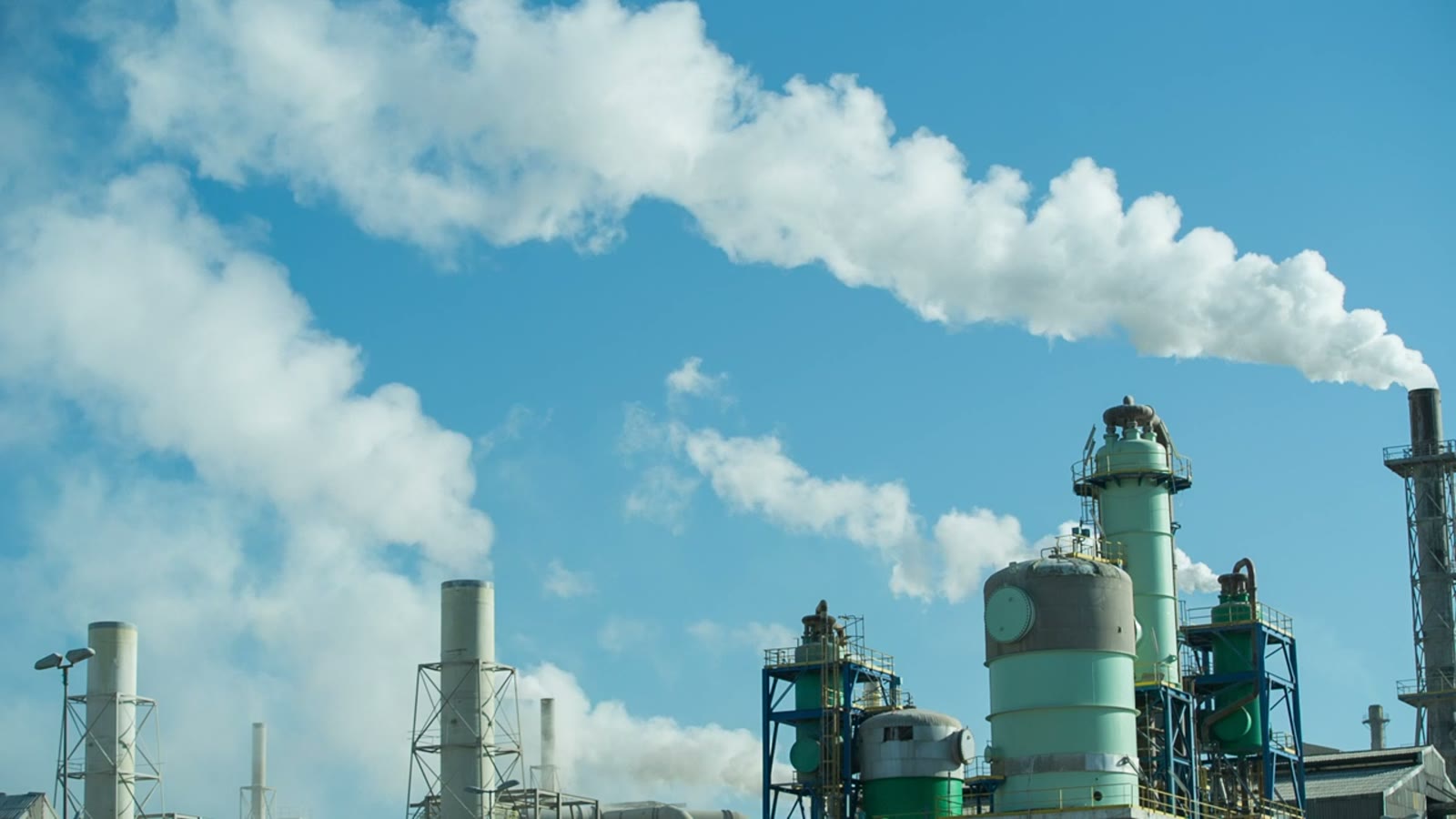
Polyvinyl chloride (PVC) is the third-largest-volume thermoplastic globally and one of the largest construction-material polymers. Chinese capacity is approximately 28 million tonnes per year, about 40% of global capacity. The Chinese PVC industry is structurally different from the rest of the world: most Chinese capacity uses the calcium carbide production route (ethylene-free), while the rest of the world uses ethylene-derived VCM. This route distinction matters for cost economics, environmental footprint, and increasingly for regulatory acceptance in major Western markets.
What PVC actually is
PVC is poly(vinyl chloride), the polymer of vinyl chloride monomer (VCM). The polymer is white-to-cream powder or granule at room temperature, requires plasticisers and stabilisers for most end-use applications, and is processed by extrusion, calendering, or moulding. PVC has good chemical resistance, electrical insulation properties, and can be formulated as either rigid (uPVC, used in pipes, window frames) or flexible (with plasticiser, used in flooring, cables, films).
The product is produced by polymerising VCM. The two main VCM routes:
- Ethylene route: ethylene + chlorine → ethylene dichloride (EDC) → cracked to VCM → polymerised to PVC. This is the global standard.
- Carbide (acetylene) route: calcium carbide + water → acetylene + Ca(OH)₂; acetylene + HCl → VCM → polymerised. Mercury chloride is used as catalyst in the acetylene-HCl reaction. This is the dominant Chinese route.
China’s PVC capacity is approximately 80% carbide-route, 20% ethylene-route. The carbide-route plants are concentrated in Inner Mongolia and Xinjiang (close to coal-fired power and limestone for calcium carbide); ethylene-route plants are coastal.
Industrial applications and grade selection
PVC applications:
- Pipes and fittings (water, sewer, drainage, electrical conduit), rigid PVC, K-66 to K-67
- Window frames and door frames (uPVC), rigid, K-65 to K-67
- Cable and wire insulation, flexible PVC with plasticiser, higher K-value
- Flooring and roofing membranes, flexible PVC, plasticised
- Films and packaging, lower K-value, biaxially-oriented
- Medical products (tubing, blood bags), pharmaceutical-grade PVC, very specific specifications
- Synthetic leather (upholstery, fashion), flexible PVC
Grade selection by K-value:
| K-value | Molecular weight | Application |
|---|---|---|
| K-58 to K-60 | Low | Film, bottle, calendering |
| K-65 to K-67 | Medium | Pipes, fittings, profiles, sheets |
| K-70 to K-73 | High | Cable, wire, flexible products |
Most volume sourcing is K-66 or K-67 because of the dominant pipe-and-fitting application.
Chinese production geography
| Region | Production route | Major producers |
|---|---|---|
| Inner Mongolia | Carbide | Many, coal-and-limestone-based cluster |
| Xinjiang | Carbide | Several integrated petrochemical complexes |
| Shandong | Mixed (carbide and ethylene) | Major coastal producers |
| Jiangsu | Ethylene route | Coastal Sino-foreign joint ventures |
| Tianjin | Ethylene route | Bohai Bay producers |
| Guangdong | Ethylene route | Pearl River Delta |
For volume buyers, the choice is between Inner Mongolia / Xinjiang (carbide route, lowest FOB but highest mercury and carbon-footprint scrutiny) and coastal ethylene-route producers (higher FOB but lower regulatory risk for Western markets).
Packaging and container loading
| Packaging | Fill | Container loading |
|---|---|---|
| 1,000-1,200 kg big bag | 1,000-1,200 kg | 18-20 bags per 20’GP (~18-22 MT) |
| 25 kg PP/paper bag | 25 kg | ~880 bags per 20’GP (~22 MT) |
For volume export, 1-tonne big bags is the standard. Bulk-vessel PVC shipments are uncommon.
Regulatory profile
| Destination | Regime | PVC status | Specific notes |
|---|---|---|---|
| US | TSCA | Listed | Active AD/CVD on Chinese PVC |
| EU | REACH | Registered | Active anti-dumping orders |
| Australia | AICIS | Listed | Standard |
| China | IECSC | Listed | No NCSN |
| India | India BIS | Standard | Active anti-dumping |
| Mexico, Brazil, Turkey | Various | , | Periodic AD/CVD |
PVC is one of the most-AD-affected Chinese chemical exports because of the structural Chinese capacity surplus and the integrated value chain that allows aggressive export pricing.
Tariff and trade-remedy stack
For US-bound PVC from China (a representative scenario):
| Component | Status |
|---|---|
| HTS 3904.10 MFN tariff | 6.5% |
| Section 301 List 3 | +25% |
| AD/CVD on Chinese PVC | Active, typically 50-90% margin depending on producer |
| Total cash deposit | 80-120% on FOB value |
For EU buyers: AD on Chinese PVC active periodically; rates 20-40% typical.
For Indian buyers: AD active periodically; rates 15-30%.
The AD/CVD overlay is the key economic constraint. Chinese PVC FOB prices are typically the lowest in the world, but the AD/CVD-paid landed cost for major Western destinations is uncompetitive vs domestic and Korean/Taiwanese alternatives.
Carbide-route environmental scrutiny
The carbide-route PVC industry is subject to increasing environmental scrutiny:
- Mercury catalyst usage, mercury chloride is the catalyst for acetylene-HCl reaction. The Minamata Convention on Mercury restricts mercury use; Chinese carbide PVC producers face progressively tighter mercury limits.
- Carbon emissions, the carbide route is significantly more carbon-intensive than the ethylene route (~0.7 tonnes CO₂ per tonne PVC for ethylene route vs 1.2-1.5 for carbide route).
- EU Carbon Border Adjustment Mechanism (CBAM), phasing in 2026-2034. CBAM will levy a carbon-equivalent tariff on imports of carbon-intensive goods including PVC. Chinese carbide-route PVC will face significant CBAM costs at the EU border.
For Western buyers concerned about carbon footprint or supply-chain due diligence, the production route distinction matters increasingly. Specifying ethylene-route PVC on the purchase order is the standard practice for environmentally-conscious sourcing.
Freight and landed cost
For a 20’GP of K-67 ethylene-route PVC (18 MT in 1-tonne big bags) Shanghai to Houston:
| Component | Cost |
|---|---|
| FOB Shanghai (ethylene-route) | USD 750-900 / MT × 18 = USD 13,500-16,200 |
| Origin THC + handling | USD 300-450 |
| Sea freight | USD 2,500-4,500 |
| Marine insurance | USD 30-60 |
| Destination THC + drayage | USD 600-1,000 |
| MFN tariff (6.5%) | USD 880-1,055 |
| Section 301 (25%) | USD 3,375-4,050 |
| AD/CVD cash deposit (assume 70%) | USD 9,450-11,340 |
| Total landed | USD 30,635-38,655 |
| Per MT landed | USD 1,700-2,150 |
Compare to US-domestic K-67 PVC (~USD 900-1,100/MT delivered): Chinese cargo is uncompetitive after the AD/CVD overlay.
Operational failure modes
Three patterns recur:
- AD/CVD producer-rate mismatch. AD/CVD rates are producer-specific. A buyer assuming the average rate may be exposed if the actual producer’s rate is higher. Confirm the producer’s specific cash-deposit rate from Commerce records before booking.
- Mercury content drift in carbide-route PVC. Carbide PVC can have detectable mercury residue. For pharmaceutical, food-contact, or potable-water applications, mercury content must be very low. Specify and verify mercury content per COA.
- K-value batch variability. K-value can drift across batches. A buyer running specific extrusion processes can detect K-value variation in the finished product. Specify per-batch K-value reading.
Quality assurance
Standard documentation:
- Per-batch COA showing K-value, density, residual VCM, ash content, particle size distribution
- SDS per GB/T 17519 and OSHA HCS / CLP
- Certificate of production-route disclosure (carbide vs ethylene), increasingly requested
- Bill of lading, packing list, certificate of origin
Payment
Chinese PVC factories typically accept:
- T/T 30/70, most common
- L/C at sight, for new
- L/C 60-90 days usance, for volume relationships
For AD/CVD-affected destinations (US, EU, India), the importer’s working capital exposure to AD cash deposits can be USD 50,000-200,000+ per shipment. Some buyers structure payment terms to mirror the cash-deposit cycle.
When Chinese PVC is the right call
Chinese PVC is the right sourcing choice when:
- Asian-Pacific destinations without active AD/CVD
- Belt-and-Road and RCEP destinations with preferential tariff
- Specialty grades where Chinese producers have technical edge
When Chinese PVC is the wrong call:
- US/EU/India bulk imports. AD/CVD cash deposits make alternatives cheaper
- Carbon-footprint-sensitive supply chains, carbide-route PVC face increasing scrutiny
- Pharmaceutical/food-contact applications. Western or Korean ethylene-route PVC is the cleaner option
K-value selection and downstream-process matching
K-value is the polymerisation-degree number that maps directly to the molecular weight distribution of the resin. Chinese PVC is sold across a range from K-55 to K-80 with the bulk of commercial volume in K-65 to K-71. Picking the wrong K-value is one of the most expensive process-fit mistakes a downstream PVC compounder can make.
| K-value | Molecular weight (rough) | Typical end use | Processing notes |
|---|---|---|---|
| K-57 to K-60 | Lower | Injection moulding fittings, pipe couplings | Easy flow, lower mechanical strength |
| K-65 to K-67 | Mid | Rigid pipe (water, sewer), profile extrusion | Standard balance of strength and processability |
| K-67 to K-70 | Mid-high | Window profiles, rigid sheet | Better impact strength, requires hotter processing |
| K-70 to K-75 | High | Flexible PVC compounds (cable insulation, flooring) | High plasticiser uptake capacity |
| K-75 to K-80 | High | Specialty cable insulation, technical films | Slower processing, higher melt viscosity |
A downstream extrusion line set up for K-67 PVC pipe cannot simply switch to K-72 resin without re-tuning the entire line, screw temperatures, screw speed, head pressures, and downstream sizing equipment all need adjustment. Buyers running multiple downstream lines should specify K-value tightly per line and confirm the COA reflects the spec on every batch.
When a Chinese supplier offers a “general purpose K-67/K-68” grade at a discount, the discount typically reflects a wider permissible band. The grade often tests at K-66 in some batches and K-69 in others. For tight downstream processes the wider band creates yield losses; for loose processes the discount is captured cleanly.
The AD/CVD producer-rate matrix and bonded-warehouse routing
AD/CVD on Chinese PVC into the US has been active since 2008. The cash-deposit rate is producer-specific and is published by Commerce after each administrative review. As of the 2025 review, Chinese producer rates ranged from a low of about 5 per cent (a small specialty producer with a successful separate-rate application) to 90+ per cent (the country-wide rate applied to producers without a separate-rate determination).
For a US buyer evaluating Chinese PVC, the practical path is:
- Identify the producer by name on the proforma invoice. Generic “from China” descriptions cannot benefit from any producer-specific lower rate.
- Confirm the producer’s current cash-deposit rate through the most recent Federal Register notice or through a customs broker with PVC AD experience. The rate changes after every administrative review.
- Plan for a working-capital tail. AD cash deposits at entry are not refunded for 12 to 30 months pending the next administrative review’s final-duty determination. Buyers running multiple shipments per quarter accumulate USD 100,000 to USD 500,000 in cash on deposit at any given time.
- Consider bonded warehouse routing for buyers who use Chinese PVC as an intermediate input. Bonded-warehouse cargo can be processed and re-exported with the AD deposit refunded. This turns the AD cash deposit from a sunk cost into a working-capital line.
For volume buyers (over 1,000 MT per year of Chinese PVC), the bonded-warehouse plus duty-drawback route can recover 60 to 90 per cent of the AD cash deposit if the downstream product is exported. The administrative overhead is significant (CBP filings, inventory tracking, drawback claims) and typically requires a customs broker with bonded-warehouse experience.
CBAM and the carbon-route premium for EU-bound cargo
The EU Carbon Border Adjustment Mechanism (CBAM) reporting obligation took effect in 2023; the financial obligation phases in from 2026 through 2034. PVC was not in the original CBAM scope (cement, iron and steel, aluminium, fertilisers, hydrogen, electricity), but the Commission has signalled that downstream chemicals including PVC are likely to be added in the next CBAM expansion.
For EU buyers planning 2027-2030 PVC sourcing, the practical advice is:
- Track the CBAM scope expansion through the European Commission’s published consultations.
- Specify ethylene-route PVC on Chinese sourcing to minimise CBAM exposure when PVC is added. Ethylene-route Chinese PVC carries roughly 0.7 tonnes CO₂-equivalent per tonne of resin; carbide-route runs 1.2 to 1.5 tonnes. The CBAM cost differential at EUA prices around EUR 80 per tonne is EUR 40 to EUR 50 per tonne of PVC in the buyer’s favour.
- Build supplier-disclosure clauses that require the producer to provide CBAM-aligned emissions data per shipment. Major Chinese ethylene-route producers (Formosa Ningbo, Shandong Xinhai, Wanhua) already provide this for European-bound cargoes.
For non-EU buyers, CBAM is not directly relevant but the supply-chain due diligence trend is similar in the US (SEC climate disclosure rules, federal procurement standards) and in Australia (Corporate Australia Climate Reporting). Specifying ethylene-route Chinese PVC is the conservative choice that preserves option value as disclosure regimes expand.
Resin form and downstream-customer-fit considerations
Beyond K-value and production route, PVC ships in two physical forms that affect downstream processing and storage. Suspension-process PVC (S-PVC) is the dominant form globally, accounting for roughly 80 per cent of capacity. Emulsion-process PVC (E-PVC) is the specialty form for paste applications (vinyl flooring, automotive underbody, decals).
Chinese S-PVC ships as free-flowing white powder in 25-kg paper bags, 1-tonne big bags, or bulk silos. The particle size distribution centres on 100 to 200 microns. This form runs cleanly through standard PVC compounding equipment (pellet mills, profile extruders, pipe extruders, calendars).
Chinese E-PVC ships as fine spray-dried powder, particle size 0.1 to 5 microns. The form requires careful handling because particle-size-driven flow is poor; storage silos need vibrating bottoms or fluidising air. E-PVC is sold into a smaller, more specialised buyer base; only a few Chinese producers (Wanhua, Befar, Shandong Haili) have meaningful E-PVC capacity.
For a buyer:
- S-PVC is the default specification. Confirm K-value and production route per the prior sections.
- E-PVC is a separate qualification process. The supplier set is narrower; quality and consistency vary more across Chinese producers than for S-PVC.
- The form decides the downstream equipment fit. A buyer running rigid-pipe extrusion uses S-PVC. A buyer running paste-PVC for vinyl flooring uses E-PVC. The two are not interchangeable.
Vinyl chloride monomer (VCM) residual and the safety angle
Residual VCM in finished PVC resin is the single most important health-and-safety parameter for buyers using PVC in food-contact, medical-device, or potable-water applications. Vinyl chloride is a known carcinogen; finished PVC resin is generally safe because the polymerisation process removes nearly all monomer, but trace residual VCM in the resin can migrate into food, water, or drug formulations.
The standard limit for residual VCM in food-contact PVC is 1 ppm; for medical-device PVC it is 0.5 ppm; for general industrial PVC it is 5 to 10 ppm. Chinese ethylene-route producers consistently meet the 1 ppm limit; chloride-route producers vary, with newer plants meeting it routinely and older plants drifting above the limit on occasional batches.
For buyers in food-contact, medical-device, or potable-water applications, specifying numerical residual-VCM limits and per-batch verification on the COA is non-negotiable. Acceptance testing at the buyer’s destination is also standard practice for these applications.
Practical sourcing checklist
Before issuing a PO:
- Confirm K-value spec
- Confirm production route (carbide vs ethylene)
- Confirm packaging
- Confirm HS code, 3904.10
- Confirm Incoterms with named place
- For US/EU, confirm AD/CVD producer-specific cash-deposit rate
- Confirm payment terms
Related sourcing references
For Incoterms: FOB, CIF, CFR. For freight: BAF, Demurrage. For documentation: Bill of Lading, COA. For trade-remedy: Anti-Dumping Duty, AD/CVD, Section 301.