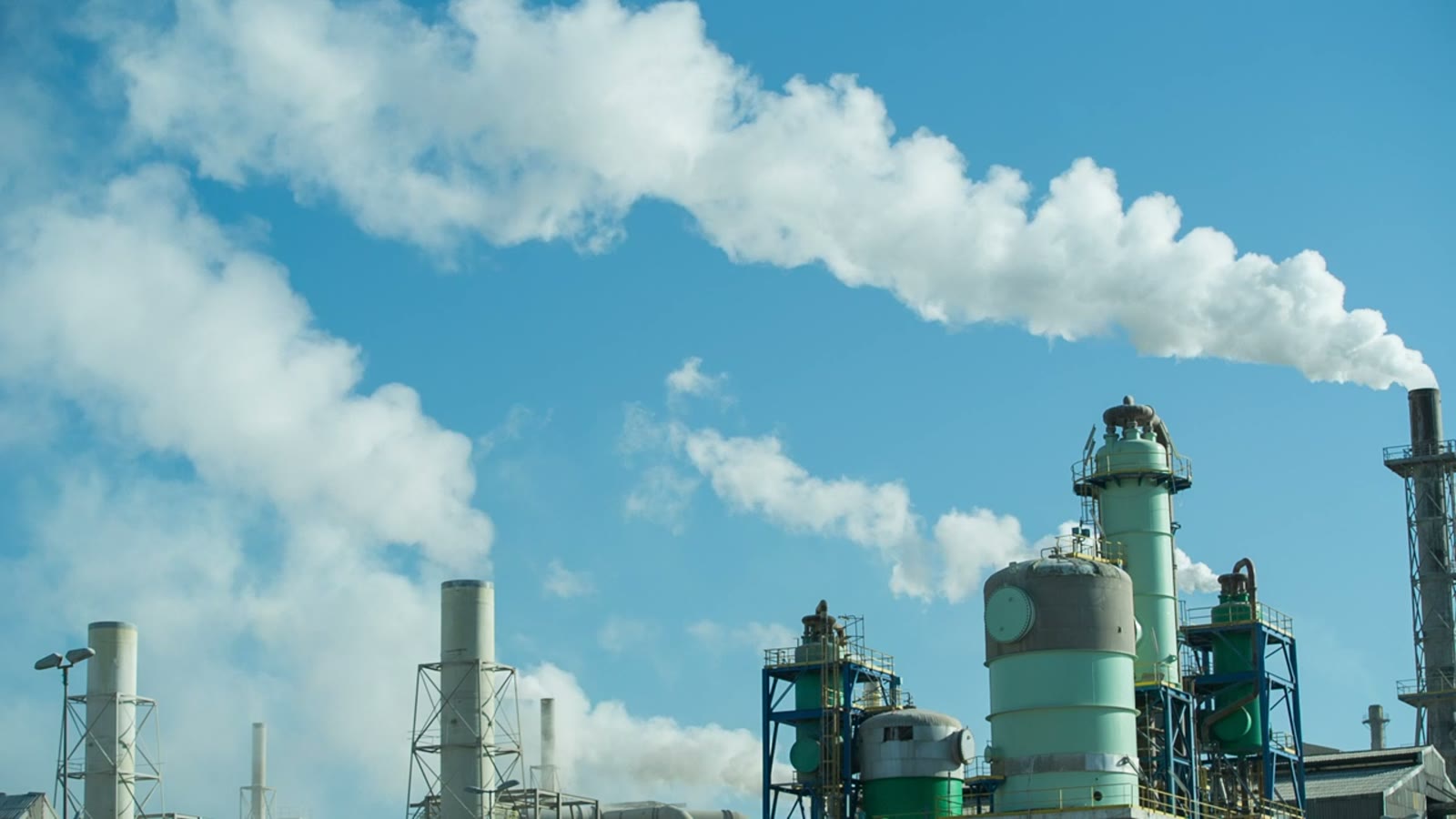
Methanol is the simplest alcohol, methyl alcohol, CH₃OH, and one of the largest-volume bulk petrochemicals globally. Chinese capacity is approximately 100 million tonnes per year, about 60% of global capacity. The dominant feature of Chinese methanol production is that ~75% is coal-based (synthesis gas from coal gasification), while the rest of the world is primarily natural-gas-based. This route distinction matters for cost, carbon footprint, and increasingly for regulatory acceptance under CBAM and similar carbon-pricing regimes.
What methanol actually is
Methanol is the simplest alcohol, colorless, volatile, flammable, miscible with water in all proportions, with a faint sweet odour. The boiling point is 64.7°C, the flash point is 11°C, and the autoignition temperature is 470°C. The product is highly toxic, ingestion can cause blindness or death, with the toxic dose for humans approximately 10 mL of pure methanol.
The product is produced from synthesis gas (a mixture of CO and H₂) over a copper-based catalyst at moderate temperature and pressure. The synthesis gas can come from:
- Natural gas (the global standard), gas reformed to syngas, then to methanol
- Coal (the dominant Chinese route), coal gasified to syngas, then to methanol
- Biomass, emerging route for “bio-methanol”
Industrial applications
Methanol applications:
- Formaldehyde production (the largest single use, ~30% of global), formaldehyde then to phenol-formaldehyde, urea-formaldehyde, melamine
- MTBE / TAME (gasoline oxygenates), though MTBE has been phased out in many markets
- Acetic acid production (Cativa or Monsanto process), methanol carbonylation
- Methyl methacrylate (MMA) for acrylic plastics
- Direct fuel use (methanol-blend fuels in some markets, notably China)
- Olefin production (methanol-to-olefins, MTO process, coal-to-olefins value chain)
- Solvent (industrial cleaning, paint thinning, antifreeze)
- Biodiesel production (transesterification of vegetable oils)
For Chinese-origin methanol export, formaldehyde production and MTO are the dominant downstream uses.
Chinese production geography
| Region | Production | Major producers |
|---|---|---|
| Inner Mongolia | Coal-based | Numerous large complexes; lowest cost producers |
| Shaanxi | Coal-based | Yan’an Energy + others |
| Shanxi | Coal-based + coke-oven gas | Multiple |
| Xinjiang | Coal-based | Xinjiang complexes |
| Ningxia | Coal-based | Ningxia integrated complexes |
| Shandong, Jiangsu | Mixed (coal-based + gas-based) | Coastal producers |
| Hainan | Gas-based (offshore gas) | Hainan complex |
Inner Mongolia, Shaanxi, Shanxi, and Xinjiang are the coal-based methanol heartland. Coastal producers in Shandong and Jiangsu use a mix of coal-based, coke-oven gas, and natural gas.
ISO tank logistics and packaging
Methanol is liquid, hazardous, and shipped in dedicated equipment:
| Packaging | Fill | Container loading |
|---|---|---|
| 200 kg HDPE drum | 200 kg | 80 drums per 20’GP (16 MT cargo) |
| 1,000 kg IBC | 1,000 kg | 16-18 IBCs per 20’GP |
| ISO tank | 22-24 MT | 1 tank |
| Methanol tanker | 1,000-50,000 MT | Specialty methanol-rated tanker |
For volume export, ISO tank is the standard. Bulk-tanker shipments are common for very large parcel sizes (Trinidad to US Gulf Coast, Middle East to Asia).
Regulatory profile
| Destination | Regime | Status | Notes |
|---|---|---|---|
| US | TSCA | Listed | TSCA cover sheet |
| EU | REACH | Registered | Standard |
| Australia | AICIS | Listed | Annual declaration |
| China | IECSC | Listed | DG transport regulations |
IMDG Class 3 flammable liquid plus secondary toxicity (Class 6.1):
- UN 1230, Packing Group II
- MSA China DG packing certificate required
- DG declaration on documentation
- Hazmat surcharges on freight
Tariff stack
For US-bound methanol from China:
| Component | Status |
|---|---|
| HTS 2905.11 MFN tariff | 5.5% |
| Section 301 List 3 | +25% |
| AD/CVD | None active currently |
| Total | ~30.5% |
For Australian buyers under ChAFTA: zero preferential tariff replaces the 5% MFN rate.
For European buyers: MFN tariff applies. EU CBAM (phasing in 2026-2034) will add a carbon-equivalent tariff on coal-based methanol, a meaningful cost for Chinese coal-based product into Europe.
Freight and landed cost
For a 22 MT ISO tank of IMPCA-grade methanol Shanghai to Houston:
| Component | Cost |
|---|---|
| FOB Shanghai | USD 280-380 / MT × 22 = USD 6,160-8,360 |
| ISO tank lease | USD 1,000-1,800 per voyage |
| Sea freight + DG hazmat surcharge | USD 3,500-5,500 |
| Marine insurance | USD 30-60 |
| Destination THC + drayage | USD 800-1,200 (DG premium) |
| MFN tariff (5.5%) | USD 340-460 |
| Section 301 (25%) | USD 1,540-2,090 |
| Total landed | USD 13,370-19,470 |
| Per MT landed | USD 600-880 |
Compare to Trinidad / Saudi gas-based methanol landed at USD 350-500/MT into US Gulf Coast: Chinese methanol is meaningfully more expensive after Section 301.
Operational failure modes
Three patterns recur:
- Cross-contamination from prior cargo in ISO tank. ISO tanks rotate between cargoes. A tank previously carrying ethanol, butanol, or another solvent needs cleaning before methanol loading. Methanol is sensitive to water content (water absorption from contaminated tank is the typical failure). Specify dedicated methanol-cycle ISO tank where possible.
- Specification deviation in coal-based methanol. Coal-based methanol can have higher trace impurities (sulfur compounds, higher alcohols, ketones) than gas-based methanol if the gasifier is not tuned. For chemical-synthesis use cases (acetic acid, MMA), specification consistency matters.
- DG documentation gap. Methanol’s dual classification (Class 3 + secondary toxicity) means stricter documentation than typical Class 3. Missing emergency response information, missing IMDG Code emergency action codes, missing UN-certified packaging records, all can hold the cargo.
Quality assurance
Standard documentation:
- Per-batch COA showing methanol %, water content, aldehyde, free acid, alkali, distillation range, density
- AA-grade or IMPCA-grade certification
- SDS per GB/T 17519 with full IMDG and DOT classifications
- DG declaration, MSA China packing certificate
- ISO tank cleanliness certificate
Payment
Standard terms apply. T/T 30/70 most common; L/C usance for volume.
When Chinese methanol is the right call
Chinese methanol is the right sourcing choice when:
- Asian-Pacific destinations. Chinese coal-based methanol has lowest landed cost
- Volume buyers without carbon-pricing exposure, when CBAM does not apply
- MTO and downstream-Chinese-petrochemical buyers, natural fit for the Chinese coal-to-chemicals value chain
When Chinese methanol is the wrong call:
- US imports. Trinidad / Saudi gas-based methanol is cheaper after Section 301
- EU imports under CBAM, gas-based methanol from Norway, Trinidad, US is cleaner
- Specialty applications requiring tight impurity profile, gas-based methanol typically more consistent
Coal-to-methanol versus gas-based methanol economics
Chinese methanol capacity is roughly 70 per cent coal-based and 30 per cent natural-gas-based. The split is the largest single factor in Chinese methanol’s competitive position globally.
Coal-based methanol uses Chinese steam coal as feedstock, gasified to syngas (CO + H2) and converted to methanol over copper-zinc-aluminium catalyst. Capital cost per tonne of capacity is roughly 30 to 40 per cent higher than gas-based methanol because of the gasifier and the auxiliary air-separation unit. Operating cost is dominated by coal price, not natural-gas price; this disconnects Chinese methanol cost from global natural-gas markets and links it instead to Chinese coal markets and to Chinese power-grid economics.
Gas-based methanol uses natural gas as feedstock through steam reforming or autothermal reforming. The route is the global standard outside China; Trinidad, Saudi Arabia, Iran, Norway, Russia, Equatorial Guinea, and the US all use it. Gas-based capacity globally totals roughly 100 million tonnes per year; coal-based capacity (almost entirely Chinese) totals roughly 60 million tonnes per year.
For a buyer:
- The Chinese cost advantage is most pronounced when global gas prices are high (LNG above USD 12 per MMBtu). At those gas prices, Chinese coal-based methanol can land FOB at USD 250 to USD 320 per MT while gas-based competitors quote USD 380 to USD 450 per MT. When global gas prices are low (LNG below USD 6 per MMBtu), the gap narrows or reverses.
- The carbon-footprint differential matters increasingly. Coal-based methanol carries roughly 3.0 to 3.5 tonnes CO2 per tonne of methanol; gas-based methanol carries roughly 0.7 to 1.0 tonnes. EU CBAM phase-in from 2026 to 2034 prices the differential at the EU border; current EUA prices around EUR 80 per tonne translate to a CBAM cost of EUR 180 to EUR 200 per tonne of methanol against coal-based product. This is a meaningful cost overlay for EU-bound cargo.
- The downstream-application matters. For methanol-to-olefins (MTO) and methanol-to-aromatics (MTA) downstream of methanol production, the CO2 footprint of the methanol matters less because most of the carbon ends up in the polymer or aromatic product. For methanol used as a fuel additive or as a chemical intermediate where the methanol itself is the traded molecule, the CO2 footprint is more transparent.
IMPCA versus AA grade specifications
Methanol grade selection is dominated by two specifications: IMPCA (International Methanol Producers and Consumers Association) and AA (American Alcohol Association, sometimes called Federal Grade). The two specs overlap heavily but differ in a few important parameters that matter for downstream applications.
| Parameter | IMPCA | AA grade |
|---|---|---|
| Methanol content (mass %) | Min 99.85 | Min 99.85 |
| Water (mass %) | Max 0.10 | Max 0.10 |
| Acetone (ppm wt) | Max 30 | Max 30 |
| Ethanol (ppm wt) | Max 50 | Max 10 |
| Acid (as acetic acid, ppm wt) | Max 30 | Max 30 |
| Distillation range (°C at 760 mm Hg) | 1.0 °C window incl 64.6 ±0.1 | Same |
| Permanganate time (minutes) | Min 50 | Min 30 |
| Density (g/ml at 20°C) | 0.7910 to 0.7930 | Same |
| Carbonyl compounds (ppm wt) | Max 30 | Max 30 |
| Iron (ppm wt) | Max 0.10 | Max 0.10 |
The two big differences:
- Ethanol limit is 50 ppm in IMPCA but 10 ppm in AA grade. AA grade is significantly tighter. For specific downstream uses (specialty chemical synthesis, pharmaceutical solvent applications), the lower ethanol limit matters.
- Permanganate time is 50 minutes in IMPCA versus 30 minutes in AA grade. This is a measure of oxidisable impurities; IMPCA is the tighter spec. For paint and coatings applications, the longer permanganate time reduces yellowing risk.
For most general-purpose Chinese methanol exports, IMPCA grade is the default specification. AA grade is available from a smaller producer set (typically the gas-based plants in the Bohai Bay region) at a USD 20 to USD 50 per MT premium. Specify the spec explicitly on the proforma invoice.
ISO tank discipline and the methanol-water sensitivity
Methanol absorbs water aggressively. A tank with even a few hundred millilitres of residual water from cleaning sets the cargo above the 0.10 per cent water spec for IMPCA. The discipline around tank preparation is the difference between an in-spec arrival and a downgraded cargo.
Standard preparation for a methanol ISO tank:
- Steam cleaning with high-pressure steam to remove residual prior cargo.
- Dry-air purge for 30 to 60 minutes to evaporate steam condensate.
- Nitrogen purge to displace humid air with dry nitrogen.
- Tank-bottom drain check to confirm no liquid water residue.
- Pre-load wall-rinse test with a small volume of in-spec methanol to confirm the tank surface is dry; the rinse sample is tested for water content. If under 0.05 per cent water, the tank is acceptable for loading.
For a buyer running tight-spec methanol procurement, the tank-prep cost adds USD 100 to USD 200 per voyage and is universally absorbed into the freight rate. Skipping the steps to save the cost reliably produces out-of-spec cargo on warm or humid days. Major fleet operators (Stolt, Den Hartogh, NewPort) maintain dedicated methanol fleets that follow this protocol as standard.
Downstream-application matrix and grade fit
Methanol is a chemical-industry workhorse with diverse downstream uses, each with different grade requirements and supplier preferences. The downstream matters because the grade premium varies by use and the supplier’s spec consistency affects different end uses unequally.
| Downstream | Grade fit | Critical spec | Chinese supplier fit |
|---|---|---|---|
| Methanol-to-olefins (MTO) | Industrial / IMPCA | Acid number, water | Excellent (Chinese MTO industry consumes most of own production) |
| Formaldehyde production | IMPCA | Permanganate time, aldehyde | Strong (large producer base) |
| Acetic acid via Cativa or Monsanto process | IMPCA, low metals | Iron, copper, ethanol | Strong (mid-tier producer base) |
| MTBE / TAME / ETBE blendstock | Industrial | Sulphur, water | Strong (refinery-grade producers) |
| Biodiesel transesterification | Industrial | Water, density | Strong (cost-driven application) |
| Specialty chemical synthesis (pharma intermediates, polymers) | AA grade | Permanganate time, ethanol | Mid-tier (Bohai gas-based producers) |
| Solvent blending (paint, coatings) | AA grade | Permanganate time, colour | Mid-tier |
| Fuel-grade methanol (M85, M100 fuels) | M-grade per ASTM D5797 | Water, salt | Strong |
For most large-volume exports out of China, IMPCA grade is the default specification and matches roughly 80 per cent of buyer demand. AA-grade specification narrows the supplier set and adds USD 20 to USD 50 per MT FOB premium. Application-specific specifications (USP for pharma, biodiesel-specific specs, fuel-grade specs) further narrow the supplier pool and add their own premium tiers.
For a buyer running multi-application procurement, the practical move is to align procurement specifications across applications where possible and accept slight over-specification on lower-tier uses to consolidate supplier relationships. A buyer running both MTO feedstock and specialty solvent purchasing typically saves 1 to 2 per cent through consolidated AA-grade procurement versus running two separate supplier programmes at different specs.
Methanol in the energy-transition narrative
Methanol has emerged as a candidate marine fuel under International Maritime Organisation decarbonisation pressure. Maersk, MSC, and other major container lines have ordered or contracted methanol-burning vessels in 2023 to 2025, and Chinese coal-based methanol has been part of the supply discussion. The energy-transition narrative for methanol matters to chemical-grade buyers because rising marine-fuel demand can compete with chemical-grade demand for the same producer output, lifting prices on weeks where bunker buyers are aggressive in the spot market.
For a chemical-grade buyer, the practical implication is to track marine-fuel offtake commitments at the major Chinese coal-based producers. When a producer signs a multi-year bunker-fuel commitment, their available chemical-grade export volume tightens. This is one factor among several, but it has become more material since 2024 and is worth incorporating into supply-risk analysis on long-tenor contracts.
Practical sourcing checklist
Before issuing a PO:
- Confirm grade (AA or IMPCA)
- Confirm production route (coal-based vs gas-based)
- Confirm packaging (ISO tank type, drum spec)
- Confirm HS code, 2905.11
- Confirm UN number and Packing Group
- Confirm Incoterms with named place
- Confirm DG documentation chain
- Confirm payment terms
Related sourcing references
For Incoterms: FOB, CIF, CFR. For freight: BAF, Demurrage, Free Time. For DG handling: IMDG Class 3, DG Declaration, MSA China. For documentation: Bill of Lading, COA. For trade finance: L/C, T/T, Open Account.