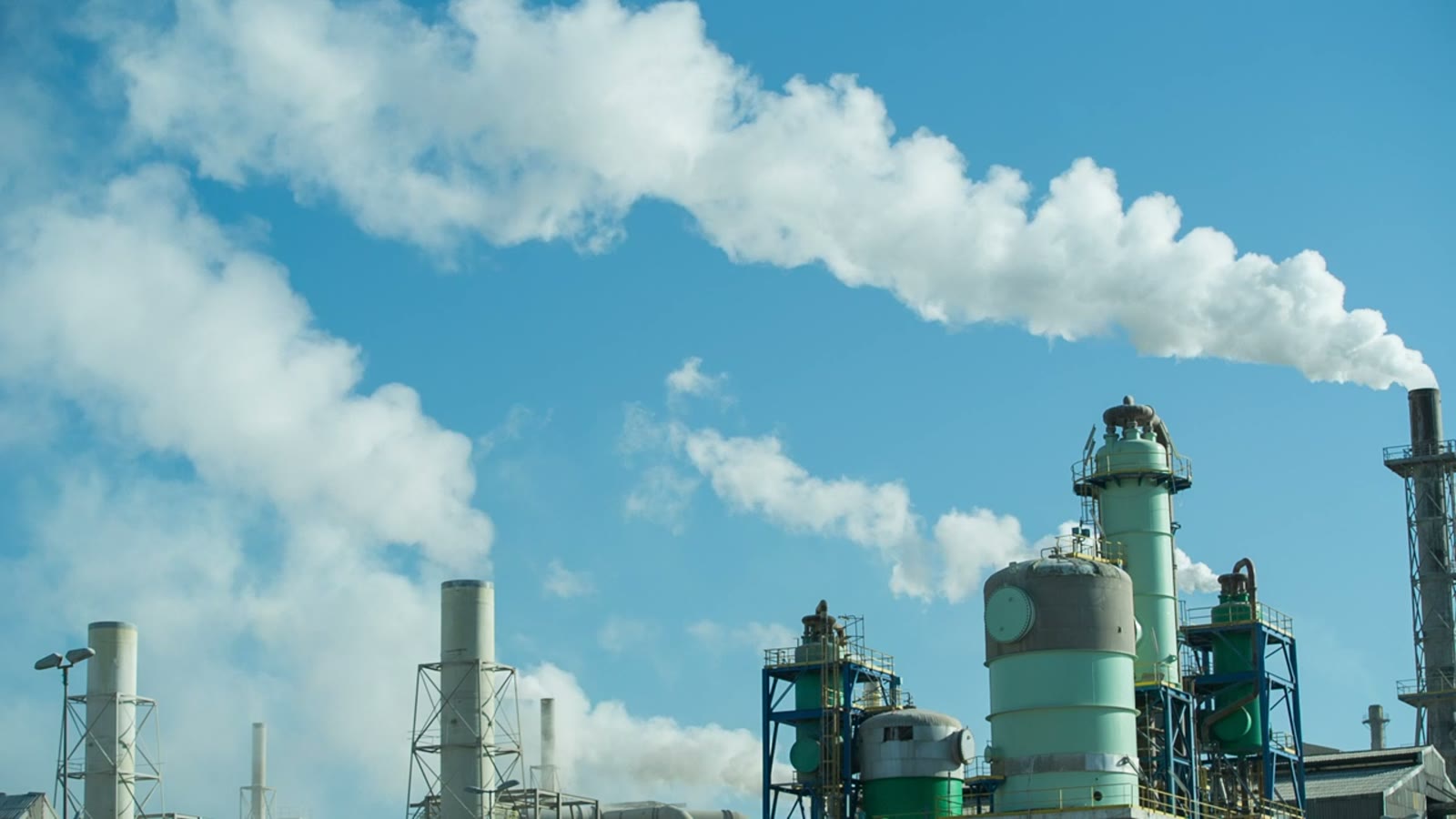
Citric acid is one of the largest-volume specialty chemicals globally, used principally as an acidulant and chelating agent in food, beverage, pharmaceutical, and detergent applications. Chinese capacity is approximately 2.5 million tonnes per year, over 70% of global capacity. The Chinese citric acid industry is dominated by a handful of large fermentation-based producers (RZBC, Ensign, TTCA, COFCO Biochemical), and exports flow to most international markets except the US, where active antidumping orders have driven Chinese imports to near zero.
What citric acid actually is
Citric acid is the tricarboxylic acid HOOC-CH₂-C(OH)(COOH)-CH₂-COOH (2-hydroxypropane-1,2,3-tricarboxylic acid in IUPAC nomenclature). It is a white crystalline solid at room temperature, highly soluble in water, weakly acidic, with a tart sour taste. The product exists in two forms, anhydrous (dry) and monohydrate (one water molecule per citric acid molecule).
Industrial production is by submerged fermentation of sugars (typically corn-derived glucose syrup or beet/cane molasses) using the fungus Aspergillus niger. The fermentation broth is then filtered, the citric acid is recovered (typically by calcium precipitation followed by sulfuric-acid release), purified by ion exchange or activated carbon, and crystallised to either anhydrous or monohydrate form.
Industrial applications
Citric acid applications:
- Food and beverage acidulant (the largest single use, ~50% of global), soft drinks, juice, candies, sour confectionery
- Pharmaceutical formulations (effervescent tablets, anti-coagulants, drug solubilisation). USP grade
- Detergents and cleaning products (chelating agent, replaces phosphate in some formulations)
- Cosmetics and personal care (pH adjuster, antioxidant in skincare)
- Industrial chelation (metal cleaning, water treatment, electroplating)
- Concrete admixture (set retarder)
- Animal feed (acidulant in feed additives)
Grade hierarchy:
- Industrial / technical grade, for industrial chelation, detergents, non-food uses
- FCC food grade. Food Chemicals Codex specifications; the dominant export grade
- USP grade, pharmaceutical use; tighter impurity limits
- EP grade. European Pharmacopoeia equivalent
- Organic-certified, grown from organic feedstocks
Chinese production geography
| Producer | Location | Approximate capacity |
|---|---|---|
| RZBC (Rizhao Bohi Chemical) | Shandong (Rizhao) | 600,000+ MT/year |
| Ensign Industries | Anhui (multiple sites) | 500,000+ MT/year |
| TTCA Group | Anhui (Bengbu) | 400,000+ MT/year |
| COFCO Biochemical | Anhui | 300,000+ MT/year |
| Smaller producers | Various | 700,000+ MT/year combined |
The industry is concentrated in Shandong (Rizhao port access) and Anhui (inland, rail to Shanghai or Lianyungang). For volume buyers, direct relationships with RZBC, Ensign, or TTCA via their export trading subsidiaries is standard.
Anhydrous vs monohydrate
The form selection matters:
| Form | Water | Crystallisation temp | Use |
|---|---|---|---|
| Anhydrous | None (~0% water) | Above 36°C | Dry mixes, low-moisture food, pharmaceutical |
| Monohydrate | ~8.6% water | Below 36°C | Beverages, wet food applications |
For shipping economics: monohydrate carries water that the buyer pays freight on. Per kilogram of citric acid content, anhydrous is cheaper to ship. Monohydrate is preferred for some applications where the water is needed for downstream processing.
Packaging
| Packaging | Fill | Container loading |
|---|---|---|
| 25 kg fiber drum (1G) | 25 kg | ~640-720 drums per 20’GP (~16-18 MT) |
| 25 kg PP/paper bag | 25 kg | ~880 bags per 20’GP (~22 MT) |
| 1,000 kg big bag | 1,000 kg | 18-20 bags per 20’GP |
| 500 kg medium bag | 500 kg | Less common |
Fiber drums are common for food and pharmaceutical-grade material because the inner liner provides cleaner contact surface. Big bags are dominant for industrial-grade.
Regulatory profile
| Destination | Regime | Status | Notes |
|---|---|---|---|
| US | TSCA | Listed | Active AD/CVD order |
| EU | REACH | Registered | Standard SDS reference |
| Australia | AICIS | Listed | Annual declaration |
| China | IECSC | Listed | No NCSN |
Citric acid is not classified as DG. Documentation is standard non-DG.
Tariff and trade-remedy stack
For US-bound citric acid from China:
| Component | Status |
|---|---|
| HTS 2918.14 MFN tariff | 6.0% |
| Section 301 List 3 | +25% |
| Antidumping duty on Chinese citric acid | 117-156% (active since 2009, sunset-renewed) |
| Countervailing duty on Chinese citric acid | 14-159% |
| Total cash-deposit rate | ~165-345% |
For US imports, this is the highest effective tariff stack on any major Chinese chemical commodity. The combination has effectively ended Chinese citric acid imports to the US, domestic and Mexican producers (with no Section 301 exposure) supply the US market.
For Australian buyers under ChAFTA: zero preferential tariff replaces MFN.
For EU buyers: MFN tariff applies (~6.5%); EU has had AD measures historically, currently expired or suspended (verify).
Freight and landed cost (excluding US)
For a 20’GP of FCC food-grade citric acid (18 MT in 1-tonne big bags) Shanghai to Melbourne:
| Component | Cost |
|---|---|
| FOB Shanghai | USD 800-1,100 / MT × 18 = USD 14,400-19,800 |
| Origin THC + handling | USD 300-450 |
| Sea freight | USD 1,500-2,500 |
| Marine insurance | USD 30-60 |
| Destination THC + drayage | USD 500-800 |
| MFN tariff | 0% (ChAFTA preferential) |
| Total landed | USD 16,730-23,610 |
| Per MT landed | USD 930-1,310 |
Australian-domestic citric acid is essentially non-existent (no significant Australian production), so Chinese cargo competes with US, EU, and Mexican alternatives.
Operational failure modes
Three patterns recur:
- Moisture absorption causing caking. Citric acid is hygroscopic. Bag damage allowing moisture ingress can cause hard caking. Specify multi-trip 13H4 coated bags or PE-lined fiber drums for tropical or humid routings.
- Lead and heavy metal limit drift. FCC food-grade specs include very tight lead, arsenic, and mercury limits. Trace contamination from process equipment can cause spec failures. Per-batch heavy metal verification is standard for food-grade buyers.
- Microbial contamination on long-tenor cargo. Citric acid is not sterile. Moist cargo on long sea routes can develop microbial growth. Specify total plate count and yeast/mold limits on the COA.
Quality assurance
Standard documentation:
- Per-batch COA showing citric acid %, water (anhydrous spec or monohydrate spec), heavy metals, sulfate, oxalate, microbial limits (for food/pharma)
- FCC or USP certification
- SDS per GB/T 17519
- Bill of lading, packing list, certificate of origin
- Halal / Kosher certification where required
For first-shipment relationships, factory audit of the fermentation and recovery process is recommended for food/pharma-grade buyers.
Payment
Standard terms apply. Major Chinese citric acid producers offer T/T 30/70, L/C at sight, L/C usance, and open account for top-tier buyers.
When Chinese citric acid is the right call
Chinese citric acid is the right sourcing choice when:
- Non-US destinations. Chinese FOB is consistently competitive
- Food and beverage routine applications. Chinese FCC food-grade is fully competitive on quality
- Volume buyers in Asia, Europe, Australia, Latin America
When Chinese citric acid is the wrong call:
- US imports. AD/CVD makes alternatives (US, Mexico) cheaper landed
- Pharmaceutical formulations requiring USP-strict spec, some buyers prefer specialty Western producers
- Time-sensitive applications, 28-35 day Pacific transit
Anhydrous versus monohydrate form selection
Citric acid ships in two crystalline forms. Anhydrous citric acid is the dehydrated form (no waters of crystallisation, formula C6H8O7); monohydrate is hydrated with one water of crystallisation (C6H8O7·H2O). Per kilogram of citric-acid-content, monohydrate carries about 8.5 per cent water by mass; the buyer pays freight on this water on every shipment.
The form selection is downstream-application-driven:
| End use | Preferred form | Reason |
|---|---|---|
| Beverages (carbonated, juice, energy drinks) | Anhydrous | Tighter dosing control, less water in syrup formulation |
| Confectionery (gummies, sour candy) | Anhydrous | Better flow in dry blending |
| Food preservation (canning, pickling) | Either | Both dissolve readily |
| Detergent (powder formulations) | Anhydrous | Tighter dosing in dry blends |
| Pharmaceutical (effervescent tablets) | Anhydrous USP | USP monograph specifies anhydrous |
| Personal care (bath bombs, shampoo) | Either | Cost-driven choice |
| Animal feed | Monohydrate | Cost-driven, crystal form acceptable |
| Cleaning chemicals (descaling agents) | Either | Cost-driven |
Per-tonne FOB pricing typically runs USD 50 to USD 100 per MT in favour of monohydrate because the producer’s drying and crystallisation step is shorter. Per-tonne-of-citric-acid-content basis, the two forms are nearly equivalent. The freight component, on the other hand, runs USD 30 to USD 60 per MT lower on anhydrous because the buyer is not shipping water across the Pacific.
For a buyer running anhydrous applications, specify anhydrous explicitly and confirm the COA reflects the anhydrous monograph. Receiving monohydrate against an anhydrous purchase order is a common mismatch on first-supplier shipments and produces in-process rework if the buyer’s downstream blend cannot tolerate the extra water.
Fermentation feedstock and the supplier-tier matrix
Chinese citric acid is produced by Aspergillus niger fermentation on carbohydrate feedstock. The feedstock choice (corn glucose, cassava starch, molasses) drives both cost and the supplier’s downstream applicability matrix.
The major Chinese producers split into three tiers by feedstock:
- Tier 1 corn-glucose producers: COFCO Biochemical (the largest globally at over 700,000 MT per year), Anhui BBCA, Ensign Industry. These run integrated corn-to-citric facilities. Quality consistency is high; food and pharma-grade applications are routine. FOB prices are at the upper end of the Chinese range.
- Tier 2 mixed-feedstock producers: RZBC, Weifang Ensign, smaller producers in Shandong and Anhui. These run flexible feedstock plants that can switch between corn glucose, cassava starch, and molasses depending on raw-material economics. Quality is acceptable for most food-grade applications but with more batch-to-batch variation. FOB prices typically USD 30 to USD 60 per MT below tier 1.
- Tier 3 lower-grade producers: smaller plants on cassava or molasses feedstock. Industrial-grade and animal-feed-grade product. Lower spec consistency. Not suitable for food or pharma applications.
For a buyer running food-grade applications, sourcing from tier 1 producers is the standard practice. The 1 to 3 per cent FOB premium versus tier 2 is recovered through reduced batch-rejection costs and better supplier responsiveness on technical questions.
US AD/CVD reality and the substitution path
The US AD/CVD order on Chinese citric acid is among the most punitive trade remedies in force globally. The original AD investigation in 2009 produced cash-deposit rates of 117 to 156 per cent; the CVD added 14 to 159 per cent. The orders have been sunset-renewed twice (2015 and 2020) and remain active. Combined with Section 301 (+25 per cent) and the 6 per cent MFN, the cash-deposit rate at entry can reach 350+ per cent of FOB value.
The practical effect: Chinese citric acid is essentially absent from the US market. The supply gap is filled by:
- US-domestic production, primarily ADM at Decatur, Illinois. About 60 per cent of US citric acid demand.
- Mexican production, primarily Cargill at Eddyville, Iowa (despite the location, classified as North American sourcing for trade purposes). About 20 per cent.
- European production, primarily Citrique Belge in Belgium and Jungbunzlauer in Switzerland and Austria. About 10 per cent.
- Other Asian production, primarily from Thailand and India, with some volume from Brazil. About 10 per cent.
For a US buyer, the Chinese option is realistically off the table for routine procurement. The exceptions are very limited: bonded-warehouse re-export plays where the AD cash deposit is recoverable through duty drawback; specialty grades where Chinese producers offer a unique spec; or mid-supply-chain entities (toll manufacturers, contract beverage co-packers) where the customer absorbs the AD cost.
For non-US buyers, the AD/CVD overlay is irrelevant and the Chinese FOB advantage flows through cleanly. EU buyers have intermittent EU-side AD measures on Chinese citric (currently expired); Indian, Australian, Brazilian, and Southeast Asian buyers have free access to Chinese citric at competitive prices.
Halal and Kosher certification logistics
Volume citric-acid procurement for the food and beverage industry routinely requires Halal certification (for Muslim-majority markets and for global brands selling into those markets), Kosher certification (for US, Israeli, and Jewish-community markets), or both. Chinese producers have varied certification status; getting this right matters for downstream commercial flow.
Halal certification for citric acid means certifying the fermentation feedstock, the production process, and the cleaning chemicals do not include alcohol or porcine-derived ingredients. Major Chinese producers routinely carry JAKIM (Malaysia), MUI (Indonesia), or Halal Certification Authority Australia accreditation. The annual certification audit typically costs USD 3,000 to USD 8,000 per facility and producers absorb this into their pricing.
Kosher certification (typically Orthodox Union, OK Kosher, or Star-K) requires ingredient and process traceability through the same lens. The certification body inspects the facility annually and certifies that the equipment, feedstock, and cleaning agents are kosher-compliant.
For a buyer:
- Specify the required certifications on the proforma invoice. A producer not currently certified for the buyer’s required body will need 6 to 12 months to complete the audit cycle.
- Verify certification documents are current. Halal and Kosher certifications expire annually; an expired certificate means the cargo cannot be claimed as certified at the destination market.
- Match the certification body to the destination. A producer Halal-certified by JAKIM is recognised in Malaysia and Indonesia; certification by Halal Certification Authority Australia is recognised in Australia. Cross-recognition is increasing but not universal.
The major Chinese producers (COFCO, BBCA, Ensign, RZBC) typically carry both Halal and Kosher certifications across multiple bodies. Mid-tier producers may carry one or the other. Specifying both on the contract narrows the supplier set but ensures the cargo can be sold across the buyer’s full destination market.
Long-term contract structures and price-protection clauses
Volume citric-acid procurement typically runs on 6 to 12 month fixed-volume contracts. The pricing structure within those contracts has evolved over the last decade as both producers and buyers have learned how to manage the price volatility of a fermentation-based product whose raw-material cost (corn glucose) tracks agricultural commodity markets.
Three contract pricing structures are common:
- Pure fixed-price. The buyer locks a per-MT price for the contract term. The producer carries all raw-material price risk. Historically this was the dominant structure; it has fallen out of favour as corn-glucose volatility has increased.
- Index-linked with floor and ceiling. The price tracks a corn-glucose index (typically the China corn or US corn futures-aligned print) with a fixed basis, but a floor and ceiling cap the buyer’s exposure to extreme moves. This is the most common modern structure.
- Fixed plus pass-through clauses. The base price is fixed, but specific raw-material cost increases (corn over a threshold, energy over a threshold) trigger pass-through adjustments. Volume buyers with sophisticated procurement teams use this structure.
For a buyer entering a Chinese citric-acid procurement programme, the practical advice is to start with structure 2 (index-linked with floor and ceiling) for the first contract cycle. Once a producer relationship is established and the buyer has data on actual delivered cost variability, the procurement team can negotiate towards structure 3 with specific pass-through triggers tuned to the buyer’s tolerance. Structure 1 is rarely the right call in current markets because it creates supplier-side incentive to default or to seek price-revision when corn moves significantly against the producer.
Practical sourcing checklist
Before issuing a PO:
- Confirm form (anhydrous vs monohydrate)
- Confirm grade (FCC food-grade, USP, industrial)
- Confirm packaging (fiber drum, bag, big bag)
- Confirm HS code, 2918.14
- Confirm Incoterms with named place
- For US imports, confirm AD/CVD rate exposure and consider supply chain alternatives
- Confirm payment terms
Related sourcing references
For Incoterms: FOB, CIF, CFR. For freight: BAF, Demurrage, Free Time. For documentation: Bill of Lading, COA, Certificate of Origin. For trade-remedy: Anti-Dumping Duty, AD/CVD, Section 301. For grade specifications: Technical Grade vs Pure Grade.